NEAR FUTURE FOR OIL

There has been much discussion on the volatility of the price of crude oil: the market rule based on supply and demand, in addition to being subject to the seasonality of consumption and industrial trends, is strongly linked to environmental and social factors that affect the availability of extraction and transportation. Security in some areas of extraction or sea routes is challenged by conflicts or acts of piracy or sabotage, just to name a few well-known issues.

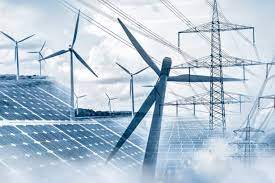
One of the lesser-told factors of the energy crisis that is causing bill costs all over Europe, is the fact that this summer less wind has blown. Especially in the north of the continent, in 2021 the strength of the currents was between 10 and 15% lower than the expected average…slowing down the wind turbines that were supposed to guarantee energy.

In fact, it could be said that climate change has already impacted the solutions available to combat climate change!

Even if the human impact on global warming is minimal compared to natural cycles, we must certainly act on the part that depends on us.

Unfortunately, regardless of the will of the various countries to break away from the servitude of fossil fuels, it must be admitted that the renewable sources available are not yet capable of guaranteeing a real ecological transition. Perhaps this is the real reason for the unenthusiastic approach to “changes” of many Rulers … if not for the generic statements that commit the distant future more than the present and more for coal alone.

Except for the young people who follow Greta, animated by youthful dreams and impulses, everyone can understand that forcing the industry with too rapid change could mean a stalemate or the destruction of the economies of many countries, if not the whole world. After all, no one – not even most young dreamers – is willing to make a drastic life change.

Economic collapse is as dangerous as the effects of climate change.

We could easily have a large amount of energy from hydroelectric and nuclear sources, but there is already an endless discussion about the safety and disposal of nuclear waste or other environmental discussions related to large dams.

The political and industrial commitment must be in the search for real alternatives rather than in the fluctuating popular consensus or the immediate profit on what is available; perhaps the concrete ecological alternatives are still to be invented or lie in the still theoretical solutions: we must not be under the illusion that eternal batteries or the availability of hydrogen in large volumes are already industrial-grade.

It is very likely that oil and gas will not leave us anytime soon, beyond the thunderous announcements of politicians looking for some quick response to public opinion.

Perhaps the real immediate solution is the reduction of energy consumption, this should not be difficult, if environmental consciences do not lie, even if paradoxically, the ecological transition will need a large amount of fossil fuels (wind turbines, or other solutions, are not made with the magic wand)

The industry has provided us with vehicles that consume and pollute less than previous models; we can give up a bit of travel and a bit of heat in our homes … but it is certainly strange that the same man, who became excessively rich by promoting electric cars and supertrains, also promotes useless and energy-intensive space travel; it is strange that the man who delivers the fruits of globalization home to us only cares about finding a faster way to expand his business, at the expense of more sustainable businesses; it is strange that no one wants to give up chatter, dispersed in millions of useless messages, ignoring the immense absorption of energy for the functioning of algorithms that already claim to be vital.

Perhaps there is, in part already there, a sustainable way to extract oil and gas (certainly abandoning the absurd practice of extraction with destructive methods such as the fragmentation of rock shales). There could be consumption, just as sustainable (intelligent), until science offers us a real alternative.

Surely we could decrease, more rapidly than any other solution, the suffocation of the seas with plastic or the deforestation of the lands: this would give a sure hand to the ecological rebalancing of the Planet.

Leaping through hoops to get out of the fossils too quickly could have worse consequences

Romano Pisciotti

Romano Pisciotti


HELLO MILANO: The wooden leg//El Gamba de legn

El Gamba de Legn’: ‘the wooden leg’ is an unusual name for a means of transport. It was the nickname that the people of Milan gave to the first steam-powered tram which started running on 9 September 1878, connecting Milan and Magenta over a distance of about 23 kilometres. They applied the same name to all the other lines that were later built between Milan and the surrounding towns.

Why wooden leg? Apparently the tram, running slowly along the tracks on Milan’s cobbled streets, made a syncopated To-Toc To-Toc sound, like a person walking with a wooden leg.

The 17 trams had from 10 to 12 carriages, without doors or heating, and there were wooden benches for the passengers who got very cold in winter. But even so, in those days the Gamba de Legn’ was advanced technology, far more efficient than the horse-drawn trams that could carry only a dozen people and that operated from Milan to Monza right up until 1900.

The 17 locomotives were manufactured by Lokomotivenfabrik Krauß in Munich, and they had a structure totally different from railway locos. For safety, the boiler and engine were completely enclosed by a steel screening structure, and the driver’s cabin was at the front for better visibility.

The maximum speed of the steam tram was specified by Milan’s provincial administration: 15 kilometres per hour in the countryside, along roads lined by mulberries used for silkworm raising, and 10 km/h in the city. When it was foggy, speed was reduced to 5 km/h. In this case, at every village and in Milan, an employee wrapped in a cloak and equipped with a lantern, bell and whistle waited for the tram and then walked in front of it to warn pedestrians of the oncoming danger. Before the First War, the tram ran five times a day. During the Second World War, many people were forced to live outside the city because of air-raid damage, and so all the goods trucks available were pressed into service, and even so, many passengers were forced to ride on the roofs of the normal carriages.

After the War, things returned to normal, and the last tram every day left Milan at 0.40 a.m., taking people back home after their evening out at the cinema or theatre.

The Gamba de Leg’ ran until 1954, and even though the residents of the villages and towns through which the slow and shuddering tram ran would have preferred to have kept the steam-powered version rather than the new electric trams, it finally went out of service in 1957. The last journey of the Gamba de Legn’ was accompanied by huge crowds of people, who put flowers on the locomotive.

https://www.hellomilano.it/hm/


Presented by Romano Pisciotti

GREAT BUSINESS IN NIGERIA

Why should you invest in Nigeria?

There are many reasons why you should consider investing in Nigeria. Nigeria is the largest economy in Africa ahead of South Africa, Egypt and the rest. With so many opportunities for growth, PwC has projected Nigeria among the top world economies in 2050 ahead of Italy, Canada, South Korea, Spain, Netherlands, Australia and others.

With over 200 million people….the best deal is to provide the food!!

Agriculture accounts for 33 percent of GDP and provides employment, both formal and informal, to more than 60% of the population.

However crop production dominates the agricultural sector and accounts for about 85 percent of agricultural activities; livestock and poultry accounting for 10 percent, fisheries and forestry, less than one percent…

…but rapidly growing.

There is a growing demand for animal protein in Nigeria!

Poultry production has not kept pace with the rapid increase in domestic consumption.

There is enormous potential for the poultry industry in Nigeria to enhance food and nutritional security, while contributing to household and economic growth.

There is no more efficient place to invest than in pullets. Pullets are the future of an integrated company. Successful pullet rearing is simply attention to detail, management, serology, biosecurity, vaccination, and worming.


https://youtu.be/Y65GVfGtsjo?t=84


Presented by Romano Pisciotti

The importance of proper and frequent cleaning of the rooms

Both at home and in the workplace, cleanliness and hygiene are an indispensable and fundamental condition.

Especially in this period, with the spread of the Coronavirus unfortunately still in progress, it is more than necessary to pay extreme attention to the cleaning and sanitation of the home and office, using suitable tools and products and providing daily thorough cleansing. of floors, surfaces and objects of common use.

Certainly cleaning and sanitizing in the time of Coronavirus is very important, but it is equally true that proper hygiene is an inevitable element to increase the level of well-being and comfort at home and in the workplace and to protect yourself from infections and allergies.

Choosing a powerful and high quality vacuum cleaner is the first rule to proceed with the total and thorough cleaning of an environment:

Presented by Romano Pisciotti

we like Lagos Environmental Sanitation Corps

https://m.facebook.com/LAGESCOfficial?_rdr&refsrc=deprecated

Nigeria – FDI: foreign direct investment

We all know that Nigeria is Africa’s largest economy, and with a population of 200 million people, one with huge potential for growth. It is therefore a country of the significant potential for foreign direct investment and foreign investors. But, for several reasons including a weak macroeconomic environment, policy inconsistency and the absence of a well-defined strategy for FDI as a component of economic growth strategy, FDI into Nigeria has declined markedly in the past several years.

Nigeria’s strategy for FDI
1. First, have a strategy: the priority sectors for the governments at federal and state levels need to be clear. The quality of investment, the quality of the government structure that handles FDI and formulates investment policy, and measurable, long term objectives regarding FDI and performance management regarding the contribution of FDI to economic development, are essential. These should be woven into a single thread that becomes the basis for execution, communication and engagement with potential investors.

2. Develop factor endowment: with skilled human capital as a priority need, strategies for FDI must focus on this frequently neglected objective. The presence or absence of productive knowledge in a society is the most important foundation for economic transformation, which remains necessary for a country such as ours with an economy still in need of diversification.

3. Align FDI with a transformational paradigm shift, for example away from extractive industries or towards value-added derivatives of such industries.

4. Improve national coordination of FDI activities between national and sub-national units.

5. Offer strong investor protections: Legal regimes in Nigeria must be adapted to facilitate increased flows of high-quality investment, in particular in light of regional trade realities such as ECOWAS, and now the African Continental Free Trade Area (AfCFTA). Beyond this, Nigerian authorities – and foreign investors- should incorporate political risk guarantees into major FDI agreements. This includes making use of guarantees offered by the World Bank Group’s Multilateral Investment Guarantee Agency (MIGA) for losses relating to currency inconvertibility and transfer restrictions, expropriation, terrorism, war and civil disturbances, breaches of contract, and failure to honour sovereign financial obligations.

6. Partial Risk Guarantees offered by the World Bank’s International Development Association (IDA), the arm of the Bank that leads to low income and lower-middle-income developing countries, cover an even more extensive range of situations than MIGA products. They can support participants in private projects such as Build-Operate-Transfer (BOT) and concession projects, public-private partnerships (PPP), and privatizations.

7. Improve the quality of governance and institutions: Assessments of governance and institutional capacity to create a sustainable investment environment play an important role in attracting quality investment.
The Nigerian Investment Promotion Commission (NIPC) has done a good job in recent years despite a difficult macroeconomic environment, including in terms of revenues it has generated for the Federal Government from foreign investments into Nigeria. I know from personal experience that, despite the early stages of the security challenges from terrorism, the Central Bank of Nigeria’s far-reaching reforms in the banking and financial sector which stabilized the sector after the global financial crisis of 2008, contributed to marked increases in FDI into Nigeria from 2009-2014. These reforms led to improved ratings of Nigerian by agencies such as Standard and Poor’s, Fitch, as well as the inclusion of Nigeria in the JP Morgan Africa Emerging Market Bond base Index alongside South Africa, which was previously the only sub-Saharan African country on the index.

Address by Professor Moghalu, President & CEO, Sogato Strategies LLC, Former Deputy Governor, Central Bank of Nigeria at the United States-Nigeria Investment Summit held in New York City, recently.

Presented By Romano Pisciotti

Un errore (stupido) ci sta portando verso la crisi economica

di Giovanni Cedaro

Siamo partiti sempre dalla rivoluzione industriale. Cioè abbiamo ideato, creato, e sviluppato qualcosa che potesse creare “benessere” per tanti. Tantissimi. All’inizio tutto questo ha generato l’inflazione positiva, aumento di reddito e stipendi. La gente andava in fabbrica, poteva permettersi di mandare i figli a studiare. Siamo passati dalla lambretta e vespa alla 500 poi 600 poi 1100 e via fino alle auto a batterie. Che bello, siamo tornati bambini!

Da decenni però il mondo è arrivato ad una capacità di produzione che la capacità di reddito sembra non possa sostenere. E allora che fare? Vai di credito al consumo. Poi non bastava per svuotare i magazzini sempre più pieni. Ed allora il tasso zero, poi il paga tra 12 mesi.
Ci riscopriamo con rate in conto senza più ricordarci quale oggetto spesava.

CONTINUA A LEGGERE


PRESENTATO DA ROMANO PISCIOTTI

Hello to all friends of slow smoking

…ending the day with a good Toscano (Tuscan) cigar is a very pleasant habit!

Toscano is the trade name of a type of bitroncoconic cigar produced in Italy originally by the Italian tobacco monopoly with untreated but naturally fermented Kentucky tobacco. TOSCANO® is a registered trademark of Manifatture

FACTORY IN LUCCA
For almost 130 years, beginning in 1818, cigar manufacturing took place mainly in Florence. But in the years following the postwar period the ‘stortignaccolo’ or ‘crooked cigar’ left the Tuscan capital for good and transferred its production to factories in Lucca and Cava de’ Tirreni.
 
Starting from around 1853 until June 2004 the main Lucca factory was based in a former convent for Dominican nuns. Since then, production has been moved to a more modern and functional building in Mugnano, on the outskirts of Lucca.

FACTORY IN CAVA DE’ TIRRENI

Tradition has it that the first tobacco plantations, in Campania, were introduced by Joachim Murat during the Realm of Naples. Ever since antiquity it was considered a very precious plant. The calamities that befell the Realm of Naples did not stop tobacco production, which from then on became a source of income for the population of Cava de’ Tirreni.
From 1912 Cava de’ Tirreni is one of the main productions sites of the famous Italian cigar.

https://www.manifatturesigarotoscano.it/en/

https://www.facebook.com/groups/47470620736


Romano Pisciotti: LIKE

Fundamentalism is arrogance and ignorance (English and Italian version)

Fundamentalism is arrogance and ignorance

(by Romano Pisciotti)

What if the voice of God you hear is just the voice of your sickness? What if your ear is your fear? What if your dialogue with God was the expression of what floats in your mind before mixing into a vortex that feeds your heart? The answers you hear may already be in your instinct, in the imprint of your pain and insecurity. What if your choices were just frustration as a limit to your desires? The voice you hear gives you answers you can’t find in others, the voice you hear gives you the arrogance of a unique and true faith! The voice you hear is your shortcut, not always downhill, towards answers to a universe too complex for man; sacrifice, unshakable faith and violent martyrs are fanaticisms that no longer give room to doubt and fill the void with the fragile thoughts of a mouse… offending the grandeur of the mystery of life. We don’t necessarily need to know who created the wonder of a starry sky if we can breathe the moods and the scent… while getting lost in the mystery.

E se la voce di Dio che senti fosse solo la voce della tua malattia? E se il tuo orecchio fosse la tua paura? E se il tuo dialogo con Dio fosse l’espressione di ciò che fluttua nella tua mente prima di mescolarsi in un vortice che nutre il tuo cuore? Le risposte che ascolti potrebbero essere già nel tuo istinto, nell’impronta del tuo dolore e della tua insicurezza. E se le tue scelte fossero solo frustrazione come limite ai tuoi desideri? La voce che ascolti ti dà risposte che non trovi negli altri, la voce che ascolti ti dà l’arroganza di una fede unica e vera! La voce che senti è la tua scorciatoia, non sempre in discesa, verso risposte a un universo troppo complesso per l’uomo; sacrificio, fede incrollabile e martirio bombaioli sono fanatismi che non danno più spazio al dubbio e riempiono il vuoto con i fragili pensieri di un topo… offendendo la grandezza del mistero della vita. Non abbiamo necessariamente bisogno di sapere chi ha creato la meraviglia di un cielo stellato se possiamo respirarne gli umori e il profumo… perdendoci nel mistero.

Romano

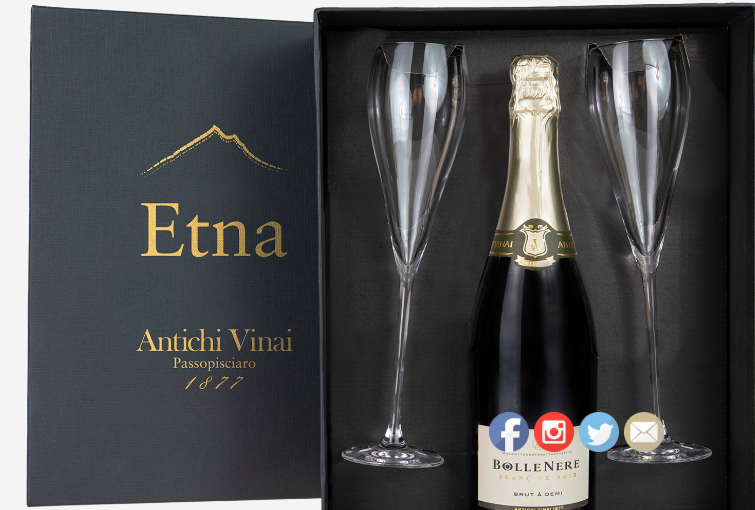
Antichi Vinai (Ancient Vintners)

Land of Fire: Divine forces flowing to the sea in crystal rivers between lava rocks and deep lakes, invisible to mortals and to the envious Moon; theatre of magnificence for the Deities that reign the Earth, battlefield for the splendour of the God who rules the waves: infinite clash for the power of beauty.

Terra del fuoco: Divine forze scorrono al mare in fiumi di cristallo tra rocce di lava e laghi profondi, invisibili ai mortali e alla Luna invidiosa; teatro della magnificenza per le Divinità che regnano la Terra, campo di battaglia per lo splendore del Dio che regna le onde: infinita battaglia per il potere della bellezza.

Romano Pisciotti


The slopes of Etna are home to some of the most particular vineyards in Europe.

The altitude, the Mediterranean exposures and the great thermal excursions, thanks to the volcanic soils, give the wines unique characteristics.

From Randazzo to Biancavilla, passing through Piedimonte Etneo and Milo, at an altitude ranging from 400 to just over 1000 meters, the production area of ​​the Etna Doc wines of Antichi Vinai extends.


“Antichi Vinai” wines are born from the secrets and passion for the vine.


For five generations the Gangemi family has been dedicated to viticulture and to the enhancement of Sicilian indigenous vines, especially Etna.


In one hundred years of work in the vineyards on the slopes of Etna and in the aging cellars, experience has been added to the passion, to experience the technology, to give admirers of Sicilian wines great certainties to savor.


THE ETNA DOC

Etna was the first controlled designation of origin to obtain the
recognition of the designation of origin, the Doc Etna

DECANTER 2020 – WORLD WINE AWARDS

https://web.facebook.com/antichivinai1877/?_rdc=1&_rdr

Presented by Aurora View Resort

http://www.auroraviewresort.it/

Fondachello di Mascali (CT) Italy

ARREDIL ART


ARREDIL ART

I walked on ancient colors and modern designs
in the smile of the light and in the geometric madness,
I discovered realizable emotions and dreams
in the enchantment of new and possible fairy tales.

Ho camminato su colori antichi e disegni moderni
nel sorriso della luce e nella geometrica follia,
ho scoperto emozioni e sogni realizzabili
nell’incanto di favole nuove e possibili.

Romano Pisciotti

Arredil Art 

per costruire, rinnovare, decorare e arredare

to build, renovate, decorate and furnish

SHOWROOM:

Corso Italia, 254

95014 Giarre (CT)

Sicily – ITALY

info@arredilart.it

www.arredilart.it

(+39) 3779727162 –  (Lia Gangemi) WhatsApp

Facebook


Aurora View Resort: LIKE

http://www.auroraviewresort.it/