IVECO spin-off

NEW YORK – Una “road map” per creare valore. È questo il senso del piano industriale al 2024 presentato ieri da Cnh Industrial a Wall Street. Il perimetro dell’operazione, come anticipato, prevede la divisione del gruppo in due società quotate con lo spin off all’inizio 2021 dei camion Iveco e dei motori Fpt Industrial.

Cambiare per vincere
Il piano denominato non senza enfasi “Transform 2 Win” oltre allo scorporo, punta al raddoppio dei profitti e dei dividendi a fine 2024. John Elkann, presidente e ad della holding di controllo Exor ha commentato: «In qualità di maggiore azionista singolo di Cnh Industrial, Exor assicura pieno sostegno a questo piano, che mira a liberare tutto il potenziale della società, nell’interesse dei suoi azionisti».

Al completamento dello scorporo Exor continuerà ad essere azionista di riferimento in entrambe le società. Cnh Industrial, dunque, si divide in due. Lo scorporo arriva appena sei anni dopo la creazione di Cnh. Quando Fiat Industrial, nel settembre 2013, decise di quotare in una società a parte le attività legate a macchine agricole e veicoli commerciali….CONTINUA A LEGGERE:https://amp-ilsole24ore-com.cdn.ampproject.org/c/amp.ilsole24ore.com/pagina/ACBihth


Presentato da Romano Pisciotti

INFO IVECO NIGERIA italmotor@gmail.com 

Iveco LNG-fueled truck sets distance record

CNH Industrial said an LNG-fueled Iveco truck completed what is believed to be the longest ever journey by road on a single fill.

Setting off from London, the vehicle was pulling a tri-axle box van trailer and running at a gross vehicle weight of 30 tonnes. After a short ferry crossing from Dover to Calais it completed the 1,728-km road journey without needing to refuel.

This exceeded the vehicle’s official range of 1,600 kilometers to set a new distance record, CNH Industrial said, adding that this equates to an LNG fuel cost saving of 40 percent compared to Diesel.

Iveco was using the journey to demonstrate that natural gas, including CNG, LNG and biomethane, are all alternatives to diesel, available from a growing network of fuel providers in the UK and across the continent.

Compared with an equivalent Euro VI diesel, a Stralis NP running on LNG emits around 90 percent less NO2 emissions, 99 percent less particulate matter, and up to 15 percent less CO2 – rising to 95 percent less CO2 when using biomethane, CNH Industrial noted.

Currently, more than 25,000 Iveco gas-powered vehicles have been delivered into service (2019)

INFO NIGERIA: Romano Pisciotti, MPI italmotor@gmail.com

Exceptional transports

​​​

Exceptional transports
On and off road
In tractor configuration, the new Trakker has all the features of sturdiness and set-up necessary for exceptional transport on the road and off-road.

Trasporti eccezionali

​Su strada e fuori strada

In configurazione trattore, Nuovo Trakker ha tutte le caratteristiche di robustezza e allestibilità necessarie per i trasporti eccezionali su strada e fuori strada.

Romano Pisciotti

Motor Parts Industry

Official Dealer in Nigeria

MPI (Nigeria-Lagos)

IVECO VISION


A technology concept for future mobility

​Iveco continues to place the search for cutting-edge new technological solutions and the interpretation and anticipation of future scenarios at the core of its business strategy. Iveco Vision, a concept centred on low environmental impact mobility, is embodied in a commercial vehicle featuring a range of innovative solutions. The concept emerged in the wake of Iveco’s Dual Energy technology, the chassis unveiled at the 2012 edition of the Hanover trade show, bringing together potential technologies for use in the light commercial vehicle of the future.

The innovation which characterises Iveco Vision starts with the Dual Energy system, a technology which allows for

the use of two different types of traction – one is exclusively electric, ensuring zero local emissions and low noise levels, and the other is hybrid (thermoelectric) and suitable for longer journeys and for extra-urban missions, reducing consumption and CO2 emissions by up to 25%.

In this architecture, a specific transfer unit couples the electric motor with the transmission shafts enabling to have an hybrid that is also an adaptive traction system with real-time energy management. Based on mission-related elements, the vehicle self-adapts to the most suitable traction: the hybrid mode improves commercial speed and autonomy range on intercity routes; while the electric mode allows unrestricted, no-emission mobility in metropolitan areas.

As a natural evolution of the “Dual Energy” project, Iveco has redesigned the frame, body, interior and user interface: the result is Iveco Vision, a commercial vehicle concept ideal for door-to-door delivery missions.

The project focused on the development of three new areas to be trialled: a new adaptive Human/Machine Interface; a design characterised by total visibility and a new fully automatic system for load management. With regard to the first of these areas, the vehicle is equipped with a high-integration tablet, which communicates with the on-board electronics.

Ample glazed surfaces and the “see-through” front pillars guarantee unrestricted outside visibility from the cabin – while rear camera sight is displayed on a panoramic screen on top of the windshield.

Finally, with regard to the specific mission, Iveco Vision is equipped with a load management system based on a series of sensors which identify the goods and then indicate the correct positioning of these within the vehicle interior, triggering containment devices which prevent the movement of larger packages. Beside protecting valuable goods from damage, improved space management also makes loading and unloading faster – with an obvious efficiency gain.

In summary, Iveco Vision is a laboratory for the study and development of new technological solutions and future modes of transport, which represent the natural evolution of Iveco’s light commercial vehicle range. To achieve this goal, Iveco continues to expand and improve the company’s open and collaborative innovation model, which sees the brand working alongside important partners for the sharing of ideas, expertise and professionalism.

Romano Pisciotti ( MPI – IVECO Nigeria): like


Super Truck ALFA ROMEO

It:Eng.version

Beautiful rendering … Alfa Romeo, icon and fantasy … for a probable future?

Alfa Romeo
THE SUPER TRUCK


… would be a splendid return to the glories of Alfa Romeo’s past

Truck
Autocarri Alfa Romeo

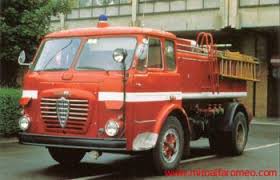
Guardando la cronologia dei camion Alfa Romeo non può non saltare all’occhio come la Casa del Portello sia stata, dopo la Fiat (e considerando per questa la continuità con l’Iveco), il più longevo costruttore italiano di veicoli industriali: il primo camion Alfa è del 1914, l’ultimo del 1988. Eppure, nonostante settantaquattro anni di produzione, il camion non è un veicolo che il pensiero collega automaticamente al marchio Alfa Romeo. E magari, pur ricordando qualche mezzo da lavoro con il marchio del Biscione, molti collegheranno il concetto di “camion Alfa” soltanto ai tanti veicoli leggeri e medio-leggeri che, dall’inizio degli anni Sessanta fino a metà degli Ottanta, hanno costituito la produzione camionistica della Casa.

Afa Romeo 950

Scoprire che, per un trentennio, l’Alfa ha prodotto camion veri e propri, omologati per il peso massimo concesso dal Codice dell’epoca e spinti da grandi motori diesel, sarà per molti una sorpresa.

Furgone Alfa

Looking at the history of the Alfa Romeo trucks, it can not fail to notice how ALFA was, after Fiat (and considering the continuity with Iveco), the longest-built Italian industrial vehicle manufacturer: the first Alfa truck Romeo is from 1914, the last of 1988. Yet, despite seventy-four years of production, the truck is not a vehicle that thought automatically links to the Alfa Romeo brand. And maybe, even if we remember some means of work with the Italian brand, many will link the concept of “Alfa truck” only to the many light and medium-light vehicles that, from the early sixties to the mid-eighties, formed the production House truck.

Camion Alfa

Discovering that, for thirty years, Alfa has produced real trucks, approved for the maximum weight granted by the Code of the time and driven by large diesel engines, will be a surprise for many.

Alfa Romeo

Presentato da Romano Pisciotti

Motor Parts Industry – IVECO Dealer

Lagos, Nigeria

italmotor@gmail.com

ITALMOTOR Ltd.

ITALMOTOR
IVECO Nigeria

THE TRUCKS AND THE HISTORY OF THE PEOPLES

THE TRUCKS AND THE HISTORY OF THE PEOPLES

Presented by Romano Pisciotti (www.rexfrog.com)

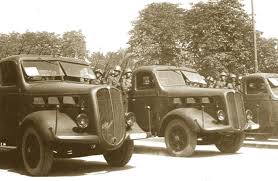
The Fiat 626 was an Italian medium truck that met specifications for the Italian army and air force for military operations prior to World War II. The Fiat 626 NLM operated in Italian North Africa (1940–1943), Italian East Africa (1940–1941), the Balkans (1940–1944), France (1940–1944), and Soviet Union(1941-1943/44).

In 1939, the 626 was the first FIAT truck with the advanced cabin and it replaced the models 621 and 633.

The initial version of the 626 for civilian use was the 626N (“N” for Nafta, the Italian for diesel). This was followed by a slightly longer wheelbase version the 626NL (from Nafta Lungo – “diesel long”). The military version for the Italian Army and the Italian Air Force was the 626NLM (for Nafta Lungo Militare)

A reliable workhorse, the FIAT 626 became the standard Italian medium truck and operated on all fronts.

France ordered 1,650 trucks; 700 had been delivered by the time Italy declared war on June 10, 1940. After the Italian armistice with the Allies in September 1943, the FIAT 626 was used by German forces. By 31 January 1945 3,000 had been produced for German use. In 1941, 100 trucks were purchased by the Bulgarian army after Bulgaria became an ally of Germany and Italy. The Bulgarian Army still used the vehicles in 1944-1945, after the country signed an armistice with the Allies’ and participated in the war against Germany.

Production finished in 1948, after 10,000 Fiat 626 had been produced at FIAT’s Turin assembly lines.


IVECO INFO: www.rexfrog.com