Chinese honey

The false Chinese honey invades the world

but nobody says anything


Chinese honey is not true honey: it is made from rice syrup or sugar, or is industrially treated, a practice prohibited by law in Europe.

From 2010 to today, global net demand for honey has grown, on average, around 20 thousand tons per year. The growing world population, but also the preferences of consumers, more and more interested in natural and healthy foods, have determined the success of bee nectar. Too bad that products on the market, like Chinese honey, are destroying their genuineness.


Reported by Romano Pisciotti

Agenzia delle Entrate

Copio da un amico……troppo bella!

Un Funzionario dell’Agenzia delle Entrate si reca presso una Sinagoga per fare un controllo fiscale sui conti e sui registri della stessa.
Alla fine del controllo, trovando tutto perfettamente in regola, pensa tra sé che non può tornare in Ufficio a mani vuote e senza aver trovato la benché minima irregolarità.
Allora chiede al contabile della Sinagoga: so che voi utilizzate parecchie candele durante le vostre cerimonie, come smaltite la cera che rimane?
Il contabile risponde:
Vede, noi raccogliamo tutta la cera in queste apposite casse e poi la spediamo all’industria della cera, che ricicla quanto rimasto e ci rispedisce delle nuove candele, come ben può vedere dalle bolle di accompagnamento emesse e dalle bolle di spedizione dell’industria.
Il Funzionario, non contento, chiede di nuovo:
“Io sono a conoscenza che, sempre durante le vostre cerimonie, voi utilizzate del pane.
Come smaltite le briciole di pane che rimangono?
Il contabile risponde:
Anche qui agiamo in perfetta regolarità, infatti raccogliamo tutte le briciole in queste casse che poi, accompagnate da regolare bolla di accompagnamento, mandiamo a un panificio che ci restituisce del pane intero che riutilizziamo.
Al Funzionario viene allora una brillante idea e chiede:
e quando fate la circoncisione, come riciclate la pelle che tagliate ai vostri adepti?
Il contabile risponde:
Vede Funzionario, noi la mettiamo in queste casse, la mandiamo, con regolare bolla, alla Agenzia delle Entrate e loro, ogni tanto ci mandano una testa di cazzo!

Romano Pisciotti: Copio da un amico……troppo bella!


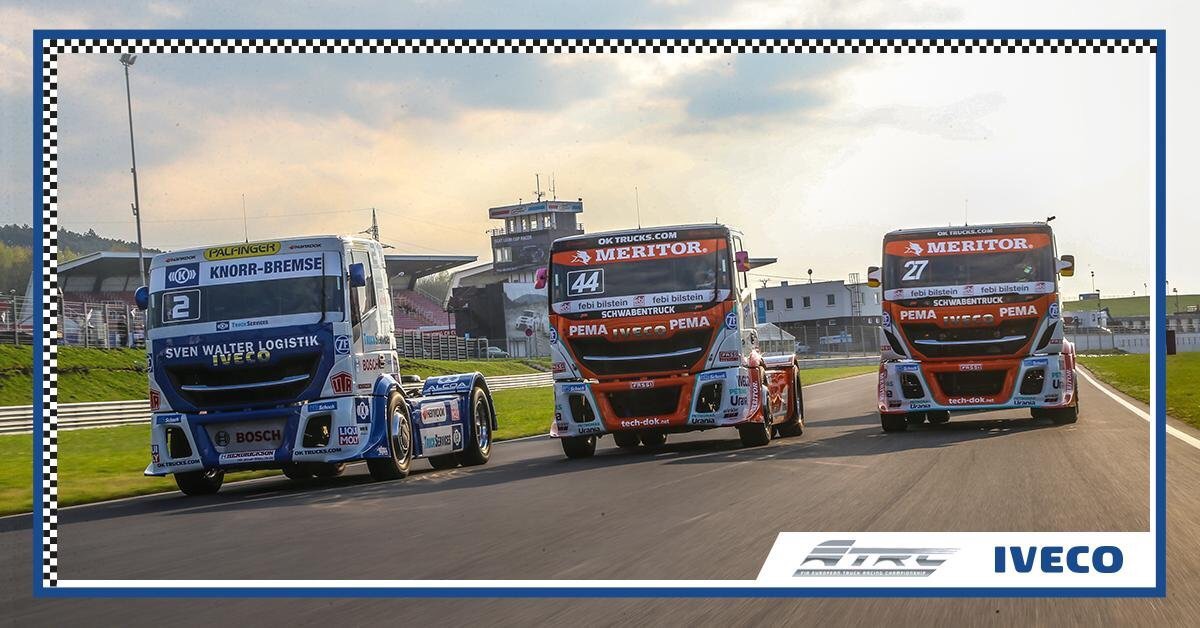
IVECO Parade ( MPI Nigeria)

Info IVECO Nigeria – Romano Pisciotti: italmotor@gmail.com

IVECO

A a major player in the global transport world, Iveco is an international leader in the development, manufacture, marketing and servicing of a vast range of light, medium and heavy commercial vehicles.

It also manufactures passenger transport vehicles and special vehicles for defence, civil protection and specific missions like fire-fighting. The vehicles adopt the latest engineering technologies, applied to a comprehensive range of engines running on diesel and alternative fuels.


Since the very first dump truck, ASTRA has designed, produced, promoted and sold thousands of specialized vehicles to suit customers demands and applications all around the world.

Unique technical features give ASTRA trucks the durability & strength to operate in the extremely harsh conditions of Mining and Quarry operations, offering a high reliability, simple maintenance & maximum profitability.

MPI (Motor Parts Industry) is official IVECO dealer in Nigeria and can supply any vehicle made by IVECOand ASTRA.

MPI is the largest stockist of original IVECO spare parts in Nigeria and has a fully equipped workshop where all IVECO vehicles can be repaired.

MPI (Nigeria-Lagos)

Our workshop is equipped with a comprehensive range of machines and IVECO special tools. We also have the latest diagnostic equipment constantly updated thanks to a direct link to IVECO’s technical department.

MPI

In our workshop we can carry out any type of repair job:

  • Complete overhaul of the main mechanical components (engine, gearbox, differential)
  • Rebuilding of complete cabins
  • Extensive refurbishing of complete vehicles

Training courses for drivers and mechanics can be organised on request.


Xway IVECO

Romano Pisciotti: italmotor@gmail.com


Il ponte e la trasparenza

Si è svolta oggi alle 13.30, presso la Sala della Trasparenza di Regione Liguria (Piazza De Ferrari, 1 a Genova) la conferenza stampa in cui è stato annunciato l’ammontare dei fondi raccolti in occasione della partita Spezia–Sampdoria del 9 settembre scorso, fondi che andranno alle famiglie colpite dalla tragedia di Ponte Morandi.


“Spero che non a caso si sia scelta la Sala della Trasparenza…ne abbiamo bisogno!!!

Toti ringrazia e parla di risposte alla città, bene, speriamo che arrivi anche la risposta che tutta Italia aspetta: una bella sentenza che inchiodi la Società Autostrade alle sue responsabilità….!!!!!”

(Romano Pisciotti)

……è stato proprio il Presidente della Regione Toti a prendere per primo la parola: “Ringrazio lo Spezia Calcio e l’U.C. Sampdoria per aver collaborato nell’organizzazione di un evento che ha consentito di raccogliere una cifra davvero importante, dando vita ad un bellissimo gesto di vicinanza nei confronti della città di Genova e della sua popolazione. Tutto il mondo sportivo ha dimostrato grande solidarietà, le iniziative sono state numerose, come testimonia anche la presenza della Nazionale che domani sera affronterà al “Ferraris” l’Ucraina. Non dimentichiamo poi il gesto del Presidente Onorario dello Spezia Calcio, Gabriele Volpi, che ha dato vita ad una donazione davvero considerevole ed a cui va il ringraziamento delle istituzioni e di tutto il popolo genovese. 

L’attenzione deve però rimanere accesa, c’è ancora tanto da fare, servono risposte rapide alle esigenze di una città intera ed i fondi raccolti devono essere utilizzati nel migliore dei modi“.


https://www.acspezia.com/news/conferenza-stampa-sui-fondi-raccolti-in-occasione-di-spezia-samp.18982.html

Most valued nation brand in Africa

South Africa is still Africa’s most valued nation brand, but Nigeria is catching up fast.

Africa features six of the world’s ten fastest-growing nation brands, which includes the Democratic Republic of the Congo, Egypt, Kenya, Tanzania, Ethiopia, and Ghana.

NIGERIA IN SHORT:

Nigeria is a middle-income, mixed economy and emerging market, with expanding manufacturing, financial, service, communications, technology and entertainment sectors. It is ranked as the 30th-largest economy in the world in terms of nominal GDP, and the 23rd-largest in terms of purchasing power parity.

Oil industry and mining

The basis of the Nigerian economy is the oil industry. At present, the oil industry is the foundation of the economy. Nigeria is the 1st in Africa and the world’s 8th exporter of oil. Oil provides more than 90% of the country’s export earnings. Today the daily oil production is 1.59 – 1.65 million barrels a day. Now the quota of Nigeria in OPEC is 1.8 million b/d. 65% of the produced oil is light grades with low sulfur content.
In Nigeria, coal, tin, cassiterite, and columbite are also mined. Extraction of cassiterite and concomitant columbite mineral (niobium ore) is produced by an open method. After the tin-smelting plant commissioning in 1962, most of the tin is exported as ingots. Following 1960, because of the railroad turning to diesel fuel and the appearance of cheaper and more environmentally friendly oil products, coal mining began to curtail.
Agriculture

In agriculture Nigeria employs 65% of the population. The main food crops are yams, sweet potatoes, and corn. Many lands are irrigated. Cacao beans (340 million tons), natural rubber (112 million tons), and cotton (0.4 million tons) are also grown. 31.29% of the land is cultivated.

Romano Pisciotti: working for Great Nigeria

THE ROME BUSINESS SCHOOL NIGERIA

Are you ready to take a seat on the management floors?

Strategy: Is this the right strategy to make your products known?

Rome Business School prides itself for its presence and relevance in over 140 countries; Nigeria inclusive. Majority of its courses; strategically designed with reference to globally accepted standards.

The idea of Rome Business School Nigeria is to tailor these global standards to a more unique grassroots-concentrated business environment (Nigeria).


“Follow my Strategic Marketing lessons”

Romano Pisciotti

nigeria@romebusinessschool.it

Romano Pisciotti

italmotor@gmail.com       (Romano Pisciotti)

http://romebusinessschool.it/en/rome-business-school-nigeria/

WE WILL ALL BE NIGERIANS

THE WORLD IN 2100 We will all be Nigerians
There is Africa in our past.

A hundred thousand years ago, humanity started from the highlands of the black continent to colonize the world… And there is Africa in our future.
Within this century, the bulk of the men and women who inhabit the planet will be native to Africa.

An extraterrestrial who, in 2100, did a hit-and-run visit to our planet and would describe us briefly would report that, for the most part, our grandchildren and great-grandchildren have black skin and frizzy hair. At least four out of ten people who would meet would be African. Much more than Chinese and Indian. And the Europeans? Well, the extraterrestrial should have luck to find them. Virtually invisible, a small minority: one in ten.
The population of the Earth is growing, in fact, a bit slower than in recent decades, but will continue to grow, especially in Africa.

Lagos, Kinshasa, Addis Ababa, Dar es Salaam These are the metropolises-boom of the next decades.
The countries destined to a faster population growth are: Nigeria, Congo, Ethiopia, Tanzania, Niger.

The Africa that it has today, scattered among savannahs, deserted forests, little more than a billion inhabitants, will have, predicts the United Nations, more than double (2.4 billion) in 2050 and four times as much (4.2 billion) at the end of the century. More than China and India combined.


…article selected by Romano Pisciotti