More and more teenagers living in a room, and they have no contact with the outside world, with the exception of the network.
Age is the critical age, adolescence. Which very often walks side by side with the rejection of conventions, hatred for the adult world, the rejection of growth. Facing the border between the age of responsibility and childhood, there are no longer just a few boys who refuse to move even one step. And not being able to go back – it’s life, it works like this – they choose a small private universe, a bedroom, four walls. That is the only world they are willing to accept.
It is a fact: the Internet is a wonderful place to go. A magical place, where everyone can create a life in life. An existence like those that we cannot have, molded on our dreams, on our realities. Hence the isolation is born. They are not crippling diseases, allergies, physical impediments to closing hikikomori teenagers in their rooms. They are the house arrest of a life that does not include them. That does not include these guys, so much that they push them to give up everything. A hug, a breath of air, a landscape.
Me cago en el amor (in Italia nota come È un mondo difficile) è un brano musicale del cantautore spagnolo Antonio de la Cuesta, meglio noto come Tonino Carotone.
Primo brano con il quale si è fatto conoscere ed ha ottenuto successo proprio in Italia. Nonostante si usi spesso una parte ricorrente del brano, per l’esattezza la prima, per descrivere il malessere della società attuale, questa canzone parla d’amore.
Io vivo in Nigeria e sono sicuro che nessun Nigeriano, con 4.000 dollari in tasca, voglia lasciare definitivamente il proprio Paese.
Sino a qualche anno fa, i villaggi Nigeriani si autotassavano per mandare a studiare all’estero qualche giovane, con l’impegno di tornare e di dividere con il villaggio gli utili ricavati dal futuro lavoro d’ingegnere, medico, ecc…. Questi erano i veri migranti!!! Studenti che hanno frequentato anche le nostre Università, alcuni di loro hanno vinto borse di studio e, poi, hanno trovato lavoro in Italia o in patria.
Diversa è la storia dei clandestini provenienti dal Sub Sahara: per attraversare il deserto, nel tentativo di raggiungere la Libia, occorrono mezzi e organizzazione di tutto rispetto, oltre che la compiacenza di qualche funzionario corrotto; organizzazioni del malaffare possono mettere a disposizione tutto l’occorrente.
Forse, sino a pochi anni fa, qualche giovane poteva essere incantato dal miraggio europeo, da qualche tempo le televisioni dei paesi Africani scoraggiano questo tipo d’avventura e proponendo le immagini delle difficoltà dei viaggi clandestini già trasmesse dai media europei, naufragi e morti inclusi.
Se nessun sano di mente affronta più questi viaggi che non hanno nulla a che vedere con guerre e rivoluzioni, rimangono solo due categorie di clandestini: i forzati e i soldati…della mafia; famiglie ricattate dai trafficanti d’uomini o giovani già affiliati a qualche clan malavitoso. Tenere aperta l’autostrada del mare, è sempre e comunque, favorire questo traffico illegale, se non addirittura vergognoso! Senza una via si limitano o s’interrompono i viaggi clandestini.
La mafia ha bisogno di confini aperti e di governi tolleranti per potersi espandere come un cancro. La mafia è disposta a venire a patti con tutti, quando addirittura non sono gli Stati o varie organizzazioni private, che per scopi politici o di lucro, si alleano con essa.
Le “pressioni migratorie” servono alla malavita per ogni tipo di nefandezza: prostituzione, spaccio, manodopera a basso costo e persino traffico di organi; servono all’incontrollato sistema “liberalista” per creare un futuro mercato unico di masse globalizzate; servono alla fantafinanza e alla politica, per creare occasioni di tensione e scontro; sembrano servire alla Chiesa, per affermare un ruolo; servono ai Governi africani, interessati al motto “aiutiamoli a casa loro!”
La contrapposizione “buonisti” e “sovranisti” alimenta voti per entrambe gli schieramenti, essendo diventato il nuovo tema delle battaglie elettorali; qualcuno spera anche in facili cittadinanze per crearsi un futuro serbatoio di voti.
Ingenui buonisti o bastardi in malafede, raccolgono soldi per oliare questo “sistema” assurdo e si acclamano azioni illegali per attaccare leggi e Governi. Si potrebbe affermare che, se un tempo, la guerra era l’estensione della diplomazia, oggi, il sostegno all’immigrazione incontrollata, è la nuova arma estrema di ricatto anche tra Stati: una guerra non combattuta che crea vittime, falsi eroi… fatturati.
Ultima cosa: con 3.000 dollari in tasca e un biglietto aereo pagato (…all’incirca il costo di ogni singolo viaggio sostenuto dai trafficanti), un Nigeriano può ottenere un visto regolare, ma a quel punto diventerebbe rintracciabile e rispendibile al mittente… questo alla mafia, nostrana o nigeriana, non piace!
Se l’immissione di giovani, realmente, servisse ai paesi che stanno invecchiando o alle aziende bisognose di manodopera (…da rispettare e pagare), non mancherebbero i modi per favorire l’immigrazione regolare; non mancherebbero i modi per l’integrazione di persone che dimostrino la volontà d’integrarsi. Ora, i clandestini sembrano le armi di nuove guerre o per la destabilizzazione di equilibri secolari.
L’Italia è stata nazione di emigranti, forse qualche mela marcia l’abbiamo esportata anche noi…nulla a confronto di milioni di persone che hanno pagato un regolare biglietto, hanno sgobbato e si sono integrate (rispettando le leggi) in Europa e nel resto del mondo.
I paesi africani hanno bisogno di cultura, investimenti e tecnologia… quelli più poveri hanno bisogno di acqua e farina, i veri sconfitti saranno, nuovamente, questi ultimi.
Quel 20 luglio, i nostri occhi, tutti i nostri sensi e sentimenti, erano sulla Luna: abbiamo viaggiato con la paura, il desiderio e la speranza.
Non abbiamo dimenticato la Luna, ma abbiamo lasciato sul satellite le emozioni, le passioni, la poesia e lo spirito d’avventura che aveva guidato l’uomo per millenni. Abbiamo viaggiato con l’anima, forse, per l’ultima volta.
L’Universo sembra non fare più paura, ne essere più poesia o scienza: i nostri desideri si sono spenti nella voglia di Nike o nell’ultimo modello di smart phone.
Abbiamo imparato a gestire le reazioni del corpo, per contrastare l’enorme spinta dei motori che ci hanno strappato al giogo della gravità terrestre, ma la nostra anima sembra essersi staccata da quel corpo: i veloci cambiamenti tecnologi, la fantafinanza e il globalismo sembrano aver vinto sui valori e speranze che su quel satellite ci avevano portato.
Abbiamo raggiunto la Luna come naviganti d’altri tempi, sapevamo che il rientro da quella missione, pur non trovando ne oro o nuovi frutti, avrebbe cambiato il mondo…e, oggi, è tutto diverso: i logaritmi ci hanno fatto sognare le stelle, ora gli algoritmi ci stanno portando alle stalle.
Romano Pisciotti ( luglio 2019)
That July 20, our eyes, all our senses and feelings, were on the Moon: we traveled with fear, desire and hope.
We have not forgotten the Moon, but we have left the emotions, passions, poetry and spirit of adventure that had guided man for millennia. We have traveled with the soul, perhaps, for the last time.
The Universe seems to no longer frighten us, nor be it more poetry or science: our desires are extinguished in the desire for Nike or in the latest model of smart phones.
We have learned to manage the reactions of the body, to counteract the enormous thrust of the engines that have torn us from the yoke of earth’s gravity, but our soul seems to have detached itself from that body: fast technological changes, fanciful finance and globalism seem to having won over the values and hopes they had brought us on that satellite.
We reached the Moon as sailors of the past, we knew that the return from that mission, even if we didn’t find any gold or new fruits, would change the world … and, today, everything is different: the logarithms made us dream about the stars , now the algorithms are taking us to the stables.
On fire…
No one had tears for the social rights burnt in globalization, nobody murmurs a prayer for human values trampled and mocked; no one has anger for the Europe of fanciful finance, for false progress and the cancer of poverty that has returned to bite even in Europe. Perhaps a church can be rebuilt, the dignity not, in a Europe that suffocates Justice in the name of an inconsistent and non-existent “unity”.
Thus I find no tears for art if it is no longer the pride of the people; I find no tears for the sacred lands turned into a fair by merchants ready to sell the soul to ignorant buyers of the ephemeral.
The churches burn … while the future and the hopes of the people go up in smoke.
We have already betrayed history, lost wisdom and culture.
A fire is not the sign of God or the revenge of anyone … it is only the image of the fragility of beautiful things and a warning to take care of our future ….. maybe we are still in time!
The whole process is based on the so-called risk perception, since there can not be prevention without perception. Unfortunately, the limits of human nature in this regard are well known. Although variable from person to person, it is well known that the perception of the risk of the individual is high only in cases where it has already personally experienced the emergence of the consequences of a risk.
As strange as it may seem, the common attitude is to underestimate the possibility that something that has already gone wrong in the past may have happened to us too. This is well demonstrated by statistical studies that show how the most common and ruinous causes of design disasters are always the same, to demonstrate how project managers and designers tend not to learn from mistakes made by others in the past even in projects very similar to their own.
RISK
In general, numerous researches show that the tendency is not to think adequately about possible problems and to protect themselves accordingly, unless they are evidence that is really difficult to ignore.
TITANIC
Given the correspondence between uncertainty and risk, the project manager will simply have to assume that his project will run into risks.
At the beginning of the twentieth century, Italy is a rapidly changing agricultural country under the pressure of the second industrial revolution. The first establishments of the modern era were born in Milan and Turin, many of which were dedicated to the nascent automotive sector. The production is still modest and in the city streets are still the animal-powered carriages to ensure mobility. This is how the “Carradore” workshops were born, which repair and build carriages to move around the city. Like the one inaugurated in 1912 by a young man who arrived under the Mole from the province of Cuneo in search of fortune, it was Giovanni Bertone, who was busy repairing carts.
Nuccio Bertone, son of Giovanni, was born on July 4th 1914
In 1918 Giovanni opened a new office in via Monginevro 119, hired 20 workers and decided to focus on the sector that considers the future: the automobile. The first important order arrives early: build a torpedo on 23 S mechanics, a sports model of the SPA (Società Piemontese Automobili) of Matteo Cerano and Michele Ansaldi. The work is carried out with care and passion and attracts an order for a high-performance model, the Fiat 501 Sport Siluro Corsa.
Fiat 501 SportLancia Lambda
Followed by agreements with other small companies, such as Fast, Chiribiri, Aurea, SCAT and Itala, and soon contacts with the two brands are becoming more and more important: Fiat and Lancia.
More and more appreciated models are coming that allow Bertone to come out unscathed from the Great Depression and to expand acquiring the new factory of Corso Peschiera.
After the war events of World War II, Giovanni, now 61 years old, gradually left the reins of the company to his son Nuccio, just forty years old but already for twenty years in the Bertone world. Its imprint does not wait and within a few years come out some specimens that mark the new stylistic trends of the next decade, such as the Lancia Aprilia Cabriolet and two fascinating variants of the Fiat 1100 made with Vittorio Stanguellini, a racy coupé and a discovery from competition.
Lancia Aprilia Cabriolet
In the Fifties,
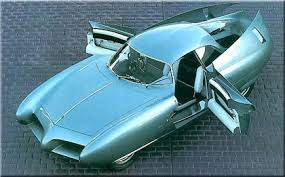
1954 Alfa Romeo BAT 7BAT 7
Italy finds new vitality singing the songs of the newborn Festival di Sanremo and enthusiastically following the challenges with pedal strokes between Coppi and Bartali. The liberated Europe becomes a great market and the first foreign orders arrive at Bertone. In 1952 those of MG and Bristol, in 1957 is the turn of the NSU, a German brand that entrusts Bertone with the production of Prinz Sport, a small two-cylinder “dressed” with grace by Franco Scaglione, recently at the court of Nuccio. An increase in work that leads the management to think of a larger plant to house the new plants and the employees, which have now reached 550. The building will be ready in 1959 in Grugliasco, just outside Turin. To mark the decade, however, is the collaboration with Alfa Romeo. The first approach is in 1953, when Nuccio entrusted Scaglione with the design of the Giulietta Sprint prototype, a model for which a production limited to 1000 units is planned.
Alfa Romeo Giulietta Spider
The Sixties are the period of the “Dolce Vita”, of the widespread wellbeing, of the mass motorization that runs on the new Autostrada del Sole and crosses the Alps from the newly inaugurated Mont Blanc Tunnel. And they are the years of maximum lightning of Italian touring, the “GT”. A sector that the whole world envies us and that Nuccio and his designers contribute to make famous. From this period some extraordinary models like the Alfa Romeo 2600 Sprint,
Alfa Romeo Sprint
in coupe and cabriolet version, two Ferrari 250 GT, one called Wax from the name of the client and the other used by Nuccio himself, the Aston Martin DB4 GT “Jet “and the Maserati 5000 GT.
Aston Martin DB4 GT jet
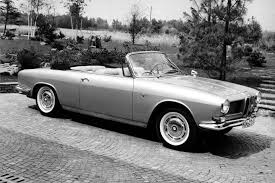
There are also many prototypes to remember, such as the Chevrolet Corvair Testudo, a concept destined not to have an industrial following and which Nuccio personally guides up to the 1963 Geneva Motor Show, or the 1964 Alfa Romeo Canguro made on the basis of Giulia TZ and Giulia GT in 1965. Without forgetting the “Ferrarina”, the ASA 1000 born from a project by Enzo Ferrari that will never land on the market despite the great interest that aroused. Industrial plans are also going well. From abroad the requests of BMW arrive to realize the 3200 CS
BMW 3200 CS
and Simca for the 1000 Coupé. From Fiat those for a small discovery based on the 850.
ASA 1000 Ferrarina
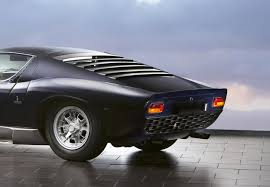
The seventies are still beginning in the name of Taurus with Jarama and Urraco (Lamborghini). But to shake the engine enthusiasts is a futuristic concept created by Gandini on the basis of the Lancia Fulvia HF, the Stratos Zero. A specimen that appears at the Turin Motor Show in 1970 arousing great fanfare and that will have a great competitive future with its road evolution, the Lancia Stratos HF.
Lancia Stratos ZeroLancia Stratos
The years of industrial consolidation begin. 1500 employees work at the Grugliasco plant and production is more intense than ever.
FIAT X1/9
Merit of the Fiat X1 / 9, small sport signed by the usual Gandini replacing the 850 Spider surpassing it in units produced: 160,000 from 1972 to 1988. And the new agreement with Volvo for the production of the 264 TE limousine and the refined coupé 262 C. Model exhibited for the first time at the Geneva Motor Show and for which Bertone is responsible for the entire production cycle, from the assembly of the raw body to the assembly of mechanical parts and the related road tests.
Volvo 262 C
The eighties / nineties are a decade of events that will change the course of history, from the explosion of the nuclear reactor at Chernobyl, from the discovery of the ozone hole over the Antardite to the fall of the Berlin Wall. In tale trambusto la Bertone prosegue la strada del rafforzamento industriale e finanziario rinunciando in parte alla realizzazione di concept spettacolari per concentrarsi nella produzione. D’altronde gli impegni sono sempre più severi. Dall’inizio del decennio la Bertone vende direttamente con il proprio marchio la Ritmo Cabrio e la X1/9.
Sono di questi anni pure gli accordi con Citroën e General Motors. Per la casa francese segue lo stile di due importanti modelli, la BX e l’ammiraglia XM. Con la filiale europea del colosso di Detroit Nuccio sigla nel 1987 un accordo commerciale per la produzione della Kadett Cabrio, seguita poi dall’Astra Cabrio e, negli anni seguenti, dalle versioni Coupé e Cabriolet della compatta Opel.
CITROEN XM
The last decade of the millennium opens with the commitment of Carrozzeria Bertone for the development of innovative technologies.
1994 Bertone ZER (Zero Emission Record)ZER
Eco-compatible expedients that Bertone puts into practice with another prototype with excellent aerodynamics (CX of 0.11): the ZER, acronym of Zero Emission Record.
Porsche Karisma Bertone
In this period there are plenty of style car shows like the Karisma of 1994, a strange sedan made on a Porsche basis, or the 1995 Kayak, a sleek coupe with the Lancia brand that some have defined the 2000 Aurelia B20.
Lancia Kayak
An unusual coupé-wagon based on Calibra, which was exhibited in Geneva in 1996, the Slalom, and the less enthusiastic sport utility derived from the Fiat Brava platform. On the production front, Bertone obtains, first in Italy in the automotive sector, the ISO 9001 quality certification of its Grugliasco plants. Where the top models are the cabriolets built on Opel Astra and Fiat Punto. To make it more sad the decade is the disappearance of Nuccio Bertone on February 26, 1997, a few days before the Geneva Motor Show where an unlikely Suv Alfa Romeo is exhibited.
Nuccio Bertone
The novel centenary of the Bertone family has entered by law in the history of Italy with the decree of the Ministry for Cultural Heritage and Activities which attributes to the Bertone Collection of historic cars held in Caprie (TO) the recognition of “national artistic heritage”.
I Lloyd’s, insieme alla società di modellazione RMS, hanno pubblicato un rapporto – intitolato “Counterfactual Disaster Risk Analysis: Reimagining history” – che descrive come una tipologia di pensiero laterale, chiamato counterfactual (controfattuale, ipotetico), possa essere applicato per contribuire all’analisi dei rischi da parte degli assicuratori.
“E se una tempesta solare avesse colpito Londra durante le olimpiadi del 2012? E se il vento avesse portato la contaminazione radioattiva verso l’interno quando gli impianti nucleari di Fukushima sono stati colpiti dallo tsunami nel 2011? E se l’Africa orientale fosse rimasta coinvolta in una guerra civile durante la crisi dell’Ebola nel 2014?”.
Eventi globali cruciali come questi – chiariscono dai Lloyd’s – avrebbero potuto svolgersi in modo molto diverso se le cose fossero accadute anche in modo lievemente differente. Il peggior disastro nella storia dell’aviazione, ad esempio, è stato evitato per poco lo scorso luglio quando un pilota di un aereo passeggeri che stava atterrando all’aeroporto di San Francisco è risalito all’ultimo secondo.
Il rapporto Lloyd’s – RMS parla di come l’analisi controfattuale di esiti peggiori – in altre parole considerare come eventi storicamente evitati per poco avrebbero potuto dar origine a disastri di grave entità – può essere svolta in pratica e divenire un punto di partenza per una futura ricerca riguardante eventi controfattuali e le loro caratteristiche.
Secondo i Lloyd’s il pensiero controfattuale produce una serie di benefici per gli assicuratori: “Il fatto che eventi controfattuali siano ancorati ad esperienze storiche reali – ha spiegato Trevor Maynard, Head of Innovation ai Lloyd’s – aiutano a rendere più semplici spiegazioni complesse, facilitano comprensioni più approfondite e rendono la comunicazione più coerente per i rischi futuri e la modellazione dell’incertezza per i consigli di amministrazione, i contraenti, gli assicuratori, i risk managers ed altre figure coinvolte”.
“Gli assicuratori – ha affermato Gordon Woo, Catastrophist presso RMS, ha aggiunto –trarranno beneficio dal poter esaminare il passato anche solo per realizzare ciò che sarebbe potuto accadere. Qualsiasi sia il passato, la comprensione dei rischi si origina dalla possibilità di esplorare come le cose avrebbero potuto voltare al peggio. Adottando una prospettiva controfattuale ed esplorando come gli eventi nella storia avrebbero potuto svolgersi differentemente, è possibile avere approfondimenti rispetto a perdite estreme rare che altrimenti potrebbero arrivare come una sorpresa”.
“L’analisi del rischio controfattuale – ha aggiunto Woo, riferendosi alla modellazione dei rischi – aiuta a evitare i pregiudizi che possono far parte di alcuni modelli basati sugli stessi gruppi di dati storici. Se si espandono i dati a disposizione includendo ciò che sarebbe potuto accadere, questi modelli possono essere costruiti affidandosi meno su singole fonti di dati, andando così a migliorare la loro accuratezza. L’analisi è inoltre uno strumento utile per le autorità di supervisione al fine di testare i modelli di rischio catastrofali”.
“Il rapporto descrive come applicare il pensiero controfattuale sistematicamente – ha concluso Maynard –. Ai Lloyd’s sappiamo che viene già operata un’attenta gestione del rischio e questa nuova metodologia dovrebbe essere considerata come un utile complemento alla serie di strumenti già a disposizione di assicuratori e risk managers. Dopo un disastro gli analisti del rischio tendono a studiare con cura cosa è accaduto ma poca attenzione viene riservata a cosa sarebbe potuto accadere. Sicuramente questa attività è tecnicamente più impegnativa ma noi riteniamo che gli assicuratori trarranno benefici dalla valutazione sistematica dall’analisi controfattuale”.
Intermedia Channel
BY GOOGLE TRANSLETOR:
Lloyd’s, together with the modeling firm RMS, have published a report – entitled “Counterfactual Disaster Risk Analysis: Reimagining History” – which describes how a type of lateral thinking, called counterfactual (counterfactual, hypothetical), can be applied to contribute to risk analysis by insurers.
“What if a solar storm hit London during the 2012 Olympics? What if the wind brought inward radioactive contamination when Fukushima’s nuclear facilities were hit by the tsunami in 2011? What if East Africa was involved in a civil war during the Ebola crisis in 2014? “.
Crucial global events such as these – make it clear from Lloyd’s – could have taken place very differently if things happened even slightly differently. The worst disaster in aviation history, for example, was barely avoided last July when a pilot from a passenger plane that was landing at San Francisco airport climbed back to the last second.
The Lloyd’s – RMS report talks about how counterfactual analysis of worse outcomes – in other words, considering how events historically avoided could have caused serious disasters – can be carried out in practice and become a starting point for a future research concerning counterfactual events and their characteristics.
According to Lloyd’s counterfactual thinking produces a series of benefits for insurers: “The fact that counterfactual events are anchored to real historical experiences – said Trevor Maynard, Head of Innovation at Lloyd’s – help to simplify complex explanations, facilitate understandings more in-depth and make the communication more coherent for future risks and the modeling of uncertainty for the boards of directors, contractors, insurers, risk managers and other figures involved “.
“Insurers – said Gordon Woo, Catastrophist at RMS, he added – will benefit from being able to examine the past just to realize what could have happened. Whatever the past, the understanding of risks arises from the possibility of exploring how things could have turned to the worst. By adopting a counterfactual perspective and exploring how events in history could have unfolded differently, it is possible to have insights into extreme rare losses that might otherwise come as a surprise. ”
“The counterfactual risk analysis – added Woo, referring to risk modeling – helps to avoid the prejudices that may be part of some models based on the same historical data sets. If you expand the data available to include what could have happened, these models can be built by relying less on individual data sources, thus improving their accuracy. The analysis is also a useful tool for supervisory authorities in order to test catastrophe risk models “.
“The report describes how to apply counterfactual thinking systematically – concluded Maynard -. At Lloyd’s we know that careful risk management is already under way and this new methodology should be considered as a useful complement to the series of instruments already available to insurers and risk managers. After a disaster, risk analysts tend to study carefully what happened but little attention is given to what could have happened. Surely this activity is technically more demanding but we believe that insurers will benefit from the systematic evaluation of counterfactual analysis “.