Coronavirus disease (COVID-19)
NO PANIC
Romano Pisciotti
NO PANIC
Romano Pisciotti

OCIMF = Forum marittimo internazionale delle compagnie petrolifere
Durante il convegno dell’OCIMF l’idea che l’incidente sia stato valutato come l’errore di un singolo più che di un’intera organizzazione, non viene ritenuto compatibile con quanto realmente accaduto.
È stato inoltre osservato come, nel corso del procedimento portato avanti dalla giustizia italiana, siano state ignorate molte questioni tecniche che hanno caratterizzato la tragedia e che avrebbero potuto essere raffigurate e valutate correttamente, solo da persone esperte. Il fatto che in carcere ci sia solo il comandante e che il resto della plancia di comando abbia patteggiato pene irrisorie, – a quanto dichiarato nel convegno dell’OCIMF – lascia aperti molti interrogativi sull’equilibrio della sentenza che viene considerata dagli esperti, “un passo indietro nella cultura della sicurezza marittima”.
OCIMF = International maritime forum of oil companies
During the OCIMF conference, the idea that the accident was assessed as the error of an individual rather than an entire organization, is not considered compatible with what actually happened.
It was also observed that, in the course of the proceedings carried out by the Italian justice system, many technical issues that characterized the tragedy and that could have been correctly portrayed and evaluated, only by expert people, were ignored. The fact that there is only the commander in prison and that the rest of the bridge has negotiated derisory penalties, – as stated in the OCIMF conference – leaves many questions open about the balance of the sentence that is considered by experts, “a step back in the culture of maritime safety “.
from the web
Romano Pisciotti
dal web
Romano Pisciotti
La multinazionale fondata da Elon Musk ha iniziato la costruzione dell’impianto di Grünheide, nel Brandenburgo, a pochi chilometri da Berlino, che dovrebbe essere inaugurato nel 2021. I lavori stanno accumulando ritardi su ritardi a causa delle formiche!
A gennaio Tesla ha ricevuto il via libera dal governo tedesco per la costruzione dello stabilimento. Tra gli obblighi contratti dall’azienda americana c’è anche quello di preservare una particolare specie di formiche in via di estinzione. Secondo la Süddeutsche Zeitung, la casa automobilistica deve ora disotterrare e poi trasferire numerose colonie di formiche usando «pale e piccoli escavatori». Un lavoro che si sta dimostrando molto più complicato del previsto e che ha allungato inesorabilmente i tempi.
Notizie dal web
Romano Pisciotti
The Fiat 127 is a supermini car produced by Italian car manufacturer FIAT from 1971 to 1983. It was introduced in 1971 as the replacement for the Fiat 850. Production of the 127 in Italy ended in 1983 following the introduction of its replacement, the Fiat Uno.

Centro Storico FIAT:
… how could the new FIAT 127 be


Presentato da Romano Pisciotti
OPEC, which describes itself as a permanent intergovernmental organization, was created in Baghdad in Sept. 1960 by its founding members: Iran, Iraq, Kuwait, Saudi Arabia, and Venezuela. The headquarters of the organization are in Vienna, Austria, where the OPEC Secretariat, the executive organ, carries out OPEC’s day-to-day business.
According to its statutes, OPEC membership is open to any country that is a substantial exporter of oil and shares the ideals of the organization. After the five founding members, OPEC added 11 additional member countries as of 2019. They are, in order of joining, Qatar (1961), Indonesia (1962), Libya (1962), the United Arab Emirates (1967), Algeria (1969), Nigeria (1971), Ecuador (1973), Gabon (1975), Angola (2007), Equatorial Guinea (2017), and Congo (2018). However, Qatar terminated its membership on Jan. 1, 2019, and Indonesia suspended its membership on Nov. 30, 2016, so as of 2019 the organization consists of 14 states.
The group has agreed to define OPEC’s mission thusly: “to coordinate and unify the petroleum policies of its Member Countries and ensure the stabilization of oil markets in order to secure an efficient, economic, and regular supply of petroleum to consumers, a steady income to producers, and a fair return on capital for those investing in the petroleum industry.”
As a cartel, OPEC members have a strong incentive to keep oil prices as high as possible while maintaining their shares of the global market.
..It is notable that some of the world’s largest oil producers, including Russia, China, and the United States, are not members of OPEC, which leaves them free to pursue their own objectives….

OPEC’s influence on the market has been widely criticized. Because its member countries hold the vast majority of crude oil reserves (79.4%, according to the OPEC website), the organization has considerable power in these markets.
Presented by Romano Pisciotti
Il Comitato Centrale del Partito Comunista dell’Unione Sovietica arrivo a questa decisione dopo aver analizzato ben 54 differenti progetti. A vincere la sfida fu la Fiat che “conquistò” i russi, nella fattispecie l’allora segretario generale Nikita Cruschev, durante l’Esposizione Italiana del 1962 a Mosca. Erano gli anni del boom economico e della motorizzazione di massa dell’Italia ed il modello di produzione della Fiat parve la soluzione ideale agli occhi dei sovietici.

Il 15 agosto 1966 Urss e Fiat decisero che un paese sul Volga sarebbe diventato la Città dell’auto. Con il nome del leader del Pci.
Un sogno vecchio più di cinquant’anni se si prende per data ufficiale del “progetto Togliatti” il 15 agosto 1966 con la storica firma a Mosca dell’accordo tra il presidente (uscente) della Fiat, Vittorio Valletta, e i ministri dell’Industria automobilistica e del commercio estero dell’Urss.
Presentato da Romano Pisciotti

Regia:
Fabio Pellarin
Genere
documentario
Edizione:
italiano
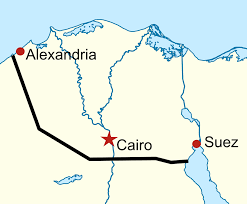
The Sumed pipeline is 320 kilometres (200 mi) long. It consists of two parallel lines of 42 inches (1,070 mm) diameter. Its capacity is 2.5 million barrels per day (400×103 m3/d).
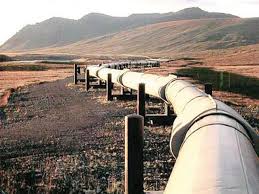
In 2009 it carried 1.1 million barrels per day (170×103 m3/d).
TODAY:
Arab Petroleum Pipeline Co. ( SUMED) has established a fully equipped product hub at their Ain Sukhna complex on the Red Sea Coast in Egypt. The hub includes both onshore and offshore facilities. The onshore facility comprises 61 product storage tanks with a total capacity of 2,125 million m³, and two 50 km long unidirectional pipelines to the city of Suez. The diameter of the individual product storage tanks varies from 21 to 59 m.

The offshore facility comprises a jetty and berths (500-160,000 DWT) including a topside pipeline and other auxiliaries. The hub includes an offshore single point mooring for very large crude carriers (VLCC), connected via a sea pipeline and marine hoses. The offshore facility is intended to accommodate future expansions to handle up to 24 million tonnes per annum of various products.
Presented by Romano Pisciotti
Romano Pisciotti
http://www.italmotor.tech/italmotor/alfa-romeo-2000-gtv/
Romano Pisciotti
http://www.italmotor.tech/sea-mare/galeazza/
Presented by Romano Pisciotti