Romano Pisciotti: marine hose expert

Irrespective of the hose application; you will feel overwhelmed by the options available in the market. While there are many grades and type of hose available; you need to pick the one which best serves your need. 

Marine hoses

Romano Pisciotti: marine hose expert
Consultant for technical choice of hose and accessories for SPM and FPSO

TEST and Handling

italmotor@gmail.com

Romano Pisciotti

The chain of command is not enough

The chain of command in a company refers to the different levels of command within the organization. It starts with the top position such as CEO or the business owner, all the way down to the front-line workers. Companies create a chain of command in order to flow instructions downward and accountability upward by providing each level of workers with a supervisor.

A quick view of how the chain of command should be used to effectively and efficiently work:

What facilitates implementation
of a command and control system on the intervention?
 Common knowledge of the “rules of the game” (ie procedures)
 Personal skills and “bosses” quality
 Personal skills and qualities of the Operators
 Trust between team members
 Dialogue between team members (sharing)

A SYSTEM CAN BE DEFINED
AS “A COMPLEX OF INTERACTING ELEMENTS”
INTERACTION MEANS THAT THE ELEMENTS ARE CONNECTED BY RELATIONSHIPS, SO THAT THE BEHAVIOR OF AN ELEMENT IS DIFFERENT FROM WHAT IT WOULD BE ITS BEHAVIOR IF IT WAS TO ACT BY ITSELF
IN OTHER WORDS: MAKE SYSTEM.

Romano Pisciotti

Romano Pisciotti

Who will cruise soon?

«The market data are encouraging: sector studies predict between 80 and 100 cruise ships in China by 2030. Numbers that would translate into an estimate of 20 million passengers per year.

«Today there are almost 400 cruise ships in the world, the sector is growing: shipowners have invested to build 100 new ships by 2027. Not to mention that every five years a ship is modernized. The ‘refits’ are impressive and can even cost 250 million, for example if it is necessary to enlarge the ship to cope with an increase in passengers. Today only 6% of world tourism chooses the cruise: an increase of only 1% would mean building 50 new ships “

«I dati del mercato sono incoraggianti: gli studi di settore prevedono per il 2030 tra le 80 e le 100 navi da crociera in Cina. Numeri che si tradurrebbero in una stima di 20 milioni di passeggeri all’anno.

«Oggi ci sono quasi 400 navi da crociera nel mondo, il settore è in crescita: gli armatori hanno investito per realizzare 100 nuove navi entro il 2027. Senza contare che ogni cinque anni una nave viene riammodernata. I ‘refit’ sono imponenti e arrivano a costare anche 250 milioni, ad esempio se è necessario ingrandire la nave per fare fronte a un incremento dei passeggeri. Oggi solo il 6% del turismo mondiale sceglie la crociera: un aumento anche solo dell’1% vorrebbe dire costruire 50 nuove navi».

…Then came COVID 19

…Poi venne il COVID 19

Il Coronavirus ha messo uno stop al ‘boom’ delle crociere

Coronavirus has put a stop to the cruise boom


Il settore stimava per quest’anno un vero e proprio ‘boom’ ma deve ora fronteggiare la pesante battuta d’arresto dovuta all’epidemia. Si attendevano 32 milioni di passeggeri e invece finora si conta il 50% di cancellazioni. 

The sector was forecasting a real boom for this year but is now facing a heavy setback due to the epidemic. 32 million passengers were expected and 50% of cancellations so far.


https://www.cdc.gov/mmwr/volumes/69/wr/mm6912e3.htm


Presentato da Romano Pisciotti

MARKET

“Market” is any area within which the meeting between supply and demand for goods and services takes place and the exchange of them through the price mechanism, determined precisely by this meeting: operators decide independently and individually their behavior, in particular, the prices and quantities of sales and purchases, such that the overall market performance, in terms of global prices and quantities, is the result of the countless decentralized decisions taken by the actors operating there and their interactions. The term “competition” can have two meanings and both presuppose the notion of market set out: one of them refers to the conduct of companies, the other to a particular structural conformation of the market. The first meaning is that which recalls rivalry, competition and struggle between companies, which implement independent behavior in order to increase their position on the market, to the detriment of rivals. The second, however, consists of the situation characterized by a large number of operators on the market, each of which offers such a small share of the same product or service that it is not able to individually influence the price level following a change in the quantity offered.

For the polysemy of the term “market” see, in particular, M.R. FERRARESE, Law and market, Turin, 1992, p. 17 ss., Which sorts the variety of meanings into four categories: a) market as place; b) market as ideology; c) market as a paradigm of social action; d) market as an institution.

Summarizes the characteristics of the market economy model: a) free market of production factors (raw materials, capital and labor); b) freedom of private economic initiative; c) organization of the private enterprise according to the principle of capital sovereignty; d) free play of competition; e) consumer sovereignty.


Romano Pisciotti browsing the web….about antitrust

INVESTMENT IN AFRICA AT THE TIME OF THE PANDEMIA

All economies have shown their fragility, it is very probable that globalization, as we have known it, will have to change … and perhaps this will not be completely negative. The investments of governments and entrepreneurs will make the difference in favouring the integration between local and global production.

In my opinion, as regards the transport sector, there may be a drop in container movements … I am referring to the gigantic container ships … but very little will change in national and local transport which today and tomorrow will be for decades on the road.

In Nigeria, the agricultural sector with all the related supply chain will continue to grow; although in small steps, the industrial sector will be forced to grow…. everyone will need to increase logistics and, consequently, transport will be at the service of each segment of the local economy.

One thing is certain: no pandemic, war or financial crisis has stopped the world … perhaps it has changed it, almost always for the better. Obviously it is not the spectators who benefit from the change, but the forward-looking entrepreneurs.

We know that Africa has undergone even dramatic upheavals, as we know that all African nations have increased their GDP, as we know that the economy of the USA, China and Europe can no longer disregard African economies and African consumers… there is no virus that can stop this, at worst it can only slow down temporarily … and this time must be spent studying new business change for the future.

Romano Pisciotti

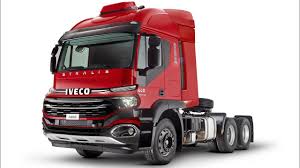
INVESTMENT OPPORTUNITIES IN THE INDUSTRIAL VEHICLES SECTOR (ASSEMBLY) … italmotor@gmail.com


Parmigiano Reggiano or Parmesan cheese

The Parmigiano Reggiano or Parmesan cheese as it is called in English is considered to be among the top cheeses by cheese connoisseurs.

Today, it is produced by various producers. However, PDO designation states that for a cheese to be called as Parmesan, it has to be produced from cows grazing on fresh grass and hay.

Cheeses mocking Parmigiano Reggiano are called as Parmesan or Italian hard cheese by producers to avoid legal issues. Parmigiano Reggiano cheese is named after the provinces in which it is made, namely Provinces of Parma, Reggio Emilia, Modena, Bologna and Mantua.

True Parmesan cheese has a hard, gritty texture and is fruity and nutty in taste. Cheeses mocking Parmesan or inferior Parmesan may have a bitter taste. Parmigiano Reggiano cheese is mostly grated over pastas, used in soups and risottos. It is also eaten on its own as a snack.


Romano Pisciotti: LIKE

Edible packaging – Packaging edibile


The use of edible material to coat food products, which in a certain way take up the function of natural wraps, is increasingly a market requirement.

L’impiego di materiale edibile per rivestire prodotti alimentari, che in un certo modo riprendano la funzione degli involucri naturali, è sempre più un’esigenza del mercato.

Libera traduzione – Free translation by Romano Pisciotti

The global market for technologies aimed at improving food packaging is continuously growing: according to the report published in September by Markets & Markets, the compound annual growth rate, estimated at 6.1%, would project the total value towards a total of 46 billion dollars ( approximately 43 billion euros) by 2019. The importance of packaging for food, in fact, is no longer confined to its use as a marketing tool: the application of new methodologies has extended its functionality to meet the increased needs of consumers in terms of health and safety and to industry demands, for which the extension of the shelf-life of products has become a key factor in competing in an increasingly globalized market. National and European regulations are also becoming more restrictive, both in terms of safety and environmental sustainability. In this context, research and development projects have multiplied, also supported by numerous European calls for proposals, aimed at developing increasingly effective, economic, safe and sustainable solutions. Among the various possibilities identified, a particularly promising trend seems to be that of edible packaging which, due to its characteristics, meets many of these needs simultaneously. It is a question of using edible material to coat food products by tracing the model of natural wraps (such as fruit peels or cheese rind). The advantages of this solution are numerous: these are biodegradable materials that can also be consumed together with the product and that allow to reduce the environmental impact by replacing all, or in part, the synthetic packaging (in particular plastics). Furthermore, edible packaging can contain additives to extend the shelf-life of the product (for example antimicrobials) or improve its nutritional or sensorial qualities (flavoring or coloring) or to increase the mechanical or permeability characteristics of the material itself. Finally, edible films can also be easily used to package small portions or as separators of the various components of the product. For their realization, high molecular weight polymers are generally used applied to foods by dipping, spraying or by jam: these are substances such as cellulose, starch, pectins, gluten, egg-albumin, casein, or proteins derived from fish, milk or soy. To these are added plasticizing agents (glycerol, sorbitol, fatty acids, monoglycerides), solvents (water or ethanol solutions) and various preservative and flavoring additives. The chemical-physical properties of the materials and their edibility and biodegradability characteristics naturally depend on the composition: polysaccharides, for example, have good film-forming properties and high permeability to water and fats while proteins confer modest water barrier properties but at the same time they slow down the passage of oxygen and add excellent mechanical properties (elasticity and structure). In any case, the starting characteristics can be improved with the addition of specific additives: lipids or other hydrophobic substances (insoluble proteins, resins and waxes) can, for example, increase the waterproofing of the material.

Il mercato globale delle tecnologie rivolte al miglioramento del packaging alimentare è in continua crescita: secondo il report pubblicato a settembre dalla Markets&Markets il tasso di crescita annuo composto, stimabile al 6.1%, ne proietterebbe il valore complessivo verso un totale di 46 miliardi di dollari (circa 43 miliardi di euro) entro il 2019. L’importanza del confezionamento per alimenti, in effetti, non è più confinata al suo utilizzo come strumento di marketing: l’applicazione di nuove metodologie ne ha esteso le funzionalità venendo incontro alle accresciute esigenze dei consumatori in termini di salute e sicurezza e alle richieste dell’industria, per la quale l’estensione della shelf-life dei prodotti è diventata un fattore chiave per competere in un mercato sempre più globalizzato. Anche le regolamentazioni nazionali ed europee si fanno via via più restrittive, sia in termini di sicurezza che di sostenibilità ambientale. In questo contesto si sono moltiplicati i progetti di ricerca e sviluppo, supportati anche da numerosi bandi europei, mirati allo sviluppo di soluzioni sempre più efficaci, economiche, sicure e sostenibili. Tra le diverse possibilità individuate, un filone particolarmente promettente sembra essere quello del packaging edibile che, per le sue caratteristiche, viene incontro contemporaneamente a molte di queste esigenze. Si tratta di utilizzare materiale commestibile per rivestire prodotti alimentari ricalcando il modello degli involucri naturali (come le bucce dei frutti o la crosta dei formaggi). I vantaggi di questa soluzione sono numerosi: si tratta di materiali biodegradabili che possono anche essere consumati assieme al prodotto e che permettono di ridurre l’impatto ambientale sostituendo tutti, o in parte, gli imballaggi sintetici (in particolare le plastiche). Le confezioni edibili, inoltre, possono contenere additivi per estendere la shelf-life del prodotto (ad esempio antimicrobici) o migliorarne le qualità nutrizionali o sensoriali (aromatizzanti o coloranti) o ancora per accrescere le caratteristiche meccaniche o di permeabilità del materiale stesso. I film commestibili, infine, possono essere facilmente utilizzati anche per confezionare porzioni ridotte o come separatori dei diversi componenti del prodotto. Per la loro realizzazione vengono generalmente utilizzati polimeri ad alto peso molecolare applicati agli alimenti per immersione, spruzzo o tramite confettura: si tratta di sostanze come cellulosa, amido, pectine, glutine, ovo-albumina, caseina, o proteine derivate da pesce, latte o soia. A questi vengono aggiunti agenti plasticizzanti (glicerolo, sorbitolo, acidi grassi, monogliceridi), solventi (acqua o soluzioni di etanolo) e vari additivi conservanti e aromatizzanti. Le proprietà chimico-fisiche dei materiali e le loro caratteristiche di edibilità e biodegradabilità dipendono naturalmente dalla composizione: i polisaccaridi, ad esempio, possiedono buone capacità filmogene e alta permeabilità all’acqua e ai grassi mentre le proteine conferiscono modeste proprietà di barriera all’acqua ma allo stesso tempo rallentano il passaggio di ossigeno e aggiungono ottime proprietà meccaniche (elasticità e struttura). In ogni caso, le caratteristiche di partenza possono essere migliorate con l’aggiunta di specifici additivi: i lipidi o altre sostanze idrofobiche (proteine non solubili, resine e cere) possono, ad esempio, incrementare l’impermeabilità del materiale.