Exceptional transports On and off road In tractor configuration, the new Trakker has all the features of sturdiness and set-up necessary for exceptional transport on the road and off-road.
Trasporti eccezionali
Su strada e fuori strada
In configurazione trattore, Nuovo Trakker ha tutte le caratteristiche di robustezza e allestibilità necessarie per i trasporti eccezionali su strada e fuori strada.
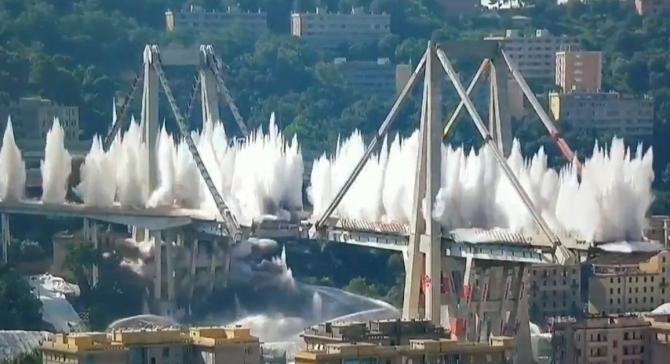
La diretta video della demolizione controllata con esplosivo delle pile 10 e 11 del Ponte Morandi di Genova. “E’ andato tutto come da programma”, ha detto il sindaco di Genova e commissario per la ricostruzione del viadotto, Marco Bucci, dopo la demolizione delle pile 10 e 11. Dal punto di vista tecnico la procedura è stata rispettata al 100 per cento. Siamo in linea con il piano”.
The direct video of the explosive demolition of the 10 and 11 piles of the Ponte Morandi of Genoa. “Everything went as planned,” said the mayor of Genoa and commissioner for the reconstruction of the viaduct, Marco Bucci, after the demolition of piles 10 and 11. From a technical point of view the procedure was 100% respected. We are in line with the plan “.
The tram was originally going to be called the “Skyway” but when they ran into copyright problems they changed it to “Skiway” (the tram buses were also nicknamed “cloudliners” AND “flying buses”). The tramway was promoted as the longest and largest in the world and the first of its type ever to be constructed. The tram cars were actually converted city buses and they each seated 36 people, with room for 14 more to stand. The tram did not operate like other trams did. The buses each had two 185-horsepower gas engines.
A December 9, 1973 retrospective in the Oregonian described the mechanism:
Most mountain tramways are pulled by a moving cable. Not this one. The cars were suspended by sheaves from the 1.5-inch suspension cables. Two 1.75-inch cables wound around three-foot drive sheaves on the sides of the car. The cars pulled themselves up the mountain on the traction cables which were anchored at both ends.
I primi posti che l’Italia possiede nell’export mondiale spaziano dalle macchine e dalle tecnologie per l’agricoltura e il tabacco ai prodotti alimentari e alle bevande (in cui primeggiamo a livello mondiale nell’export di pasta, derivati del pomodoro, insaccati, caffè torrefatto, vermut, aceti, mentre nei vini abbiamo un secondo posto di peso) sino a molti tipi di macchine per l’industria alimentare. I nostri primati proseguono nella moda (con molti prodotti del tessile-abbigliamento, della pelletteria, delle calzature, dell’occhialeria, della componentistica di questi settori e dei relativi macchinari industriali). Ed abbiamo molti primi posti anche nell’export mondiale di beni d’arredo per la casa, la cucina e l’ufficio nonché nei materiali e nei prodotti meccanici per il sollevamento e l’edilizia (su tutti i rubinetti e le valvole). L’Italia, inoltre, possiede molti primati nell’export mondiale di prodotti dell’industria della carta , nonché di prodotti dell’industria metallurgica (dai tubi in ferro e acciaio ai lavori in alluminio) ed ha primati importanti anche nelle tecnologie della metallurgia, nelle tecnologie del caldo e del freddo (attrezzature frigorifere per il commercio), nonché nelle macchine per lavorare il legno e i minerali non metalliferi come le pietre ornamentali e le ceramiche. Siamo primi esportatori mondiali anche di diverse tipologie di prodotti in metallo, di macchinari speciali della meccanica hi-tech (tra cui le macchine per imballaggio, vari tipi di macchine per lavorare i metalli e le materie plastiche). Deteniamo primati anche nell’export di beni per il divertimento e lo sport (dagli yacht ai fucili da caccia, sino a beni più di “nicchia” come le selle per bicicletta).
export
The first places that Italy has in world exports range from machines and technologies for agriculture and tobacco to food products and beverages (in which we excel worldwide in the export of pasta, tomato derivatives, sausages, roasted coffee, vermouth, vinegars, while in wines we have a second place in weight) up to many types of machines for the food industry. Our records continue in fashion (with many textile-clothing products, leather goods, footwear, eyewear, components in these sectors and related industrial machinery). And we also have many first places in the world of home goods, kitchen and office exports as well as in materials and mechanical products for lifting and construction (on all taps and valves). Furthermore, Italy has many firsts in the world export of paper industry products, as well as products from the metallurgical industry (from iron and steel pipes to aluminum works) and has important primates also in metallurgy technologies. in hot and cold technologies (refrigeration equipment for trade), as well as in machines for working wood and non-metallic minerals such as ornamental stones and ceramics. We are also the world’s leading exporters of various types of metal products, special machinery of hi-tech mechanics (including packaging machines, various types of machines for working metals and plastics). We also hold records in the export of goods for fun and sport (from yachts to hunting rifles, to more than “niche” goods like bicycle saddles).
“La recessione è potenzialmente ostile alla politica della concorrenza”
“The recession is potentially hostile to competition policy”
J.FINGLETON
L’esperienza della Grande Depressione negli Stati Uniti mostra segnali contraddittori, che vanno dalla sospensione al rafforzamento della politica antitrust.
Fino alla crisi attuale, il diritto antitrust europeo non ha dovuto affrontare recessioni gravi, ma solo crisi settoriali o congiunture negative di limitata entità.
La crisi attuale ha investito gli ordinamenti dei paesi capitalistici in una fase storica in cui le norme antitrust, pur scontando le perenni incertezze nell’individuazione dei principi ispiratori, si trovavano in una fase di allentamento applicativo evidente, in un quadro ideologico iperliberistico; a ciò si aggiunga che la modernizzazione del diritto antitrust comunitario, entrata in vigore nel 2003, è figlia di un periodo di grande sviluppo e di prevalente ideologia neoliberista, e non si pone neanche il problema della possibile sopravvivenza della figura del “cartello di crisi”, senza considerare che una procedura di self- assessment può essere una soluzione razionale ed efficiente se attuata da imprese efficienti e prospere, mentre si presenta molto meno credibile se attuata da imprese che si trovano in condizioni di emergenza o di vera e propria crisi strutturale di settore. La grave crisi finanziaria mondiale, apertasi nell’autunno del 2008, ha creato un clima di emergenza, nel quale alcuni stati membri hanno pensato di dovere immediatamente intervenire, in primo luogo per il salvataggio di banche in difficoltà.
The experience of the Great Depression in the United States shows contradictory signals, ranging from suspension to strengthening antitrust policy. Until the current crisis, the European antitrust law has not had to face serious recessions, but only sectoral crises or limited negative conjunctures. The current crisis has invested the laws of the capitalist countries in a historical phase in which the antitrust norms, while discounting the perennial uncertainties in the identification of the inspiring principles, found themselves in a phase of evident application loosening, in a hyperliberistic ideological framework; in addition to this, the modernization of the EU antitrust law, which came into force in 2003, is the result of a period of great development and prevailing neoliberal ideology, and there is not even the problem of the possible survival of the figure of the “crisis cartel” , without considering that a self-assessment procedure can be a rational and efficient solution if implemented by efficient and prosperous companies, while it is much less credible if implemented by companies that are in an emergency or real structural crisis than sector. The severe global financial crisis, which began in the fall of 2008, created an emergency climate, in which some member states thought they would have to intervene immediately, primarily for the rescue of troubled banks.
“Antitrust seems to be a luxury that the country cannot afford in any crisis”
“L’antitrust sembra essere un lusso che il paese non può permettersi in nessuna crisi”
As social media is abuzz with who might be cast in the next Batman movie, with concerns that some of the candidates might not be menacing enough to fill those big black boots, it might be time to look again at one of the bat figures that featured as an imposing power in Mesoamerican mythology – Camazotz.
Camazotz, (meaning ‘death bat’ in the Kʼiche’ Mayan language of Guatemala) originated deep in Mesoamerican mythology as a dangerous cave-dwelling bat creature. A cult following for the creature began amongst the Zapotec Indians of Oaxaca, Mexico and the figure was later adopted into the pantheon of the Maya Quiche tribe and the legends of the bat god were later recorded in Maya literature.
Bats are considered to be menacing creatures in many cultures. They are nocturnal and thus associated with the night, which is also often associated with death. Many common species also have a relatively bizarre appearance, which makes them all the more off-putting for humans. It doesn’t help that there is a species that actually sucks blood (the vampire bat, Desmodus Rotundus ).
IN-PLANT TRAINING COURSE ON “THE ART OF SELLING” FOR BIG DUTCHMAN AGRICULTURE NIGERIA COMPANY LTD
On Saturday the 27th of April 2019 through to Sunday 28th April 2019, delegates from the BIG DUTCHMAN AGRICULTURE NIGERIA COMPANY LTD, guided by the MD/CEO, Mr. Ogundiran Thomas, were hosted in the Rome Business School’s campus in Nigeria for a Specialized Training on “The Art of Selling”. Big Dutchman is the recognised market leader in the entire Agricultural industry. Across five continents and in more than 100 countries, the company name stands for long-lasting quality, rapid service and unsurpassed know-how.
The Art of Selling course is designed for the medium and senior sellers. The course is based on two blocks of four hours each. Each block is divided into about three hours of lessons and one hour for the debate and the development of some cases. The training sessions dealt with topics such as: Creating value for your customers and for your company, How to earn customer trust, Needs detection of the customer and his final market, Understanding marketing programs, Understanding the budget and contributing to the definition, Invest the right amount of resources in terms of visits and promotions, Direct marketing, Understanding the competitors, Defending against the dangers of social attitudes (animal rights), Promotion & Strategy, Awareness of one’s professionalism, etc.
The training was contextualized from an international perspective.
As always, the Rome Business School had the great opportunity of having the lectures held by one of the best experts in the field, in person of
Capt. Romano Pisciotti, who after an important experience as a naval officer, Romano worked on behalf of important international companies (Pirelli, for example) in Italy (his country of origin), Argentina, Brazil, Egypt and Nigeria with full responsibility, in a managerial position.
Join us in our journey as we work together to producing Better Managers for a Better World!