E’ N.A.T.O. IL VECCHIO AFGHANISTAN

Kabul, “scalata” agli aerei per fuggire

Aggrappati all’aereo, poi precipitano!

Le milizie talebane domenica sono entrate a Kabul, occupando il palazzo presidenziale. L’arrivo nella capitale fa seguito alla presa di tutte le città chiave dell’Afghanistan, dove i combattenti fondamentalisti hanno trovato poca o nessuna resistenza da parte dell’esercito.

“L’Afghanistan sanguina e il mondo lo ignora”

Romano Pisciotti

33 years since the disappearance of the Drake

Enzo Ferrari, it was the Ferragosto of 1988 (August 15 1988)

THE COMPANY FAMILY
Ferrari ran the company as a family, enriched with training schools, canteens, banks with subsidies for employees. And in the most dramatic cases where the health insurance fund did not arrive, his intervention was not long in coming. That’s why he never went on strike. There was an attempt: the workers lined up outside the entrance with banners. He arrived, got out of the car, greeted the leader of the trade unionists and said: “You are right, to strike is your right, in a sense I am with you. But I work today because I have to think of you too, of your families. By the way, I heard your son was sick, is it better now? “. He greeted and entered. The others followed him in silence.

Remembered by Romano Pisciotti

Leveraging livestock for human nutrition

Livestock are a key resource for economic growth in many countries, both at national and household level. Animals are important assets and an essential source of income for livestock-keeping households. 

Well-managed and utilized livestock can play an important role in achieving the Sustainable Development Goals.

The livestock sector plays a crucial role in the social and economic development of a country, especially in low- and middle-income countries. It directly supports the livelihoods of 600 million poor smallholder farmers in the developing world. Livestock are a direct and indirect source of food for rural and urban households. It is estimated that livestock-derived foods, or animal-source foods (ASF), contribute 18% of global food energy consumption and 34% of global protein consumption (FAOSTAT, 2016). ASF are a unique source of high-quality proteins and bioavailable essential vitamins and minerals. 

Leveraging the potential of livestock and optimizing efficiency in production systems is now more important than ever before given the current global food security and nutrition situation.

Presented by Romano Pisciotti

QUANDO VI DICONO…

“…stiamo diventando molto intelligenti”: vi stanno rincoglionendo

“…non credo che arriveremo…”: attenzione, lo stanno facendo e non sarà una cosa piacevole


“…dovrà intervenire un ente regolatori”: saremo preda di pirati e perderemo totalmente ogni “privacy”

“…non potrà mai sostituire…”: lo stanno già facendo


Romano Pisciotti

BADERNE E GALEOTTE

Baderne e galeotte

di Romano Pisciotti

Boccaporti e incerate sono ancora nella memoria di qualche marinaio anziano, eppure le grandi navi dalle bocche metalliche sono già arrivate alle spiagge di Alang: relitti oramai divorati dalle formiche umane e dal tempo; altre ne sono già state costruite e si usurano alla velocità delle maree.

Le navi dei nostri sogni avevano l’odore di mercati lontani e i colori di nuovi orizzonti. I nostri vapori issavano l’orgoglio della bandiera e l’emozione di ogni partenza; nei fischi di saluto si disperdevano la nostalgia e la paura.

Abbiamo abbandonato le tavole pesanti da listellare con la tela cerata: siamo riusciti a sorprendere le onde, che per secoli hanno sfidato l’opera dei marinai provetti, chiudendo le bocche delle stive con lame d’acciaio.

Nessuno rimpiange il sudore della fatica, ma abbiamo perso il coraggio, l’esperienza e la saggezza, non solo dei marinai.

I sogni, senza la manutenzione della passione e della pazienza, si sono arrugginiti spiaggiandosi sulle terre di pianeti lontani, mentre la realtà presente ci sta spaesando e il futuro si farà così breve e vicino da non riconoscerlo più come tale.

R.P.

Piero Calamai

Una scalinata, dopo sessantacinque anni di vergogna e menzogne: Calamai ha disceso tutti gli scalini del silenzio sino alla morte.


Oggi un piccolo riscatto, tardivo e senza troppo rumore, per un Comandante amato dal suo equipaggio e disonorato da chi ha sotterrato la verità per codardia o convenienza.
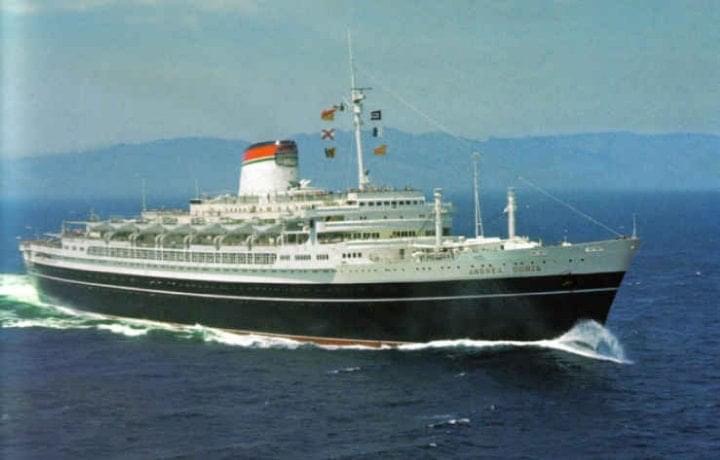
Forse, si chiude così la storia dell’Andrea Doria e del suo Comandante: due anime legate, da tempo, in quello scafo squartato da una prua rinforzata e dall’imperizia di altri uomini.

Romano Pisciotti

Africa’s population will double

Projections show that by 2050, Africa’s population will double.

By 2100, one in three people on Earth will be African.

This means that, by the end of the century, sub-Saharan Africa—which already has an extraordinarily young population—will be home to almost half of the young people in the world.

With a steadily growing population heading towards 2bn, Africa’s 1.1bn workforce will be the world’s largest by 2040. Equally, with a collective GDP of $2.6 trillion by 2020 and $1.4 trillion of consumer spending, many see the impact of around 500m new middle class consumers. Africa as a continent has, on average, grown its economy by at 5% per annum over the last decade. It is already as urbanized as China and has as many cities of over 1m populations as Europe.

However clearly there are many ‘Africas’, with varied economies: from the oil exporters of Nigeria, Angola, Libya and Algeria to the already more diversified economies found in Egypt, South Africa and Morocco, there is a host of nations already with GDP per capita well over $2000. Elsewhere there are many countries such as Kenya, Tanzania, Ghana and Cameroon in transition from agricultural to manufacturing and service economies.

For years, Africa’s growth has been shaped by commodity prices – the continent has a third of the planet’s mineral resources, 10% of the world’s oil reserves and produces nearly 70% of the global diamond trade. While this has clearly been good for growth in the past, the dependency on a few key commodities, and hence their global price, has led to high levels of market uncertainty – especially around many of Africa’s currencies: at least ten African currencies, for example, lost more than 10% of their value in 2014. Although oil prices are volatile, oil and gas will however continue to be an important factor in the future of Africa – Africa will remain an important producer of oil and natural gas, accounting for 10% of global oil and 9% of natural gas production in 2035.

In a bid to diversify away from resources, several nations have been pushing hard to grow other sectors of the economy. To date, manufacturing, services and tourism in particular have all shown growth (although, whether from ebola, localized terrorism or national political change, growth from the latter source is evidently volatile). For example, while Nigeria is still very much an oil exporting economy, its service sector now accounts for 60% of its GDP – and ‘Nollywood’, its $3 billion film industry, is now the second largest in the world – bigger than Hollywood and just behind Bollywood in Mumbai. Likewise in Angola, Africa’s second largest oil exporter, where fishing, agriculture and manufacturing growth now means that a third of government revenue comes from non-oil sources. On the back of the success of m-pesa mobile payments that kicked off in Kenya in 2007, many African states, from Nigeria to the DRC, are seen as world leaders in adapting mobile technology and social networks to deliver potentially life-changing new financial platforms – many of which operate across borders and so engender greater transparency and cooperation. Older, protected, and often niche, monopolies are being superseded by collaborative, mass-market platforms from IT-enabled and, most importantly, more trusted, challengers.

FROMWEB

Presented by Romano Pisciotti

WE ARE WHAT WE EAT

Humans and animals depend on antibiotics to fight microbial infections. It is essential to maintain their efficacy so that future generations can lead healthy lives. Antibiotic efficacy is under threat from the development of antimicrobial resistance, which emerges from overuse and misuse in both human and veterinary medicine. Across the globe, broilers are still raised with the assistance of antibiotics. Either for disease therapy, to prevent disease occurrence, and still, in some parts of the world, to enhance performance. Driven by regulatory and consumer demands, broiler production with minimal or no use of antibiotics is rapidly gaining importance.

The main sustainability challenge for broiler production lies in securing enough high-quality, nutritious, safe, and readily available food at a reasonable cost.

At times, feed ingredients have to be included that are not nutritionally ideal and might compromise one’s broilers’ health and wellbeing. However, counteracting this threat with prophylactic antibiotics is not acceptable:

We must minimize the use of antibiotics to mitigate antimicrobial resistance.

The way forward is to go beyond static and linear nutritional value-to-price thinking. A dynamic nutritional strategy focusing on the interdependencies between ingredients, gut, microbiome, and digestion, enables sustainable broiler production.

https://ew-nutrition.com/sustainable-antibiotic-free-broiler-production/

Presented by Romano Pisciotti

EROI PRONTI ALL’USO

EROI PRONTI ALL’USO

di Romano Pisciotti

 Oggi c’è una narrazione, come usa dire, una “narrazione” che trasforma in eroe ogni cittadino che può servire alle televisioni per lunghe dirette o per far titoloni sui giornali: “eroe” per una medaglia a basso costo offerta dai media spazzatura.

Ho una certa irritazione, non verso l’eroe di turno, ma per i giornalai che distribuiscono facili allori.

Viviamo in un paese post-storico, dove non si fanno più figli, dove per un benessere fuggente e illusorio si seguono politicanti e non più idee. Un po’ in tutto il mondo si svende il passato barattandolo con un futuro incerto. La marea melmosa non riconosce i valori scolpiti nei monumenti e l’ignoranza regna padrona.

Nel paese post-storico si parla di strategia e tattica solo per le finali di calcio o per vendere un nuovo dentifricio, nessuno è più interessato a quello che succede oltre la nostra porta, tanto meno oltre le nostre coste. In un paese post-storico che c’importa dell’identità o della coscienza? Viviamo come ebeti felici nel mondo globalizzato dove gli eroi, e i cattivi, li creano alla tivù. Anche il paese post-storico ha bisogno di santi e di diavoli…nell’attesa che un algoritmo, al quale tutti saremo inginocchiati, decida il torto e la ragione.

Fortunatamente i morti hanno tutta la pazienza possibile e gli angeli sanno chi accogliere nell’Olimpo, mentre i cittadini del mondo seguono un veloce cambiamento: l’estinzione dell’intelligenza e del coraggio!

 R.P.