L’attenzione dei governanti sulle auto elettriche è criticata da climatologi, tecnici dei trasporti, ingegneri e urbanisti. I governi del pianeta, invece, hanno posto l’auto elettrica al centro della loro disastrosa strategia sul clima, che non può arrivare nemmeno alla metà degli obiettivi sulle emissioni di gas serra.
Continua a far discutere la politica del presidente Joe Biden per incentivare l’acquisto di auto elettriche negli Stati Uniti. A finire nel mirino è la proposta, inserita nel grande progetto di legge Build Back Better Act, che porta a 12.500 dollari l’attuale bonus da 7.500 $, ma solo per i veicoli costruiti negli Usa da lavoratori iscritti ai sindacati.
"I veicoli elettrici sono sopravvalutati": lo ha detto nel corso di una conferenza stampa Akio Toyoda, numero uno della Toyota e presidente della Japan Automobile Manufacturers Association. Il dirigente ha sottolineato, in particolare, "l’eccessivo clamore" sulle auto alla spina e la mancanza di adeguate valutazioni sulle conseguenze di una pervasiva adozione della mobilità a zero emissioni sul sistema economico giapponese. "Le auto elettriche sono sopravvalutate, il settore collasserà"
“Mio figlio me lo ha spiegato bene: per essere bravo nei puzzle devi avere una strategia, cercare il posto del pezzetto nella zona dove c’è il colore simile. Così fai prima.
L’ha fatta semplice, come i ragazzini, cercando un metodo in qualcosa che sembra essere molto complicato. Semplice ma non banale, partendo dall’analisi del contesto. Non ci sono ricette giuste o sbagliate, o meglio, soluzioni giuste possono essere inapplicabili se non si tiene in considerazione il dove, come e da chi vengono praticate. In generale il business, per qualsiasi campo di applicazione, ha delle regole, degli strumenti, delle metodiche molto simili tra i diversi player, campi di competizione che, per quanto globali, sono gli stessi, regole e leggi comuni, chi scappa viene subito ripreso e la tecnologia è ormai un prodotto che si compra a scaffale. Stesso numero di pezzi, stessi soggetti, stesso materiale, mescolati allo stesso modo, chi terminerà per primo il puzzle? Chi ha un metodo semplice e reale, strutturato e replicabile, chi guarda il pezzetto senza perdere d’occhio l’insieme, chi ha ben chiaro il contesto.”
Mario Verna
Presentato da Romano Pisciotti
FREE TRANSLATION:
My son explained it to me well: to be good at puzzles you must have a strategy, look for the place of the piece in the area where there is a similar color. So do it first.
He made it simple, like kids, looking for a method in something that seems to be very complicated.
Simple but not trivial, starting from the analysis of the context.
There are no right or wrong recipes, or rather, right solutions can be inapplicable if you don’t take into consideration where, how and by whom they are practiced.
In general, the business, for any field of application, has rules, tools, methods that are very similar between the different players, fields of competition that, although global, are the same, common rules and laws, those who run away are immediately caught and technology is now a product that can be bought on the shelf.
Same number of pieces, same subjects, same material, mixed in the same way, who will finish the puzzle first?
Who has a simple and real, structured and replicable method, who looks at the piece without losing sight of the whole, who has a clear context.
“…He said his father loved documents so much that he would save any paper that came his way. When he died, his children gathered all the paper together and made a bonfire of them.”
Succession plan in place 20% ….ONLY !!!
The main objective of Rome Business School is to train new entrepreneurs and new managers
The Ferrari Daytona SP3 sports a naturally-aspirated V12, mid-rear-mounted in typical racing car style. Undisputedly the most iconic of all Maranello’s engines, this power unit delivers 840 horsepower – making it the most powerful engine ever built by Ferrari – along with 697 Nm of torque and maximum revs of 9500 rpm. The chassis is built entirely from composite materials using Formula 1 technologies that have not been seen in a road car since the la Ferrari, Maranello’s last supercar. The seat is an integral part of the chassis to reduce weight and guarantee the driver a driving position similar to that of a competition car.
It seems Alfa Romeo is one of those brands that refuse to step away from traditions and move on with the times. Over the last decade or so, the Italian company has come up with some great models, but their business strategy hasn’t been what you would call sustainable. However, this may be about to change, as the Italian car company recently stated that we will be getting a new model every year until 2026, and from 2027 onwards, all models of the brand will be electrified.
The first step is to consider both cultural considerations and potential pitfalls.
Linguistic, ethnic and religious diversity makes cultural changes across the continent extreme. Demonstrating passion and interest in the local culture and its nuances is essential, not least to generate trust, but to build loyalty takes time.
Romano Pisciotti
Appreciate that Africa is not just a homogeneous market, but 54 countries with 2,000 languages, 521 of which are in Nigeria alone.
Africa’s current total population of 1.2 billion people is young: South of the Sahara, their average age is under 25 in all countries except South Africa.
Romano Pisciotti
Going forward, the continent will account for about 50% of the world’s population growth between now and 2050, predicts PricewaterhouseCoopers.
Africa’s middle classes are already growing rapidly, with one in three people now believed to be living above the poverty line, even if not among the wealthy. Meanwhile, the staggering 1.1 billion – around 42% of the continent’s population – is projected to reach middle-class status by 2060. Of the 54 African countries, South Africa is still considered the continent’s first powerhouse and a gateway to many other African countries. But with 173.6 million citizens growing their GDP by 200% in just ten years, Nigeria is regarded as Africa’s new power actor.
There has been much discussion on the volatility of the price of crude oil: the market rule based on supply and demand, in addition to being subject to the seasonality of consumption and industrial trends, is strongly linked to environmental and social factors that affect the availability of extraction and transportation. Security in some areas of extraction or sea routes is challenged by conflicts or acts of piracy or sabotage, just to name a few well-known issues.
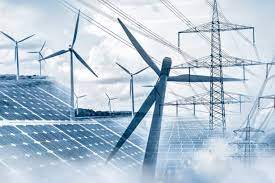
One of the lesser-told factors of the energy crisis that is causing bill costs all over Europe, is the fact that this summer less wind has blown. Especially in the north of the continent, in 2021 the strength of the currents was between 10 and 15% lower than the expected average…slowing down the wind turbines that were supposed to guarantee energy.
In fact, it could be said that climate change has already impacted the solutions available to combat climate change!
Even if the human impact on global warming is minimal compared to natural cycles, we must certainly act on the part that depends on us.
Unfortunately, regardless of the will of the various countries to break away from the servitude of fossil fuels, it must be admitted that the renewable sources available are not yet capable of guaranteeing a real ecological transition. Perhaps this is the real reason for the unenthusiastic approach to “changes” of many Rulers … if not for the generic statements that commit the distant future more than the present and more for coal alone.
Except for the young people who follow Greta, animated by youthful dreams and impulses, everyone can understand that forcing the industry with too rapid change could mean a stalemate or the destruction of the economies of many countries, if not the whole world. After all, no one – not even most young dreamers – is willing to make a drastic life change.
Economic collapse is as dangerous as the effects of climate change.
We could easily have a large amount of energy from hydroelectric and nuclear sources, but there is already an endless discussion about the safety and disposal of nuclear waste or other environmental discussions related to large dams.
The political and industrial commitment must be in the search for real alternatives rather than in the fluctuating popular consensus or the immediate profit on what is available; perhaps the concrete ecological alternatives are still to be invented or lie in the still theoretical solutions: we must not be under the illusion that eternal batteries or the availability of hydrogen in large volumes are already industrial-grade.
It is very likely that oil and gas will not leave us anytime soon, beyond the thunderous announcements of politicians looking for some quick response to public opinion.
Perhaps the real immediate solution is the reduction of energy consumption, this should not be difficult, if environmental consciences do not lie, even if paradoxically, the ecological transition will need a large amount of fossil fuels (wind turbines, or other solutions, are not made with the magic wand)
The industry has provided us with vehicles that consume and pollute less than previous models; we can give up a bit of travel and a bit of heat in our homes … but it is certainly strange that the same man, who became excessively rich by promoting electric cars and supertrains, also promotes useless and energy-intensive space travel; it is strange that the man who delivers the fruits of globalization home to us only cares about finding a faster way to expand his business, at the expense of more sustainable businesses; it is strange that no one wants to give up chatter, dispersed in millions of useless messages, ignoring the immense absorption of energy for the functioning of algorithms that already claim to be vital.
Perhaps there is, in part already there, a sustainable way to extract oil and gas (certainly abandoning the absurd practice of extraction with destructive methods such as the fragmentation of rock shales). There could be consumption, just as sustainable (intelligent), until science offers us a real alternative.
Surely we could decrease, more rapidly than any other solution, the suffocation of the seas with plastic or the deforestation of the lands: this would give a sure hand to the ecological rebalancing of the Planet.
Leaping through hoops to get out of the fossils too quickly could have worse consequences
There are many reasons why you should consider investing in Nigeria. Nigeria is the largest economy in Africa ahead of South Africa, Egypt and the rest. With so many opportunities for growth, PwC has projected Nigeria among the top world economies in 2050 ahead of Italy, Canada, South Korea, Spain, Netherlands, Australia and others.
With over 200 million people….the best deal is to provide the food!!
Agriculture accounts for 33 percent of GDP and provides employment, both formal and informal, to more than 60% of the population.
However crop production dominates the agricultural sector and accounts for about 85 percent of agricultural activities; livestock and poultry accounting for 10 percent, fisheries and forestry, less than one percent…
…but rapidly growing.
There is a growing demand for animal protein in Nigeria!
Poultry production has not kept pace with the rapid increase in domestic consumption.
There is enormous potential for the poultry industry in Nigeria to enhance food and nutritional security, while contributing to household and economic growth.
There is no more efficient place to invest than in pullets. Pullets are the future of an integrated company. Successful pullet rearing is simply attention to detail, management, serology, biosecurity, vaccination, and worming.
We all know that Nigeria is Africa’s largest economy, and with a population of 200 million people, one with huge potential for growth. It is therefore a country of the significant potential for foreign direct investment and foreign investors. But, for several reasons including a weak macroeconomic environment, policy inconsistency and the absence of a well-defined strategy for FDI as a component of economic growth strategy, FDI into Nigeria has declined markedly in the past several years.
Nigeria’s strategy for FDI
1. First, have a strategy: the priority sectors for the governments at federal and state levels need to be clear. The quality of investment, the quality of the government structure that handles FDI and formulates investment policy, and measurable, long term objectives regarding FDI and performance management regarding the contribution of FDI to economic development, are essential. These should be woven into a single thread that becomes the basis for execution, communication and engagement with potential investors.
2. Develop factor endowment: with skilled human capital as a priority need, strategies for FDI must focus on this frequently neglected objective. The presence or absence of productive knowledge in a society is the most important foundation for economic transformation, which remains necessary for a country such as ours with an economy still in need of diversification.
3. Align FDI with a transformational paradigm shift, for example away from extractive industries or towards value-added derivatives of such industries.
4. Improve national coordination of FDI activities between national and sub-national units.
5. Offer strong investor protections: Legal regimes in Nigeria must be adapted to facilitate increased flows of high-quality investment, in particular in light of regional trade realities such as ECOWAS, and now the African Continental Free Trade Area (AfCFTA). Beyond this, Nigerian authorities – and foreign investors- should incorporate political risk guarantees into major FDI agreements. This includes making use of guarantees offered by the World Bank Group’s Multilateral Investment Guarantee Agency (MIGA) for losses relating to currency inconvertibility and transfer restrictions, expropriation, terrorism, war and civil disturbances, breaches of contract, and failure to honour sovereign financial obligations.
6. Partial Risk Guarantees offered by the World Bank’s International Development Association (IDA), the arm of the Bank that leads to low income and lower-middle-income developing countries, cover an even more extensive range of situations than MIGA products. They can support participants in private projects such as Build-Operate-Transfer (BOT) and concession projects, public-private partnerships (PPP), and privatizations.
7. Improve the quality of governance and institutions: Assessments of governance and institutional capacity to create a sustainable investment environment play an important role in attracting quality investment.
The Nigerian Investment Promotion Commission (NIPC) has done a good job in recent years despite a difficult macroeconomic environment, including in terms of revenues it has generated for the Federal Government from foreign investments into Nigeria. I know from personal experience that, despite the early stages of the security challenges from terrorism, the Central Bank of Nigeria’s far-reaching reforms in the banking and financial sector which stabilized the sector after the global financial crisis of 2008, contributed to marked increases in FDI into Nigeria from 2009-2014. These reforms led to improved ratings of Nigerian by agencies such as Standard and Poor’s, Fitch, as well as the inclusion of Nigeria in the JP Morgan Africa Emerging Market Bond base Index alongside South Africa, which was previously the only sub-Saharan African country on the index.
Address by Professor Moghalu, President & CEO, Sogato Strategies LLC, Former Deputy Governor, Central Bank of Nigeria at the United States-Nigeria Investment Summit held in New York City, recently.
Siamo partiti sempre dalla rivoluzione industriale. Cioè abbiamo ideato, creato, e sviluppato qualcosa che potesse creare “benessere” per tanti. Tantissimi. All’inizio tutto questo ha generato l’inflazione positiva, aumento di reddito e stipendi. La gente andava in fabbrica, poteva permettersi di mandare i figli a studiare. Siamo passati dalla lambretta e vespa alla 500 poi 600 poi 1100 e via fino alle auto a batterie. Che bello, siamo tornati bambini!
Da decenni però il mondo è arrivato ad una capacità di produzione che la capacità di reddito sembra non possa sostenere. E allora che fare? Vai di credito al consumo. Poi non bastava per svuotare i magazzini sempre più pieni. Ed allora il tasso zero, poi il paga tra 12 mesi.
Ci riscopriamo con rate in conto senza più ricordarci quale oggetto spesava.