Corte di giustizia dell’Unione europea

Alcune delle principali istanze giurisdizionali europee, nel rapporto tra loro e con altri attori istituzionali, appaiano adottare un atteggiamento apertamente negoziale, che va ben oltre la protezione di culture giuridiche e standard di giudizio, ma si legano piuttosto alla difesa di specifici interessi politici…

Leggi di più:

https://www.diritticomparati.it/le-corti-europee-tra-dialogo-e-negoziato-riflessioni-a-partire-da-due-recenti-documenti-della-corte/

Presentato da Romano Pisciotti

La moneta italiana compie 158 anni

 Era il 24 agosto del 1862 quando fu sancita la piena unificazione monetaria dell’Italia e la lira divenne l’unica moneta a corso legale nel paese. Monopolio che durò fino al 1999, quando fu adottato l’euro come moneta virtuale e poi come moneta circolante nel 2002.

Forse la sua storia non è finita…..

Il ritorno della Lira italiana è davvero possibile? Sì, ma non nel modo in cui si potrebbe facilmente immaginare. Nessuna permanenza in Europa e dell’Euro come moneta unica pregiudicherà il ritorno della moneta che non circola più dall’ormai lontano febbraio del 2002. La Lira italiana tornerà invece come criptovaluta. Questo grazie a un progetto italoamericano, denominato ITL, ovvero Italian Lira. L’obiettivo finale è quello di creare un sistema di pagamento utilizzando la tecnologia che c’è dietro alle criptovalute (Blockchain) che sia svincolato da terze parti e dai governi.

Romano Pisciotti

Success rate of our presentations

…and if instead I told you that with that type of engine you would save a lot of money because you could make the washing machine work at night using the savings of the time slots without any disturbance of your sleep?
What we have just done is to discuss a technical characteristic (the inverter motor) in a benefit / advantage (savings)

By Romano Pisciotti

Romano Pisciotti

Rome Business School – Lagos, Nigeria

Vento & Coraggio


(AI RAGAZZI DEL VESPUCCI)

 Scrivo sia per chi considera un evento, il passaggio del Vespucci nel Canale di Taranto, sia per chi non prova più emozioni…scrivo per chi, marinaio o terricolo, ancora riesce a provare un po’ d’orgoglio per quei meravigliosi ragazzi, per quella splendida Nave e per il suo esperto Comandante!

Scrivo con un po’ di malinconia per i miei ricordi, forse meno esaltanti ma vissuti intensamente: come Ufficiale di Complemento ho servito nella Marina Militare e come Ufficiale di Coperta ho navigato su navigli mercantili…

 (…uso volutamente un vocabolario desueto: complemento, servito, navigli mercantili… per lasciarvi immaginare la mia età).

Sono abbastanza anziano d’essere carico di ricordi, d’orgoglio e di emozioni per aver visto profondi cieli stellati e respirato il freddo di un nebbioso mare ghiacciato; ho attraversato Suez e Panama, l’equatore e gli umori di Nettuno.

Ho navigato quando il viaggio ancora offriva imprevisti e soddisfazioni, quando i marinai erano orgogliosamente “uomini di mare.”

Ho navigato quando, mollati gli ormeggi, si rimaneva appesi solo al “ti… taa” del Marconista e, lasciata la costa, solo il sestante poteva “dare” il punto nave.

 Uomini di mare esistono ancora, forse meno orgogliosi e, sicuramente, con meno avventure da raccontare e meno soddisfazioni da portare a casa… anche se il mare sempre reclama sacrifici e adrenalina.

E’ cambiato il mondo ed è cresciuta l’impazienza e la fretta: un mondo veloce che ha divorato il fascino e il mistero del meraviglioso viaggio della vita. Viviamo un mondo digitale, più comodo, fatto di emozioni a buon prezzo e sciocche risate.

Quei ragazzi “a riva” hanno conosciuto il vento e il coraggio, conservando per la vita un’esperienza preziosa e unica.


Buon vento!


 Romano Pisciotti


https://www.facebook.com/110220129066935/posts/3275013335920916/?sfnsn=scwspwa&extid=kzwZRdGjVSpWC63C&d=w&vh=e

Luce e poesia

Dove il cuore
cede il passo all’anima
troviamo colori
che la mente umana
neppure può immaginare.
Come un’ombra
quel vecchio pino
è rimasto testimone
della mia voglia
di ritornare
a quella festa
di luce e poesia.
Romano Pisciotti

Where the heart

gives way to the soul,

we find colours

than the human mind

can’t even imagine.

Like a shadow,

that old pine

remained a witness

of my desire

to come back

at that party

of light and poetry.

Piedimonte Etneo

Sicilia, Italy

CRISIS

A crisis is often enacted at a system’s weakest point, not necessarily where it is caused.

Thus whenever analyzing crisis, we must consider the system boundaries we have set, and reflect on how they relate to the environment the conflict is embedded in.

Depending on where we set the boundaries, the crisis will present itself differently.

Una crisi è spesso emanata nel punto più debole di un sistema, non necessariamente dove è causata. Pertanto, ogni volta che si analizza la crisi, dobbiamo considerare i confini del sistema che abbiamo fissato e riflettere su come si relazionano all’ambiente in cui è incorporato il conflitto. A seconda di dove impostiamo i confini, la crisi si presenterà da sola
in modo diverso.

After setting the crisis system boundaries,

we can use one or more of the following tools to deepen our insight onto various aspects of the conflict/crisis

Dopo aver fissato i confini del sistema di crisi, possiamo utilizzare uno o più dei seguenti strumenti per approfondire la nostra visione sui vari aspetti del conflitto / crisi

Causation: Crisis are never mono-causal, but multi-causal and systemic factors interact. Instead of saying that everything is related to everything, it is helpful to differentiate between different “causes” or influence factors.

Causa: le crisi non sono mai mono-causali, ma i fattori multi-causali e sistemici interagiscono. Invece di dire che tutto è correlato a tutto, è utile distinguere tra diverse “cause” o fattori di influenza.

Crisis Mapping: The crisis mapping focuses on actors and their interrelationships. It is a good tool to start analyzing a crisis.

Mappatura delle crisi: la mappatura delle crisi si concentra sugli attori e sulle loro interrelazioni. È un buon strumento per iniziare ad analizzare una crisi.

Needs-Fears Mapping: this method focuses on actors and their issues, interests, needs, fears, means and options. It allows for a clear comparison of actors similarities and differences in the form of a table.

Mappatura bisogni-paure: questo metodo si concentra sugli attori e sui loro problemi, interessi, bisogni, paure, mezzi e opzioni. Consente un chiaro confronto delle somiglianze e delle differenze degli attori sotto forma di tabella.


Follow my lessons

Segui le mie lezioni

Romano Pisciotti

By Romano Pisciotti

Conflit & Crisis

The conflict tends to reduce relations
to a “friend-enemy” logic,
while the crisis is a more complex situation
crossed by tensions and contradictions that lead individuals
and groups to hesitate about the conduct to follow because
it calls into question rules and institutions.
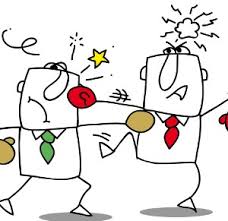
Il conflitto tende a ridurre le relazioni a una logica “amico-nemico”, mentre la crisi è una situazione più complessa
attraversato da tensioni e contraddizioni che portano gli individui
e gruppi a esitare sulla condotta da seguire perché
chiama in causa regole e istituzioni.

The conflict ends with the affirmation of one of the parties that imposes future conditions on the vanquished or with a mutual recognition of rights and duties, on the other hand, the crisis can occur in the absence of hostility and lead to a situation of widespread and generalized disorganization , without winners or losers.

Il conflitto si conclude con l’affermazione di una delle parti che impone condizioni future ai vinti o con un riconoscimento reciproco di diritti e doveri, d’altra parte, la crisi può verificarsi in assenza di ostilità e portare a una situazione diffusa di disorganizzazione generalizzata, senza vincitori o vinti.

The crisis causes a sudden, unexpected change, alters the ordinariness of social action and causes a condition, even prolonged, of uncertainty and imbalance, that is to know how to identify the choice in moments of crisis correct to do.

It originates, differently from the conflict, from forecasting difficulties while the conflict is usually the evolution of the situation when negotiations and mediations seem to give sterile results.

La crisi provoca un improvviso, inaspettato cambiamento, altera l’ordinarietà dell’azione sociale e provoca una condizione, anche prolungata, di incertezza e squilibrio, ovvero sapere come identificare la scelta nei momenti di crisi giusti da fare.

Nasce, diversamente dal conflitto, dalle difficoltà di previsione mentre il conflitto è di solito l’evoluzione della situazione in cui negoziati e mediazioni sembrano dare risultati sterili.

Take my course:

Seguite il mio corso:

Romano Pisciotti: italmotor@gmail.com
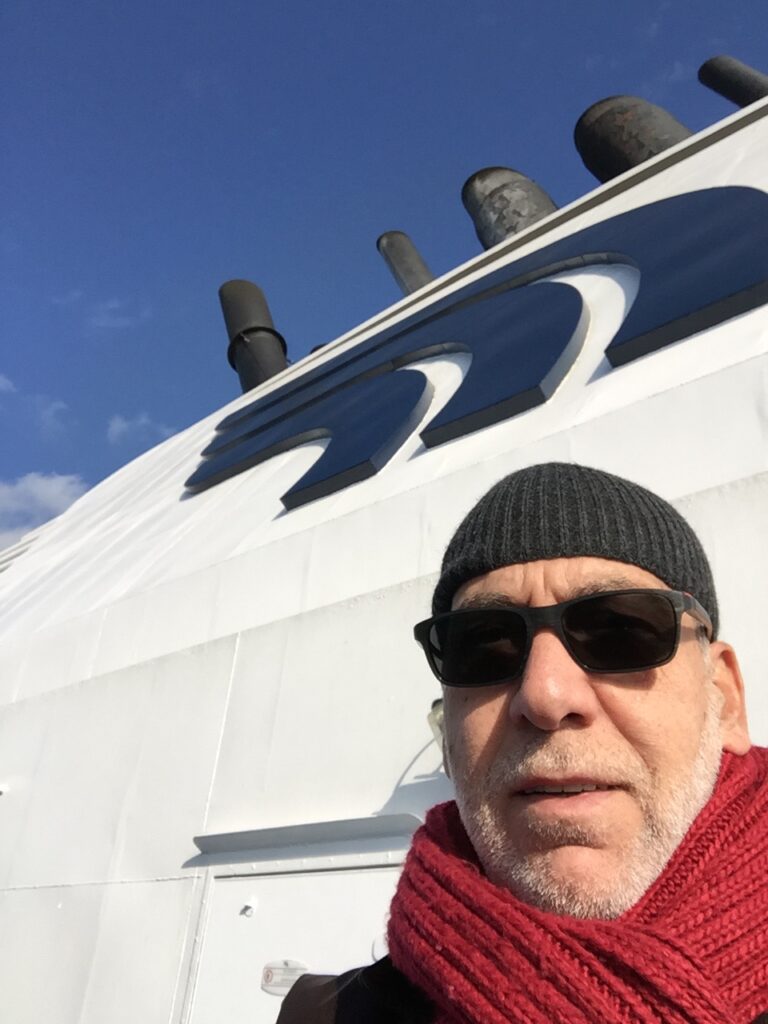
After an important experience as a naval officer, Romano worked on behalf of important international companies (Pirelli, for example) in Italy (his country of origin), Argentina, Brazil, Egypt and Nigeria with full responsibility, in a managerial position.

He actively participated in the start up of new operating units in Italy and abroad;

has been fully involved in the restructuring of companies and the increase in commercial activities. In his various experiences, Romano has led multi-ethnic work teams even in stressful environments.

He lived for over five years in Nigeria, where he had relevant experience as general manager of large industrial groups and in logistics; the current activities still tie him to Africa, in Lagos, as responsible for the development of new strategies in Nigeria for the IVECO, heavy vehicles company.

Romano has never neglected professional updating by continuously following courses at qualified universities.


Psycholinguistics

Psycholinguistics has worked hard on the functions that the “meaning” of words can have.

1) Extensive meaning: the ability to communicate is relative to the community of origin that produced that language (for example, the Eskimos have about 90 different words to indicate as many ways of being in the snow);
2) Intensive meaning: the level of comprehensibility of this meaning depends on the level of social consensus about the proper content of a word. Words like democracy, freedom, being, nothing … are used with very different meanings. Obviously, in a stable society, with a dominant culture recognized by the vast majority, the intensive meaning is unitary, shared.
3) Verbal association: the meaning of a word can be estimated by detecting the sequence of other words with which it is associated. In the verbal association tests it was verified that these associations are in relation with the social class to which the subjects belong or with the profession carried out; that the associations of the members of a family are very similar to each other; that children make associations more similar to those of the mother; that males associate more similarly to the father than females; that children associate using terms with which they could compose a sentence (e.g. hammer -> nail).
4) connotative meaning: a word is loaded with certain emotional and cognitive resonances that are relatively independent of the proper meaning, considered individually (e.g. the meaningless word PALM could indicate a shaving soap: denotative meaning; but why PALM is sold on the market, it must also have a connotative meaning of soft, fragrant, frothy, cheap, etc.).
5) Contextual meaning: the meaning of a word varies according to the logical context in which it is inserted. Indeed, precisely because they belong to a logical context, words acquire a more defined meaning than when they are isolated (phenomenon of redundancy. For example, the mother is concerned about the health of her children). Redundant messages are used in communities to reduce the effort of understanding information or to understand incomplete or disturbed information.

Romano Pisciotti

” Il linguaggio” libera traduzione di Romano Pisciotti

Nulla di nuovo, bolle speculative

Alessandro Barbero è un ottimo divulgatore, il video riporta una lezione del professore sulla rivoluzione francese….guardate il video e divertitevi (…o meditate) a trovare tutti i parallelismi con la situazione italiana. ( stati generali, tassa patrimoniale, debiti dello Stato, stato d’emergenza e potere assoluto, situazione finanziaria, limitazione del contante, banca centrale, valuta, azioni bancarie, bolle finanziarie, speculazione, banchieri e finanzieri, ecc…)

Romano Pisciotti