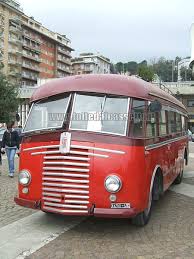
Bella, ammirata e vincitrice, questa corriera Fiat 626 del 1948, presentata dalla Pro Loco di Antignano alla grande sfilata del “Festival delle Sagre” di Asti (9 settembre 2019)
Romano Pisciotti: LIKE
Bella, ammirata e vincitrice, questa corriera Fiat 626 del 1948, presentata dalla Pro Loco di Antignano alla grande sfilata del “Festival delle Sagre” di Asti (9 settembre 2019)
Romano Pisciotti: LIKE
“Market” is any area within which the meeting between supply and demand for goods and services takes place and the exchange of them through the price mechanism, determined precisely by this meeting: operators decide independently and individually their behavior, in particular, the prices and quantities of sales and purchases, such that the overall market performance, in terms of global prices and quantities, is the result of the countless decentralized decisions taken by the actors operating there and their interactions. The term “competition” can have two meanings and both presuppose the notion of market set out: one of them refers to the conduct of companies, the other to a particular structural conformation of the market. The first meaning is that which recalls rivalry, competition and struggle between companies, which implement independent behavior in order to increase their position on the market, to the detriment of rivals. The second, however, consists of the situation characterized by a large number of operators on the market, each of which offers such a small share of the same product or service that it is not able to individually influence the price level following a change in the quantity offered.
For the polysemy of the term “market” see, in particular, M.R. FERRARESE, Law and market, Turin, 1992, p. 17 ss., Which sorts the variety of meanings into four categories: a) market as place; b) market as ideology; c) market as a paradigm of social action; d) market as an institution.
Summarizes the characteristics of the market economy model: a) free market of production factors (raw materials, capital and labor); b) freedom of private economic initiative; c) organization of the private enterprise according to the principle of capital sovereignty; d) free play of competition; e) consumer sovereignty.
Romano Pisciotti browsing the web….about antitrust
Romano Pisciotti: LIKE
C’è una cosa che i buoni, onesti, sinceri, generosi e laboriosi cittadini italiani non hanno ancora capito fino in fondo: l’Italia è uno stato bugiardo. Viviamo in uno stato che non nasce da una rivoluzione come quella francese, e in un paese dove lo stato non si identifica in noi, e noi non ci identifichiamo nello stato.
Noi cerchiamo di gabbare lo stato, evadendo le tasse e cercando di tenerlo lontano in ogni modo dalle nostre cose e dalle nostre attività, e lo stato ci tratta, come ci ha sempre trattato, da sudditi, non da cittadini.
Lo stato mente, estorce, imbroglia, inganna, ti frega appena può, fa le leggi e le trasgredisce ma è implacabile con i cittadini trasgressori. Lo stato è severo con i debitori che non pagano, ma egli stesso non paga. Ma lo stato può, poiché egli si erge al di sopra dei cittadini, e fa quello che non permette ai cittadini di fare.
Chiedete ai terremotati di tutta Italia, chiedete ai dimenticati, chiedete ai creditori non pagati dallo stato, ai reclusi innocenti, ai vessati dal fisco, verso i quali lo stato può tutto e dal quale il cittadino è inerme.
E allora, quando lo stato in emergenza corona-virus ha promesso sussidi, sovvenzioni, aiuti, sostegno, indulgenze, rinvii, elargizioni, crediti e garanzie, gli avete creduto? Mal ve ne incolga, avete fatto male a credergli e adesso lo stato si sta dimostrando quello che è: uno stato bugiardo.

Romano Pisciotti: LIKE
All economies have shown their fragility, it is very probable that globalization, as we have known it, will have to change … and perhaps this will not be completely negative. The investments of governments and entrepreneurs will make the difference in favouring the integration between local and global production.
In my opinion, as regards the transport sector, there may be a drop in container movements … I am referring to the gigantic container ships … but very little will change in national and local transport which today and tomorrow will be for decades on the road.
In Nigeria, the agricultural sector with all the related supply chain will continue to grow; although in small steps, the industrial sector will be forced to grow…. everyone will need to increase logistics and, consequently, transport will be at the service of each segment of the local economy.
One thing is certain: no pandemic, war or financial crisis has stopped the world … perhaps it has changed it, almost always for the better. Obviously it is not the spectators who benefit from the change, but the forward-looking entrepreneurs.
We know that Africa has undergone even dramatic upheavals, as we know that all African nations have increased their GDP, as we know that the economy of the USA, China and Europe can no longer disregard African economies and African consumers… there is no virus that can stop this, at worst it can only slow down temporarily … and this time must be spent studying new business change for the future.
Romano Pisciotti


What are the reactions, in general, of the people and religions?
For Muslims, “the disease was to be accepted and endured with resignation.” Needless to flee or react, the disease did not spread by contagion, but affected specific people: “God had specifically and individually selected his targets”. In general, this vision can be defined as fatalistic, and will cross all peoples. Historians note, for example, that a similar position was taken by the Calvinist / Puritan Dutch supporters of predestination during the plague of 1628 and following. Next to fatalism, the rejection reaction: the plague is not there, it does not exist (we even come to kill the doctors who reported it); or the epicurean choice: that of those who decided to flee and try to avoid fear by having fun as much as possible. Catholics have seen disease as a consequence of original sin.
Quali le reazioni, in generale, della gente, e delle religioni?
Per gli islamici “il morbo doveva essere accettato e sopportato con rassegnazione”. Inutile fuggire o reagire, il morbo non si propagava per contagio, ma colpiva specifiche persone: “Dio aveva specificamente e individualmente selezionato i suoi bersagli ”. In generale questa visione è definibile fatalista, e attraverserà tutti i popoli. Gli storici notano per esempio che una posizione analoga fu presa dagli Olandesi calvinisti/puritani fautori della predestinazione, durante la peste del 1628 e seguenti. Accanto al fatalismo, la reazione di rigetto: la peste non c’è, non esiste (si arrivano anche ad uccidere i medici che la hanno denunciata); oppure la scelta epicurea: quella di chi decideva di fuggire e di cercare di scongiurare la paura divertendosi per quanto possibile. I cattolici hanno visto nelle malattie una conseguenza del peccato originale.
Freely translated into English by Romano Pisciotti

Dio ”denaro” le fa e le accoppia, quando si tratta di fare gli interessi della parte finanziaria dell’Europa

Spero che non siano tutte qui le “quote rosa” europee
Romano Pisciotti
Death could be in the brother’s breath,
get away from the virus
not from the soul of your brothers.
Don’t forget solidarity:
you can also help your neighbour
standing one meter away!
Stay safe, stay supportive.
Romano Pisciotti
The Parmigiano Reggiano or Parmesan cheese as it is called in English is considered to be among the top cheeses by cheese connoisseurs.
Today, it is produced by various producers. However, PDO designation states that for a cheese to be called as Parmesan, it has to be produced from cows grazing on fresh grass and hay.
Cheeses mocking Parmigiano Reggiano are called as Parmesan or Italian hard cheese by producers to avoid legal issues. Parmigiano Reggiano cheese is named after the provinces in which it is made, namely Provinces of Parma, Reggio Emilia, Modena, Bologna and Mantua.
True Parmesan cheese has a hard, gritty texture and is fruity and nutty in taste. Cheeses mocking Parmesan or inferior Parmesan may have a bitter taste. Parmigiano Reggiano cheese is mostly grated over pastas, used in soups and risottos. It is also eaten on its own as a snack.
Romano Pisciotti: LIKE