Putin alle imprese italiane: “Vi forniamo gas a prezzi inferiori di quelli di mercato”….
… l’Unione Europea, piegata sulle politiche americane, rimprovera gli imprenditori italiani
Presentato da Romano Pisciotti
… l’Unione Europea, piegata sulle politiche americane, rimprovera gli imprenditori italiani
Presentato da Romano Pisciotti
Alors qu’une dizaine de pays africains projettent de se tourner vers le nucléaire civil et ont annoncé leur intention de se doter d’une centrale.
Le continent possède 20 % des réserves mondiales d’uranium. Mais le nucléaire civil représente moins de 2 % de sa production énergétique. Potentielle solution pour pallier le déficit d’électricité de l’Afrique, l’énergie atomique séduit de plus en plus. Une dizaine d’États ont déjà annoncé leur intention de se doter d’une centrale. Pour les puissances étrangères, cet engouement est un enjeu commercial de taille et l’occasion d’asseoir un peu plus leur influence sur le continent. Alors que la Chine et la Russie multiplient les projets, les États-Unis tentent de rentrer dans la course.

L’Agence internationale de l’énergie n’est pas aussi optimiste que les pays africains. Selon elle, la part de nucléaire dans la production énergétique du continent ne va pas beaucoup augmenter dans les années à venir. En cause, son coût de production, moins compétitif que le renouvelable, mais aussi l’instabilité politique et le contexte sécuritaire tendu des pays intéressés.
Romano Pisciotti : surfer sur le web
There has been much discussion on the volatility of the price of crude oil: the market rule based on supply and demand, in addition to being subject to the seasonality of consumption and industrial trends, is strongly linked to environmental and social factors that affect the availability of extraction and transportation. Security in some areas of extraction or sea routes is challenged by conflicts or acts of piracy or sabotage, just to name a few well-known issues.
One of the lesser-told factors of the energy crisis that is causing bill costs all over Europe, is the fact that this summer less wind has blown. Especially in the north of the continent, in 2021 the strength of the currents was between 10 and 15% lower than the expected average…slowing down the wind turbines that were supposed to guarantee energy.

In fact, it could be said that climate change has already impacted the solutions available to combat climate change!
Even if the human impact on global warming is minimal compared to natural cycles, we must certainly act on the part that depends on us.
Unfortunately, regardless of the will of the various countries to break away from the servitude of fossil fuels, it must be admitted that the renewable sources available are not yet capable of guaranteeing a real ecological transition. Perhaps this is the real reason for the unenthusiastic approach to “changes” of many Rulers … if not for the generic statements that commit the distant future more than the present and more for coal alone.
Except for the young people who follow Greta, animated by youthful dreams and impulses, everyone can understand that forcing the industry with too rapid change could mean a stalemate or the destruction of the economies of many countries, if not the whole world. After all, no one – not even most young dreamers – is willing to make a drastic life change.
Economic collapse is as dangerous as the effects of climate change.
We could easily have a large amount of energy from hydroelectric and nuclear sources, but there is already an endless discussion about the safety and disposal of nuclear waste or other environmental discussions related to large dams.
The political and industrial commitment must be in the search for real alternatives rather than in the fluctuating popular consensus or the immediate profit on what is available; perhaps the concrete ecological alternatives are still to be invented or lie in the still theoretical solutions: we must not be under the illusion that eternal batteries or the availability of hydrogen in large volumes are already industrial-grade.
It is very likely that oil and gas will not leave us anytime soon, beyond the thunderous announcements of politicians looking for some quick response to public opinion.
Perhaps the real immediate solution is the reduction of energy consumption, this should not be difficult, if environmental consciences do not lie, even if paradoxically, the ecological transition will need a large amount of fossil fuels (wind turbines, or other solutions, are not made with the magic wand)
The industry has provided us with vehicles that consume and pollute less than previous models; we can give up a bit of travel and a bit of heat in our homes … but it is certainly strange that the same man, who became excessively rich by promoting electric cars and supertrains, also promotes useless and energy-intensive space travel; it is strange that the man who delivers the fruits of globalization home to us only cares about finding a faster way to expand his business, at the expense of more sustainable businesses; it is strange that no one wants to give up chatter, dispersed in millions of useless messages, ignoring the immense absorption of energy for the functioning of algorithms that already claim to be vital.
Perhaps there is, in part already there, a sustainable way to extract oil and gas (certainly abandoning the absurd practice of extraction with destructive methods such as the fragmentation of rock shales). There could be consumption, just as sustainable (intelligent), until science offers us a real alternative.
Surely we could decrease, more rapidly than any other solution, the suffocation of the seas with plastic or the deforestation of the lands: this would give a sure hand to the ecological rebalancing of the Planet.
Leaping through hoops to get out of the fossils too quickly could have worse consequences
Romano Pisciotti

At the end of the 50s many nations both in Western Europe and beyond the Iron Curtain were conducting studies on nuclear energy aimed at expanding their war arsenals, the Government of Rome was concerned by the dynamism shown by Bucharest and Belgrade by constantly monitoring the ‘research institute of Vinca. In addition to this, the Minister of Defense Andreotti strongly supported the need to equip the Navy with nuclear-powered submarines to contrast with the latest models that the Soviets were putting in line or completing.
Furthermore, Andreotti always considered the development of a nuclear attack submarine (SSN) an obligatory step in order to be able to subsequently get to the construction of real attack submarines armed with ballistic missiles (SSBN).
It was decided to develop a boat strongly inspired by the studies on the experimental boat Albacore and similar to the class Skipjack (opening photo) characterized by the elongated teardrop design, rudders placed on the sail and of small dimensions, solutions that allowed it a good degree of agility as well as being able to reach a speed of 30 knots thanks to the thrust of the Westinghouse S5W reactor.

It is necessary to understand that the technology that will drive the energy transition, whether through green mobility or renewable energy, is mineral-intensive.
Copper, zinc and aluminum are used in the production of photovoltaic panels, wind turbines and electric vehicles.
The consumption of these metals is set to increase dramatically with the development of energy and green mobility, especially since these technologies are particularly mineral-intensive. An offshore wind farm requires 17 times more metal than a gas-fired power plant of the same capacity, an onshore wind farm eight times more and a photovoltaic park nine times more.

Copper is a key component in the energy transition: while a natural gas power plant needs a ton of copper to produce one megawatt of electricity, it takes twice as much to produce the same amount of energy with onshore wind and three times as much for photovoltaic panels.
The same goes for electric vehicles, which require three to four times more copper than internal combustion vehicles.

Browsing the web, translation by Romano Pisciotti

Akyo Toyoda (PRESIDENTE TOYOTA) mette in guardia la politica: una transizione troppo rapida verso l’auto elettrica rischia di far crollare l’industria.
“Quando i politici fanno sapere di volersi liberare di tutte le auto che usano benzina capiscono cosa significherebbe tutto questo? Più veicoli elettrici produciamo, più salgono le emissioni di anidride carbonica”. Parole pesanti che poi diventano macigni, quando Toyoda afferma che “una eccessiva velocità nella transizione verso l’auto elettrica rischia di far collassare l’attuale modello di business dell’industria”.
GOOGLE TRANSLATOR:“When the politicians say they want to get rid of all the cars that use gasoline, do they understand what all this would mean? The more electric vehicles we produce, the higher the carbon dioxide emissions ”. Heavy words that then become boulders, when Toyoda states that “excessive speed in the transition to the electric car risks collapsing the current business model of the industry”.

Presentato da Romano Pisciotti
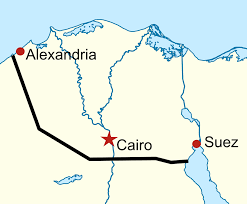
SUMED links the Red and Mediterranean Seas with a capacity of over 2.5 million barrels per day. About 1.3 million bpd flowed through the system in 2018, the US Energy Information Administration said.
The pipeline is majority-owned by Egypt’s state oil company EGPC while Saudi Aramco, the Kuwait Investment Authority and Qatar Petroleum have smaller shares.


Simon Rose, co-founder and chief executive officer of Dahlman Rose & Co., discusses the outlook for seaborne trade through the Suez Canal and importance of the SuMed pipeline transporting crude…
Presented by Romano Pisciotti

Arab Petroleum Pipeline Co. has established a fully equipped product hub at their Ain Sukhna complex on the Red Sea Coast in Egypt. The hub includes both onshore and offshore facilities. The onshore facility comprises 61 product storage tanks with a total capacity of 2,125 million m³, and two 50 km long unidirectional pipelines to the city of Suez. The diameter of the individual product storage tanks varies from 21 to 59 m.
The offshore facility comprises a jetty and berths (500-160,000 DWT) including a topside pipeline and other auxiliaries. The hub includes an offshore single point mooring for very large crude carriers (VLCC), connected via a sea pipeline. The offshore facility is intended to accommodate future expansions to handle up to 24 million tonnes per annum of various products.
The Stralis Natural Power trucks maximise the environmental advantages of natural gas delivering a reduction of between 40% and 50% in fuel costs compared to their diesel equivalents and emissions reductions of up to 90% of nitrogen dioxide, 99% of particulate matter and 10% carbon dioxide increasing to 95% when biomethane is used.

Presented by MPI, IVECO Nigeria
Romano Pisciotti
Since the beginning of the Coronavirus pandemic, there has been a loss of 1/3rd global demand – more than 30 million barrels per day (BPD).

The virus instilled a level of uncertainty for oil traders, but the catalyst for the initial drop in price can be attributed to the escalating price war between Russia and Saudi for market share, eventually leading Saudi to flood the market with oil.
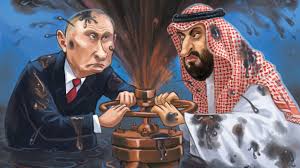
This oversupply dragged WTI prices below $20 a barrel at the end of March. Thus, increasing divergence in power politics from major producers created an initial frenzy in the oil market and an increasingly unsettling omen for investors.

In macroeconomic terms, Coronavirus has wiped out approximately 25 million jobs in the US, taking out all the jobs created since the 2003 and 2008 recessions. Central Banks globally have cut interest rates, restarted Quantitative Easing and provided other fiscal stimuli to try and keep the economy afloat.

The longer-term consequences of Coronavirus are still unknown. In the meantime, a deflationary ripple effect across the global economy can be seen, as Central Banks attempt to sustain economies’ survival as the Coronavirus pandemic continues to debilitate businesses and paralyzes transportation worldwide.
“The jump in the price of oil to the concrete promise of a vacino must not make us forget the industrial and employment crisis that will hit us in 2021.”
Romano Pisciotti
Oil’s gains weren’t necessarily all about the vaccine, however, with analysts noting remarks by Saudi Arabia’s energy minister that signaled openness to tweaking the agreement between the Organization of the Petroleum Exporting Countries and its allies, a group known as OPEC+, on production cuts.


Regia:
Fabio Pellarin
Genere
documentario
Edizione:
italiano
The Sumed pipeline is 320 kilometres (200 mi) long. It consists of two parallel lines of 42 inches (1,070 mm) diameter. Its capacity is 2.5 million barrels per day (400×103 m3/d).
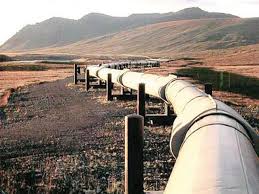
In 2009 it carried 1.1 million barrels per day (170×103 m3/d).
TODAY:
Arab Petroleum Pipeline Co. ( SUMED) has established a fully equipped product hub at their Ain Sukhna complex on the Red Sea Coast in Egypt. The hub includes both onshore and offshore facilities. The onshore facility comprises 61 product storage tanks with a total capacity of 2,125 million m³, and two 50 km long unidirectional pipelines to the city of Suez. The diameter of the individual product storage tanks varies from 21 to 59 m.

The offshore facility comprises a jetty and berths (500-160,000 DWT) including a topside pipeline and other auxiliaries. The hub includes an offshore single point mooring for very large crude carriers (VLCC), connected via a sea pipeline and marine hoses. The offshore facility is intended to accommodate future expansions to handle up to 24 million tonnes per annum of various products.
Presented by Romano Pisciotti