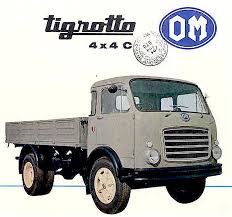
Nel primo dopoguerra la serie di autocarri della Officine Meccaniche (OM) era contraddistinta da designazioni zoologiche ed era composta da mezzi come
Leoncino
Tigrotto
Tigre, Lupetto, Cerbiatto, Daino e Orsetto; nel 1967, nell’ambito di un programma di riorganizzazione di tutto il comparto dei mezzi di trasporto merci operato da Fiat Veicoli Industriali (del cui gruppo OM faceva parte), tali diciture cominciarono ad essere sostituite da quelle semplicemente numeriche.
In the first post-war period the series of trucks of the Officine Meccaniche (OM) was characterized by zoological designations and was made up of vehicles such as Leoncino, Tigrotto,
Tigre
Lupetto
Cerbiatto
Daino
and Orsetto.
In 1967, as part of a program for the reorganization of the entire freight transport sector operated by Fiat Veicoli Industriali (of which the OM group was part), these terms began to be replaced by simply numerical ones.
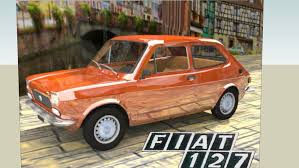
The Fiat 127 is a supermini car produced by Italian car manufacturer FIAT from 1971 to 1983. It was introduced in 1971 as the replacement for the Fiat 850. Production of the 127 in Italy ended in 1983 following the introduction of its replacement, the Fiat Uno.
Il Comitato Centrale del Partito Comunista dell’Unione Sovietica arrivo a questa decisione dopo aver analizzato ben 54 differenti progetti. A vincere la sfida fu la Fiat che “conquistò” i russi, nella fattispecie l’allora segretario generale Nikita Cruschev, durante l’Esposizione Italiana del 1962 a Mosca. Erano gli anni del boom economico e della motorizzazione di massa dell’Italia ed il modello di produzione della Fiat parve la soluzione ideale agli occhi dei sovietici.
Il 15 agosto 1966 Urss e Fiat decisero che un paese sul Volga sarebbe diventato la Città dell’auto. Con il nome del leader del Pci.
Un sogno vecchio più di cinquant’anni se si prende per data ufficiale del “progetto Togliatti” il 15 agosto 1966 con la storica firma a Mosca dell’accordo tra il presidente (uscente) della Fiat, Vittorio Valletta, e i ministri dell’Industria automobilistica e del commercio estero dell’Urss.
La Delfino è stata realizzata sul telaio di una Fiat 509 A del 1925, una vettura piuttosto diffusa all’epoca. La Fiat dopo avere realizzato gli autotelai, li inviava a carrozzieri specializzati, che provvedevano alla realizzazione delle carrozzerie, berlina, spider, torpedo, o sportiva, a seconda delle richieste della clientela.
The Delfino was built on the chassis of a 1925 Fiat 509 A, a rather popular car at the time. After making the chassis, Fiat sent them to specialized body builders, who provided for the construction of the bodywork, sedan, spider, torpedo, or sports car, according to customer requests.
La Tecnica:
L’autotelaio e quello di una Fiat 509 A del 1925, con motore a 4 cilindri da 990 cc, erogante 22 Cv a 3400 giri/min, cambio a 3 marce a leva centrale.
La carrozzeria è stata interamente realizzata in alluminio, una vera e propria opera d’arte che riproduce la forma di un pesce con tanto di coda, occhi e bocca. Costituita da due semi gusci saldati e uniti da una giunzione invisibile, la carrozzeria della Delfino è piuttosto leggera e tende a flettere molto causando crepe nella carrozzeria.
La lavorazione della carrozzeria della Fiat 509 A Delfino venne denominata “bouchonnè”, e riproduceva le squame della pelle del pesce. La finitura bouchonnè venne realizzata applicando a dei tappi di sughero una carta abrasiva molto fine, grana 600. Facendo ruotare a mano questi tappi, ed esercitando una certa pressione, venivano lasciati dei segni circolari che realizzati uno accanto all’altro su tutta la carrozzeria riproducevano la pelle del pesce, per finire, una verniciatura trasparente ricreava l’effetto viscido dei pesci.
The Technique:
The chassis of a 1925 Fiat 509 A with 990 cc 4-cylinder engine, delivering 22 HP at 3400 rpm, 3-speed gearbox with central lever.
The bodywork was entirely made of aluminum, a real work of art that reproduces the shape of a fish with a tail, eyes and mouth. Made up of two half-shells welded and joined by an invisible joint, the Delfino bodywork is rather light and tends to flex a lot, causing cracks in the bodywork.
The bodywork of the Fiat 509 A Delfino was called “bouchonnè”, and reproduced the scales of the fish’s skin. The bouchonné finish was achieved by applying a very fine abrasive paper, 600 grit, to cork stoppers. By making these stoppers rotate by hand, and exerting a certain pressure, circular marks were left which, reproduced side by side on the entire bodywork, reproduced the skin of the fish, to finish, a transparent varnish recreated the slimy effect of the fish.
La Storia:
La carrozzeria della Fiat 509 A Delfino era davvero speciale, perché riproduceva la forma di un pesce. La Fiat 509 A Delfino fu realizzata tra il 1925 e il 1926 dalla Martelleria Italiana Riva Panzeri di Milano, e venne acquistata nel 1926 da Giuseppe Bonaldi, il Podestà di Bergamo. Bonaldi ebbe poco tempo per godersi la sua Delfino, infatti, poco tempo dopo, il Governo fascista, per fronteggiare i costi della guerra, promulgò l’editto “Ferro alla Patria” dove invitava tutti i cittadini a donare rottami di ferro da fondere per la produzione di cannoni.
Bonaldi da buon patriota rispose all’appello, e consegnò la sua Fiat 509 A Delfino ai depositi governativi, questa donazione venne accettata solo in parte, la carrozzeria a forma di delfino non andava bene per fare i cannoni visto che era di alluminio, venne quindi smontata imballata e rispedita al mittente, senza autotelaio e senza motore che finirono invece nelle fonderie.
History:
The bodywork of the Fiat 509 A Delfino was very special, because it reproduced the shape of a fish. The Fiat 509 A Delfino was built between 1925 and 1926 by the Italian Martelleria Riva Panzeri in Milan, and was purchased in 1926 by Giuseppe Bonaldi, the Podestà of Bergamo. Bonaldi had little time to enjoy his Dolphin, in fact, shortly afterwards, the Fascist government, to face the costs of the war, promulgated the edict “Ferro alla Patria” where he invited all citizens to donate scrap iron to melt for the cannon production.
Bonaldi as a good patriot answered the appeal, and delivered his Fiat 509 A Delfino to the government deposits, this donation was only partially accepted, the dolphin-shaped bodywork was not good for making cannons since it was made of aluminum, it therefore came disassembled packed and sent back to the sender, without chassis and engine which ended up in the foundries instead.
National Trucks Manufacturers (NTM) was originally established in 1975 by The Federal Government of Nigeria through a joint venture agreement with FIAT IVECO of ITALY for
progressive assembly and manufacturing of Trucks and Tractors. National Trucks Manufacturers Ltd began full operation of the assembly of trucks & agricultural tractors in 1980. The company unfortunately shut down operations in 1987 due to unfavorable economic conditions.
National Trucks Manufacturers (NTM) è stata originariamente istituita nel 1975 dal governo federale nigeriano attraverso un accordo di joint venture con FIAT IVECO dell’ITALIA per l’assemblaggio e produzione di camion e trattori. National Trucks Manufacturers Ltd ha iniziato la piena attività di assemblaggio di camion e trattori agricoli nel 1980. Purtroppo la società ha chiuso le attività nel 1987 a causa di condizioni economiche sfavorevoli.
The Fiat 1300 and Fiat 1500 are automobiles which were manufactured by the Italian automaker Fiat from 1961 to 1967. They replaced the Fiat 1400 and Fiat 1200 coupé, spyder and cabriolet. The 1300 and 1500 were essentially identical except for their engine displacement, as indicated by their model names. They were available as a saloon and station wagon, and as convertible and coupé models which shared little mechanically with the other body styles except the 1500 engine.
The car’s 75 hp engine combined with its lightweight construction was unusual for the time.
Oggi, vengono prodotti ogni anno circa 60 milioni di auto, ma quanto ne sappiamo della storia delle case automobilistiche che realizzano i modelli che vediamo tutti i giorni sulle strade? Che sia stata fondata come azienda produttrice di motori marini o come mulino per il grano a conduzione familiare nell’800, ogni casa automobilistica vanta una storia interessante, che le ha rese quelle che sono oggi. Continua a leggere e scopri le cinque case automobilistiche più antiche del mondo.
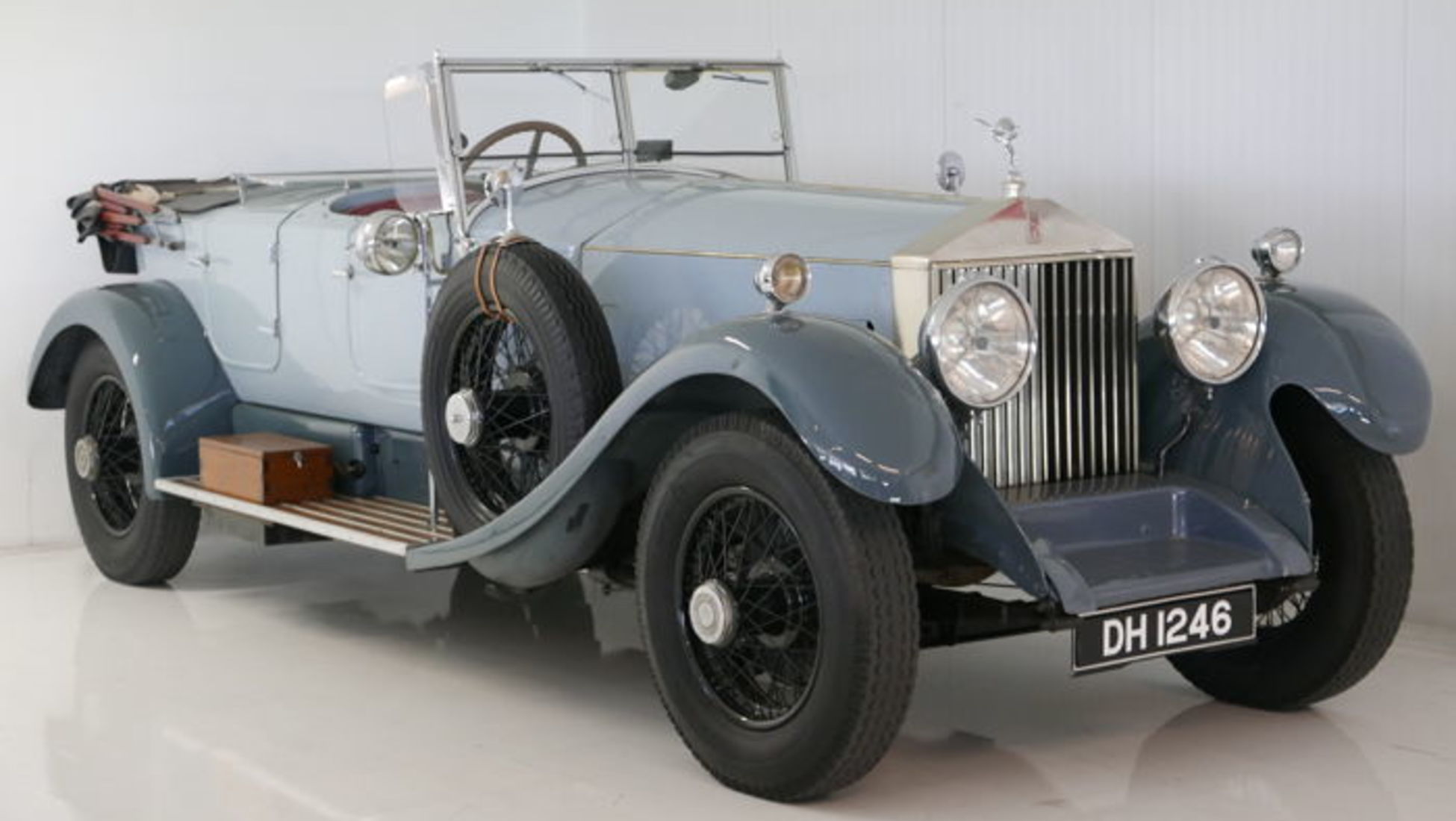
5. Rolls-RoyceUno tra i più rinomati marchi nel settore delle auto di lusso, la Rolls-Royce, è stato fondato nel 1906 da Henry Royce, ingegnere di successo, e da Charles Rolls, proprietario delle prime concessionarie di auto a motore del Regno Unito. Così nacque questa grande collaborazione. La Rolls-Royce ottenne il primo successo con la Silver Ghost, premiata come “migliore auto del mondo” dopo aver superato vari record. La Silver Ghost ha viaggiato da Londra a Glasgow per 27 volte, percorrendo l’incredibile distanza di 14.371 miglia di seguito e battendo il record del viaggio più lungo senza fermate a bordo di una vettura a motore affidabile e confortevole. La Rolls-Royce, adesso acquisita dalla BMW, rimane uno dei più rispettati produttori di auto nel mondo.
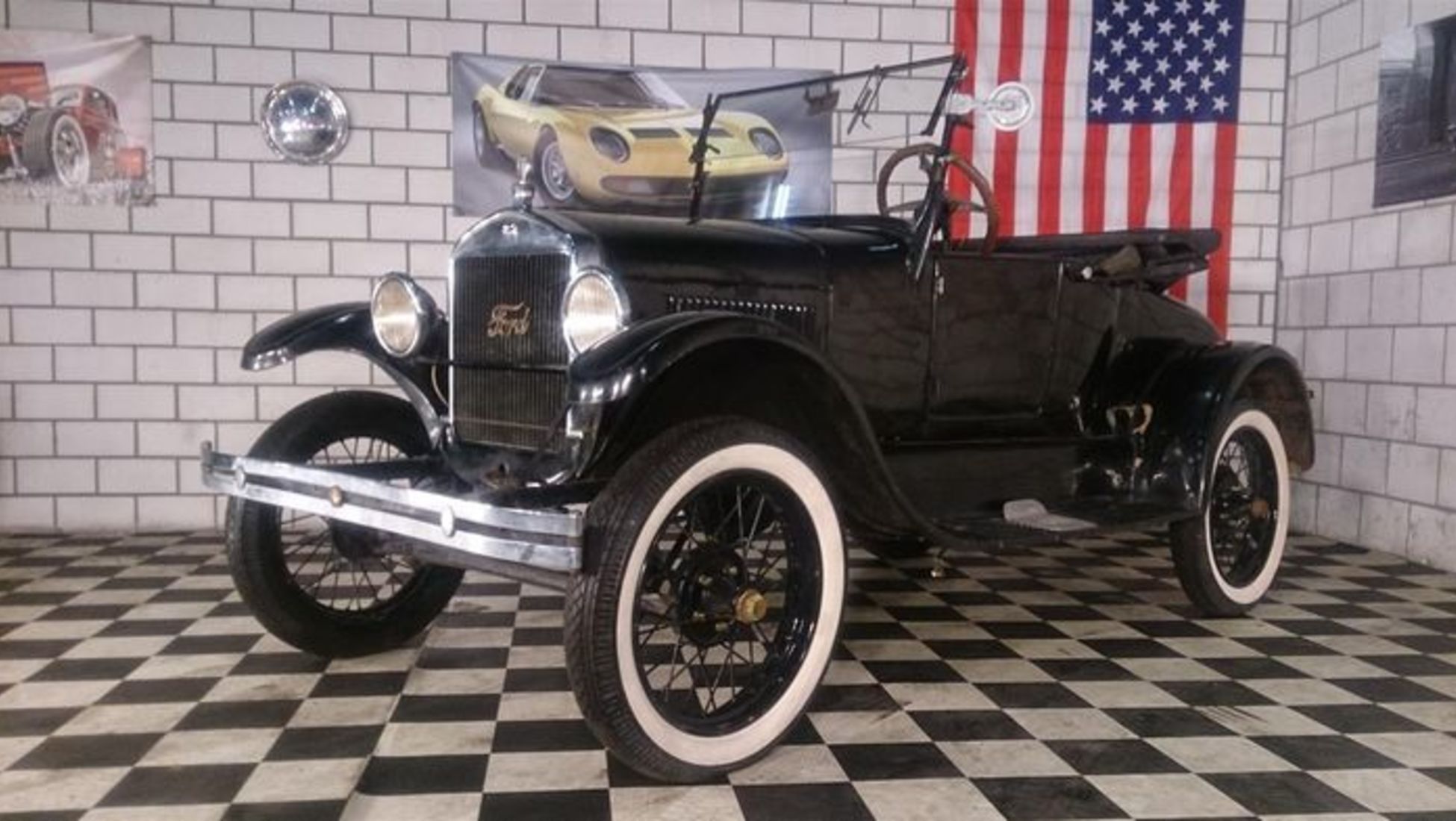
4. Ford: Il primo veicolo di Henry Ford è stato creato nel 1886, con un discreto motore a quattro cavalli. Bisognerà attendere fino al 1903 per la fondazione della società Ford. Pur essendo una delle più antiche case automobilistiche del mondo, ciò che rende la Ford così famosa è il rivoluzionario sviluppo della produzione su catena di montaggio. Questo stile di produzione rendeva la realizzazione delle automobili più conveniente e, pertanto, le vendite avrebbero avuto un prezzo inferiore, offrendo a centinaia di migliaia di americani la possibilità di possedere la prima macchina. La produzione della Model T ha consentito a molti americani di poter viaggiare e ha rivoluzionato non solo la fase di progettazione delle vetture, ma anche il loro ruolo svolto all’interno della società.
3. Fiat: La Fiat è stata fondata nel 1899. Oggi è ancora il marchio automobilistico più importante d’Italia ed è molto noto in tutta Europa. Alla fine del 1910, Giovanni Agnelli, amministratore delegato, visitò la fabbrica di Henry Ford e rimase talmente impressionato dalla linea di produzione che, al suo rientro in Italia, la introdusse alla Fiat. Questo nuovo metodo per la produzione della vettura italiana portò all’apertura della fabbrica del Lingotto, la quale vanta un’enorme pista ovale di prova sul tetto.
2. Vauxhall: La Vauxhall è stata fondata nel 1857 dall’ingegnere scozzese Alexander Wilson a Vauxhall, Londra. In quel momento, Vauxhall era un produttore di motori a pompa e marini, prima di avviare la produzione di motori a benzina nel 1894, quando Wilson lasciò l’azienda. La prima auto Vauxhall è stata fabbricata nel 1903 e costava l’imponente cifra di € 150. Questa prima automobile, nota come 6HP, era una macchina monocilindrica e due marce, senza retromarcia. Anche se oggi è un po’ più costosa rispetto a quei € 150, la Vauxhall resta una scelta molto popolare tra migliaia di appassionati.
1. PeugeotLa Peugeot venne fondata nel 1803 da Jean-Pierre e Jean-Frédéric Peugeot ed è la più antica marca di auto del mondo. Fondata originariamente come mulino di grano a conduzione familiare, la Peugeot produceva seghe, nastri in acciaio e molle per il settore dell’orologeria, prima di passare alle bici nel 1830 e alle auto nel 1882. La prima automobile firmata Peugeot è stata presentata all’Esposizione universale del 1889 di Parigi. Questo triciclo a vapore non è famoso solo per essere stato popolare durante l’Esposizione, ma anche per essere stata la prima auto mai guidata in Italia nel 1893. Un momento, una vettura francese è stata la prima auto a essere guidata sulle strade italiane? Ebbene sì. Gaetano Rossi, un industriale tessile facoltoso, ordinò la macchina dalla Francia nel 1892 e questa venne consegnata l’anno successivo a casa sua, nel nord Italia. Peugeot ha percorso un lungo cammino e continua a crescere grazie a un’estrema resistenza.
The Fiat 626 was an Italian medium truck that met specifications for the Italian army and air force for military operations prior to World War II. The Fiat 626 NLM operated in Italian North Africa (1940–1943), Italian East Africa (1940–1941), the Balkans (1940–1944), France (1940–1944), and Soviet Union(1941-1943/44).
In 1939, the 626 was the first FIAT truck with the advanced cabin and it replaced the models 621 and 633.
The initial version of the 626 for civilian use was the 626N (“N” for Nafta, the Italian for diesel). This was followed by a slightly longer wheelbase version the 626NL (from Nafta Lungo – “diesel long”). The military version for the Italian Army and the Italian Air Force was the 626NLM (for Nafta Lungo Militare)
A reliable workhorse, the FIAT 626 became the standard Italian medium truck and operated on all fronts.
France ordered 1,650 trucks; 700 had been delivered by the time Italy declared war on June 10, 1940. After the Italian armistice with the Allies in September 1943, the FIAT 626 was used by German forces. By 31 January 1945 3,000 had been produced for German use. In 1941, 100 trucks were purchased by the Bulgarian army after Bulgaria became an ally of Germany and Italy. The Bulgarian Army still used the vehicles in 1944-1945, after the country signed an armistice with the Allies’ and participated in the war against Germany.
Production finished in 1948, after 10,000 Fiat 626 had been produced at FIAT’s Turin assembly lines.
At the beginning of the twentieth century, Italy is a rapidly changing agricultural country under the pressure of the second industrial revolution. The first establishments of the modern era were born in Milan and Turin, many of which were dedicated to the nascent automotive sector. The production is still modest and in the city streets are still the animal-powered carriages to ensure mobility. This is how the “Carradore” workshops were born, which repair and build carriages to move around the city. Like the one inaugurated in 1912 by a young man who arrived under the Mole from the province of Cuneo in search of fortune, it was Giovanni Bertone, who was busy repairing carts.
Nuccio Bertone, son of Giovanni, was born on July 4th 1914
In 1918 Giovanni opened a new office in via Monginevro 119, hired 20 workers and decided to focus on the sector that considers the future: the automobile. The first important order arrives early: build a torpedo on 23 S mechanics, a sports model of the SPA (Società Piemontese Automobili) of Matteo Cerano and Michele Ansaldi. The work is carried out with care and passion and attracts an order for a high-performance model, the Fiat 501 Sport Siluro Corsa.
Fiat 501 SportLancia Lambda
Followed by agreements with other small companies, such as Fast, Chiribiri, Aurea, SCAT and Itala, and soon contacts with the two brands are becoming more and more important: Fiat and Lancia.
More and more appreciated models are coming that allow Bertone to come out unscathed from the Great Depression and to expand acquiring the new factory of Corso Peschiera.
After the war events of World War II, Giovanni, now 61 years old, gradually left the reins of the company to his son Nuccio, just forty years old but already for twenty years in the Bertone world. Its imprint does not wait and within a few years come out some specimens that mark the new stylistic trends of the next decade, such as the Lancia Aprilia Cabriolet and two fascinating variants of the Fiat 1100 made with Vittorio Stanguellini, a racy coupé and a discovery from competition.
Lancia Aprilia Cabriolet
In the Fifties,
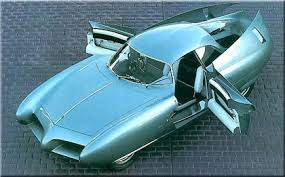
1954 Alfa Romeo BAT 7BAT 7
Italy finds new vitality singing the songs of the newborn Festival di Sanremo and enthusiastically following the challenges with pedal strokes between Coppi and Bartali. The liberated Europe becomes a great market and the first foreign orders arrive at Bertone. In 1952 those of MG and Bristol, in 1957 is the turn of the NSU, a German brand that entrusts Bertone with the production of Prinz Sport, a small two-cylinder “dressed” with grace by Franco Scaglione, recently at the court of Nuccio. An increase in work that leads the management to think of a larger plant to house the new plants and the employees, which have now reached 550. The building will be ready in 1959 in Grugliasco, just outside Turin. To mark the decade, however, is the collaboration with Alfa Romeo. The first approach is in 1953, when Nuccio entrusted Scaglione with the design of the Giulietta Sprint prototype, a model for which a production limited to 1000 units is planned.
Alfa Romeo Giulietta Spider
The Sixties are the period of the “Dolce Vita”, of the widespread wellbeing, of the mass motorization that runs on the new Autostrada del Sole and crosses the Alps from the newly inaugurated Mont Blanc Tunnel. And they are the years of maximum lightning of Italian touring, the “GT”. A sector that the whole world envies us and that Nuccio and his designers contribute to make famous. From this period some extraordinary models like the Alfa Romeo 2600 Sprint,
Alfa Romeo Sprint
in coupe and cabriolet version, two Ferrari 250 GT, one called Wax from the name of the client and the other used by Nuccio himself, the Aston Martin DB4 GT “Jet “and the Maserati 5000 GT.
Aston Martin DB4 GT jet
There are also many prototypes to remember, such as the Chevrolet Corvair Testudo, a concept destined not to have an industrial following and which Nuccio personally guides up to the 1963 Geneva Motor Show, or the 1964 Alfa Romeo Canguro made on the basis of Giulia TZ and Giulia GT in 1965. Without forgetting the “Ferrarina”, the ASA 1000 born from a project by Enzo Ferrari that will never land on the market despite the great interest that aroused. Industrial plans are also going well. From abroad the requests of BMW arrive to realize the 3200 CS
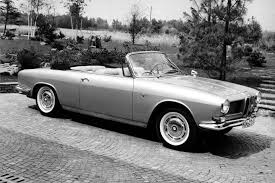
BMW 3200 CS
and Simca for the 1000 Coupé. From Fiat those for a small discovery based on the 850.
ASA 1000 Ferrarina
The seventies are still beginning in the name of Taurus with Jarama and Urraco (Lamborghini). But to shake the engine enthusiasts is a futuristic concept created by Gandini on the basis of the Lancia Fulvia HF, the Stratos Zero. A specimen that appears at the Turin Motor Show in 1970 arousing great fanfare and that will have a great competitive future with its road evolution, the Lancia Stratos HF.
Lancia Stratos ZeroLancia Stratos
The years of industrial consolidation begin. 1500 employees work at the Grugliasco plant and production is more intense than ever.
FIAT X1/9
Merit of the Fiat X1 / 9, small sport signed by the usual Gandini replacing the 850 Spider surpassing it in units produced: 160,000 from 1972 to 1988. And the new agreement with Volvo for the production of the 264 TE limousine and the refined coupé 262 C. Model exhibited for the first time at the Geneva Motor Show and for which Bertone is responsible for the entire production cycle, from the assembly of the raw body to the assembly of mechanical parts and the related road tests.
Volvo 262 C
The eighties / nineties are a decade of events that will change the course of history, from the explosion of the nuclear reactor at Chernobyl, from the discovery of the ozone hole over the Antardite to the fall of the Berlin Wall. In tale trambusto la Bertone prosegue la strada del rafforzamento industriale e finanziario rinunciando in parte alla realizzazione di concept spettacolari per concentrarsi nella produzione. D’altronde gli impegni sono sempre più severi. Dall’inizio del decennio la Bertone vende direttamente con il proprio marchio la Ritmo Cabrio e la X1/9.
Sono di questi anni pure gli accordi con Citroën e General Motors. Per la casa francese segue lo stile di due importanti modelli, la BX e l’ammiraglia XM. Con la filiale europea del colosso di Detroit Nuccio sigla nel 1987 un accordo commerciale per la produzione della Kadett Cabrio, seguita poi dall’Astra Cabrio e, negli anni seguenti, dalle versioni Coupé e Cabriolet della compatta Opel.
CITROEN XM
The last decade of the millennium opens with the commitment of Carrozzeria Bertone for the development of innovative technologies.
1994 Bertone ZER (Zero Emission Record)ZER
Eco-compatible expedients that Bertone puts into practice with another prototype with excellent aerodynamics (CX of 0.11): the ZER, acronym of Zero Emission Record.
Porsche Karisma Bertone
In this period there are plenty of style car shows like the Karisma of 1994, a strange sedan made on a Porsche basis, or the 1995 Kayak, a sleek coupe with the Lancia brand that some have defined the 2000 Aurelia B20.
Lancia Kayak
An unusual coupé-wagon based on Calibra, which was exhibited in Geneva in 1996, the Slalom, and the less enthusiastic sport utility derived from the Fiat Brava platform. On the production front, Bertone obtains, first in Italy in the automotive sector, the ISO 9001 quality certification of its Grugliasco plants. Where the top models are the cabriolets built on Opel Astra and Fiat Punto. To make it more sad the decade is the disappearance of Nuccio Bertone on February 26, 1997, a few days before the Geneva Motor Show where an unlikely Suv Alfa Romeo is exhibited.
Nuccio Bertone
The novel centenary of the Bertone family has entered by law in the history of Italy with the decree of the Ministry for Cultural Heritage and Activities which attributes to the Bertone Collection of historic cars held in Caprie (TO) the recognition of “national artistic heritage”.