I sogni sono stati le vele per i nostri cuori

I sogni sono stati le vele per i nostri cuori, per le nostre passioni! Quel brigantino ha viaggiato con noi tutta la vita, ora ci sta accompagnando nei ricordi: lacrime, gioie, fatiche e amori che hanno gonfiato di forza e volontà, dal fiocco al controvelaccio, le nostre andature.

Abbiamo risalito il vento con randa e fiocco, abbiamo imparato a navigare con vento a sei quarte o al traverso, al lasco come con andatura di poppa.

Presto abbiamo capito che non si naviga con la prua al vento e abbiamo imparato a ridurre le vele nella tempesta, per tenderle, poi, nella ricerca di ogni alito possibile, volando sul mare verso orizzonti infiniti: avventura e fede che altri ragazzi non smetteranno di portare in petto.

Romano Pisciotti


Era il 6 novembre 1881 quando, dall’unione delle scuole delle Marine pre-unitarie di Genova e di Napoli, per volontà dell’allora Ministro della Marina, Ammiraglio Benedetto Brin, si diede vita all’Accademia Navale di Livorno, una delle esperienze formative più importanti della storia d’Italia.

NOT A GOOD PERIOD

The pro-Europeans and globalist fanatics had “opened their mouths” and laughed at the post-BREXIT British situation regarding product shortages … the truth, and the problems for all, is emerging!

The globalization highway is so clogged that the delays, inefficiencies and anomalies that are accumulating are such as to make each transport, each production increasingly complicated.

After gas and microchips, everything is starting to run out across Europe and even globally.

The product furthest from the place of consumption has undergone the greatest increase, in addition to the increase in the price of raw materials.

Disruptions in the supply chain have become one of the main challenges for the global economy since the beginning of the pandemic, but it is not only the pandemic effect that creates this situation. The economic crisis of some Chinese companies (serious discontent of the dragon) , the shortage of manpower or skilled personnel in some activities in Western countries, the strong demand for marketable goods, the forced interruptions of some logistic networks (Suez navigability interruption) and capacity limits have led to sharp increases in transport costs and delivery time.

The need for an ecological transition coinciding with a rapid technological transition is occupying politics, stressing the industry, cheering up finance and dazzling consumers…obviously the latter will pay the bill, I don’t know with what climate benefits and simplified living.

In the worst case, Europe could face energy blackouts, while at the moment there is already a shortage of wheat for the production of basic foods such as pasta.

ARE WE IN THE PERFECT STORM?

(Romano Pisciotti sifting through the web)

COP26 – DRAGHI: “…I soldi ci sono…”

…BENE, MA QUANTI SOLDI?…PERCHE’ NE OCCORRONO VERAMENTE TANTI!

USCITA DAL FOSSILE

Prendendo ad esempio la Nigeria: quinto produttore mondiale di grezzo. Produce con bassa efficienza, al punto di non arrivare alle quote OPEC, ma brucia tonnellate di gas ogni giorno….i bagliori delle torce dei pozzi sono diventati i colori dei tramonti nel Rivers State. (ben poco gas viene riutilizzo, bruciando anche milioni di dollari).
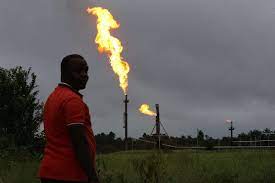
Il Paese ha molti pozzi offshore, quasi tutti gestiti da società straniere, dotati anche di navi storage. Con la normativa del Local Content, da anni è cominciata la “nigerianizzazione” di alcuni marginal field e in tutte le società straniere il personale è quasi tutto nigeriano (ad ogni livello); gli stipendi vengono imposti dal Governo allo stesso livello degli espatriati, questa pratica ha creato una frattura enorme tra gli stipendi di dipendenti oil e lavoratori di altri settori, ma ha contribuito alla formazione della classe media nigeriana. I sindacati del settore petrolifero sono una forza para-politica ed estende il suo potere in qualsiasi settore economico sinergico con quello petrolifero.

Gli automezzi pesanti circolanti non supera la normativa EURO 3, il travaso dall’Europa di veicoli più recenti dal mercato “usati” è massiccio, ma in diminuzione a causa dell’elettronica utilizzata nei moderni veicoli e dallo “spazio libero” sotto la cabina, vantaggioso per i consumi, ma di difficile impiego sulle strade nigeriane. Il prezzo di veicoli nuovi è proibitivo, se non per i veicoli cinesi assemblati localmente e dotati di meccanica semplice a normativa EURO 3.

Prima di pensare ad un miglioramento, dal punto di vista dei consumi e dell’inquinamento, occorrerebbe costruire una rete viaria compatibile con veicoli meno antiquati. Il trasporto su gomma copre l’80% del settore logistico, affiancato dal trasporto fluviale (dove possibile) e da una piccola percentuale su rotaia (la rete ferroviaria è limitata e inefficiente, nonostante i recenti investimenti).

Nonostante la produzione petrolifera, gasolio e benzina sono importati a causa della vetustà e inefficienza delle poche raffinerie funzionanti. Una nuova raffineria è prossima all’inaugurazione nella periferia di Lagos.

La distribuzione dell’energia elettrica è veramente precaria, il paese è “alimentato” da un numero incredibile (milioni) di generatori di tutte le “taglie.”

Alcune centrali idroelettriche esistenti non sono collegate efficientemente con la rete interna, al punto che parte della produzione è destinata ai paesi limitrofi.

La Nigeria è il paese più popoloso e vanta il PIL più alto tra i paesi africani…che con la crescita demografica, la bassa industrializzazione, la bassa scolarità, la bassa organizzazione dal punto d vista igienico-sanitario e la corruzione diffusa, si sta candidando a essere uno dei Paesi più inquinanti e poveri al mondo.

Altri paesi africani sono in condizioni peggiori della Nigeria e alcuni sono governati solo da bande, o tribù, armate; altri sono in condizioni migliori dal punto di vista industriale, ma con sacche di povertà ed enormi deficienze sociali.

Le risorse minerari dell’Africa sono enormi, ma le strutture e le tecniche estrattive sono spesso arretrate e fonte di un nuovo schiavismo, oltre ad alimentare l’inquinamento delle acque e dei terreni.

L’agricoltura, nonostante i recenti investimenti da parte di molti paesi, è frammentata e soffre anche delle problematiche legate alla conservazione e al trasporto dei prodotti.

Molti terreni sono già drammaticamente inariditi e la piaga delle cavallette e di parassiti mantiene ad un livello precario la produzione agricola. Nell’area tropicale e sub-tropicale il terreno fertile non supera i pochi centimetri di profondità e mal si adatta all’agricoltura intensiva (necessaria per sfamare la popolazione in crescita incontrollata), questo ha portato ad un uso indiscriminato di fertilizzanti altamente inquinanti, molti dei quali banditi in quasi tutto il mondo. La Nigeria, ad esempio, ha investito massicciamente nella produzione di riso, ma è ancora lontana dal coprire il fabbisogno interno, obbiettivo sempre più difficile da raggiungere con il continuo aumento della popolazione.

L’allevamento, nonostante la crescita di fattorie a produzione intensiva, è ben lontano dal fornire il livello di proteine minimo alle popolazioni…naturalmente con forti variazioni nelle varie classi sociali. Il consumo di latte è mediamente al disotto delle raccomandazioni minime FAO. In genere l’allevamento è basato su piccole comunità, spesso in conflitto tra di loro e con le comunità dedite all’agricoltura. Il livello igienico-sanitario, sia durante la fase di allevamento che di macellazione, è molto precario. In alcune aree la scarsità d’acqua salubre e la promiscuità tra animali e umani, favorisce la diffusione di malattie ed epidemie. Ovviamente, manca un numero adeguato di veterinari.

VACCINI PER L’AFRICA:

Con i vaccini (milioni di dosi), in molti paesi d’Africa, dovranno arrivare: frigoriferi, veicoli per il trasporto, medici e infermieri…ovviamente energia elettrica e strade per raggiungere molte città.

ALTRI CONTINENTI

Lo stesso Primo Ministro indiano, nel suo intervento al COP26, ha spiegato a chiare lettere che per una possibile de-carbonizzazione del suo enorme paese (…e fortemente inquinante) ci vorranno decenni! (…è una questione di economia: soldi!)

La Cina, pur dando una certa disponibilità (…per il futuro), non potrà cambiare rapidamente l’intero sistema industriale basato sui bassi costi produttivi e sulla globalizzazione dei mercati.

Altri paesi con economie legate al “fossile” non hanno mostrato interesse alle problematiche sollevate al COP26 e alle farneticanti proteste dei Gretini.

ALTRE PROBLEMATICHE… E ALTRI SOLDI

Le tecnologie attuali non permettono di sostituire il fossile nella copertura del fabbisogno industriale e sociale di un’umanità in crescita demografica. Forse il vero problema del pianeta è l’incontrollabile crescita demografica!

Nei paesi industrializzati lo sviluppo di fonti rinnovabili (pale eoliche, fotovoltaico, ecc.) vive per l’effetto di sovvenzioni statali; le auto elettriche godono di altrettante sovvenzioni, oltre a non aver ancora risolto il problema dell’autonomia e del riciclaggio delle batterie.

Forse assisteremo ad un revaival delle centrali atomiche?

MI FERMO QUI, ANCHE SE CI SAREBBE MOLTO ALTRO DA DIRE (…magari sull’effetto naturale dei cicli climatici e sul reale impatto delle attività umane…)

….E RIPETO LA DOMANDA: “QUANTI SOLDI CI SONO?”…sicuramente manca anche una reale volontà, ma i soldi potrebbero fare miracoli, anche se il primo miracolo sarebbe quello di avere una finanza meno fantasiosa e più legata alle reali necessità del pianeta.

Naturalmente, il processo per eventuali investimenti, non inquinanti, porterà ad un picco d’inquinamento e al rapido consumo delle materie prime!…Ma sarà per una buona causa?!


Romano Pisciotti


NEAR FUTURE FOR OIL

There has been much discussion on the volatility of the price of crude oil: the market rule based on supply and demand, in addition to being subject to the seasonality of consumption and industrial trends, is strongly linked to environmental and social factors that affect the availability of extraction and transportation. Security in some areas of extraction or sea routes is challenged by conflicts or acts of piracy or sabotage, just to name a few well-known issues.

One of the lesser-told factors of the energy crisis that is causing bill costs all over Europe, is the fact that this summer less wind has blown. Especially in the north of the continent, in 2021 the strength of the currents was between 10 and 15% lower than the expected average…slowing down the wind turbines that were supposed to guarantee energy.

In fact, it could be said that climate change has already impacted the solutions available to combat climate change!

Even if the human impact on global warming is minimal compared to natural cycles, we must certainly act on the part that depends on us.

Unfortunately, regardless of the will of the various countries to break away from the servitude of fossil fuels, it must be admitted that the renewable sources available are not yet capable of guaranteeing a real ecological transition. Perhaps this is the real reason for the unenthusiastic approach to “changes” of many Rulers … if not for the generic statements that commit the distant future more than the present and more for coal alone.

Except for the young people who follow Greta, animated by youthful dreams and impulses, everyone can understand that forcing the industry with too rapid change could mean a stalemate or the destruction of the economies of many countries, if not the whole world. After all, no one – not even most young dreamers – is willing to make a drastic life change.

Economic collapse is as dangerous as the effects of climate change.

We could easily have a large amount of energy from hydroelectric and nuclear sources, but there is already an endless discussion about the safety and disposal of nuclear waste or other environmental discussions related to large dams.

The political and industrial commitment must be in the search for real alternatives rather than in the fluctuating popular consensus or the immediate profit on what is available; perhaps the concrete ecological alternatives are still to be invented or lie in the still theoretical solutions: we must not be under the illusion that eternal batteries or the availability of hydrogen in large volumes are already industrial-grade.

It is very likely that oil and gas will not leave us anytime soon, beyond the thunderous announcements of politicians looking for some quick response to public opinion.

Perhaps the real immediate solution is the reduction of energy consumption, this should not be difficult, if environmental consciences do not lie, even if paradoxically, the ecological transition will need a large amount of fossil fuels (wind turbines, or other solutions, are not made with the magic wand)

The industry has provided us with vehicles that consume and pollute less than previous models; we can give up a bit of travel and a bit of heat in our homes … but it is certainly strange that the same man, who became excessively rich by promoting electric cars and supertrains, also promotes useless and energy-intensive space travel; it is strange that the man who delivers the fruits of globalization home to us only cares about finding a faster way to expand his business, at the expense of more sustainable businesses; it is strange that no one wants to give up chatter, dispersed in millions of useless messages, ignoring the immense absorption of energy for the functioning of algorithms that already claim to be vital.

Perhaps there is, in part already there, a sustainable way to extract oil and gas (certainly abandoning the absurd practice of extraction with destructive methods such as the fragmentation of rock shales). There could be consumption, just as sustainable (intelligent), until science offers us a real alternative.

Surely we could decrease, more rapidly than any other solution, the suffocation of the seas with plastic or the deforestation of the lands: this would give a sure hand to the ecological rebalancing of the Planet.

Leaping through hoops to get out of the fossils too quickly could have worse consequences

Romano Pisciotti

Romano Pisciotti


HELLO MILANO: The wooden leg//El Gamba de legn

El Gamba de Legn’: ‘the wooden leg’ is an unusual name for a means of transport. It was the nickname that the people of Milan gave to the first steam-powered tram which started running on 9 September 1878, connecting Milan and Magenta over a distance of about 23 kilometres. They applied the same name to all the other lines that were later built between Milan and the surrounding towns.

Why wooden leg? Apparently the tram, running slowly along the tracks on Milan’s cobbled streets, made a syncopated To-Toc To-Toc sound, like a person walking with a wooden leg.

The 17 trams had from 10 to 12 carriages, without doors or heating, and there were wooden benches for the passengers who got very cold in winter. But even so, in those days the Gamba de Legn’ was advanced technology, far more efficient than the horse-drawn trams that could carry only a dozen people and that operated from Milan to Monza right up until 1900.

The 17 locomotives were manufactured by Lokomotivenfabrik Krauß in Munich, and they had a structure totally different from railway locos. For safety, the boiler and engine were completely enclosed by a steel screening structure, and the driver’s cabin was at the front for better visibility.

The maximum speed of the steam tram was specified by Milan’s provincial administration: 15 kilometres per hour in the countryside, along roads lined by mulberries used for silkworm raising, and 10 km/h in the city. When it was foggy, speed was reduced to 5 km/h. In this case, at every village and in Milan, an employee wrapped in a cloak and equipped with a lantern, bell and whistle waited for the tram and then walked in front of it to warn pedestrians of the oncoming danger. Before the First War, the tram ran five times a day. During the Second World War, many people were forced to live outside the city because of air-raid damage, and so all the goods trucks available were pressed into service, and even so, many passengers were forced to ride on the roofs of the normal carriages.

After the War, things returned to normal, and the last tram every day left Milan at 0.40 a.m., taking people back home after their evening out at the cinema or theatre.

The Gamba de Leg’ ran until 1954, and even though the residents of the villages and towns through which the slow and shuddering tram ran would have preferred to have kept the steam-powered version rather than the new electric trams, it finally went out of service in 1957. The last journey of the Gamba de Legn’ was accompanied by huge crowds of people, who put flowers on the locomotive.

https://www.hellomilano.it/hm/


Presented by Romano Pisciotti

GREAT BUSINESS IN NIGERIA

Why should you invest in Nigeria?

There are many reasons why you should consider investing in Nigeria. Nigeria is the largest economy in Africa ahead of South Africa, Egypt and the rest. With so many opportunities for growth, PwC has projected Nigeria among the top world economies in 2050 ahead of Italy, Canada, South Korea, Spain, Netherlands, Australia and others.

With over 200 million people….the best deal is to provide the food!!

Agriculture accounts for 33 percent of GDP and provides employment, both formal and informal, to more than 60% of the population.

However crop production dominates the agricultural sector and accounts for about 85 percent of agricultural activities; livestock and poultry accounting for 10 percent, fisheries and forestry, less than one percent…

…but rapidly growing.

There is a growing demand for animal protein in Nigeria!

Poultry production has not kept pace with the rapid increase in domestic consumption.

There is enormous potential for the poultry industry in Nigeria to enhance food and nutritional security, while contributing to household and economic growth.

There is no more efficient place to invest than in pullets. Pullets are the future of an integrated company. Successful pullet rearing is simply attention to detail, management, serology, biosecurity, vaccination, and worming.


https://youtu.be/Y65GVfGtsjo?t=84


Presented by Romano Pisciotti

The importance of proper and frequent cleaning of the rooms

Both at home and in the workplace, cleanliness and hygiene are an indispensable and fundamental condition.

Especially in this period, with the spread of the Coronavirus unfortunately still in progress, it is more than necessary to pay extreme attention to the cleaning and sanitation of the home and office, using suitable tools and products and providing daily thorough cleansing. of floors, surfaces and objects of common use.

Certainly cleaning and sanitizing in the time of Coronavirus is very important, but it is equally true that proper hygiene is an inevitable element to increase the level of well-being and comfort at home and in the workplace and to protect yourself from infections and allergies.

Choosing a powerful and high quality vacuum cleaner is the first rule to proceed with the total and thorough cleaning of an environment:

Presented by Romano Pisciotti

we like Lagos Environmental Sanitation Corps

https://m.facebook.com/LAGESCOfficial?_rdr&refsrc=deprecated

The bat is served….unsafe proteins!

Five million tons of bushmeat is consumed annually in Central Africa. In the Democratic Republic of Congo alone, a million prey are captured and killed, while in Ghana over 100,000 bats are cooked. In large regions of the continent, the population sees the forest as the most convenient place to get food. For those who live in poor and isolated villages, game is the only source of protein; for some, hunting and selling meat serves to supplement their meager earnings.

In African metropolises, eating habits have not changed much and the demand for bushmeat, bushmeat, is growing, in parallel with the demographic boom. On the outskirts of Nairobi, Kampala or Abidjan the streets are teeming with street vendors selling roasted antelope legs or monkeys. For the new middle class, buying crocodile or hippo meat is a status symbol. In Kinshasa and Lagos there is no shortage of markets specialized in the sale of game. Even in Western cities like London and New York, the demand for African game is on the rise. There are even restaurants that have made the “wild menu” the key to their success: in refined locations they serve steamed snakes, anteater stews, roast chimpanzees, caterpillar skewers and birds.

The game trade has become a multi-million dollar business that worries scientists and conservationists. The reasons are well known: researchers have now ascertained that African game is a powerful vehicle for the transmission of deadly viruses (Ebola, for example) to humans. It is no coincidence that hunters and their families are the first victims of the epidemics that periodically break out in the middle of the forest.

Then there is an environmental emergency: man is literally emptying the forests

Romano Pisciotti:“The problem of providing protein to the ever-growing population in developing countries is obvious!We have to look for the solution in animal husbandry … in hygienically controlled environments, with healthy food.

Helping developing countries to increase the volumes of meat and milk produced by farms makes the entire planet safer, without forgetting to fight against fairy tales and stupid traditions (even in rich countries) that are counterproductive to development.