GIANNI AGNELLI…ENZO FERRARI…LA NUOVA MONOPOSTO

La “storia d’amore” tra la Ferrari e la Fiat nasce il 18 giugno del 1969, quando il “Drake” cede a Gianni Agnelli il 50 per cento dell’azienda, mantenendo tuttavia il controllo della gestione sportiva.

https://youtu.be/RJYFLr7ZHCw?t=59

Il primo successo della “joint venture” tutta italiana arriva nel 1975: Niki Lauda si aggiudica il titolo piloti e insieme a Clay Regazzoni quello costruttori, che vinceranno anche i due anni successivi. L’austriaco si ripeterà nel 1977.

Nel 1988, dopo la morte di Ferrari, la Fiat diventa l’azionista di maggioranza della casa di Maranello.

Dal 1999 al 2004 Schumacher vince 5 campionati del mondo piloti e 6 costruttori (con l’aiuto di Eddie Irvine e soprattutto Rubens Barrichello). Agnelli muore il 24 gennaio del 2003.


2021:


Romano Pisciotti, LIKE

GLI SPRECHI DELLO STATO COSTANO IL DOPPIO DELL’EVASIONE

L’evasione fiscale e contributiva presente nel nostro Paese – pari, secondo i dati del Ministero dell’Economia e delle Finanze, a circa 110 miliardi di euro all’anno – ammonta a poco più della metà degli sprechi, degli sperperi e delle inefficienze causate dal cattiva gestione della nostra Pubblica Amministrazione (PA) che, la CGIA, stima in oltre 200 miliardi di euro all’anno.

PUBBLICA AMMINISTRAZIONE


ROMANO PISCIOTTI: l’evasione fiscale è dedotta, spesso basata su denunce della G. d F. che vengono, poi, smentite in tribunale; gli sprechi dello Stato sono una spesa reale.

L’uso geopolitico dei vaccini

L’uso geopolitico dei vaccini anti Covid. I vaccini ‘occidentali’ contro quelli russo e cinesi? I casi dell’America Latina, Israele, Africa, Medio Oriente e Sud-Est asiatico.

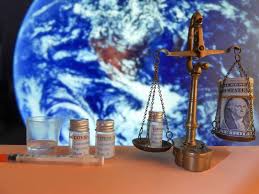
La nuova partita di geopolitica mondiale si gioca sullo scacchiere della salute. I favoriti, com’è evidente, sono coloro i quali hanno il vaccino contro il Covid. Se infatti allo scoppio della pandemia si è vissuta una sorta di sudditanza nei confronti di chi era in grado di fornire (e distribuire agli altri, perché no?) mascherine e respiratori, oggi la battaglia si gioca sul versante dei vaccini.


Presentato da Romano Pisciotti

Il nuovo coronavirus è destinato a restare

 Gli scenari delineati dai modelli previsionali per i prossimi mesi e anni sono vari, ma tutti concordano che Covid-19 non se ne andrà tanto presto.  

Molto di ciò che accadrà dipende dalle scelte dei governi e delle persone 

Gli esperti concordano su due punti: COVID-19 non se ne andrà tanto presto e il futuro dipende da molte incognite, per esempio la durata dell’immunità al virus, l’eventuale influenza delle stagioni sulla sua diffusione e – forse l’aspetto più importante – le scelte dei governi e delle persone. “Molti posti stanno riaprendo e molti altri no. Non sappiamo ancora bene che cosa succederà”, commenta Rosalind Eggo, esperta di modellazione di malattie contagiose alla London School of Hygiene & Tropical Medicine (LSHTM).

“Il futuro dipenderà in gran parte da come ricominceranno le interazioni sociali e dal tipo di prevenzione che adotteremo”, dice Joseph Wu, epidemiologo dell’Università di Hong Kong.  Modelli recenti ed evidenze ricavate dai lockdown che hanno funzionato indicano che i cambiamenti comportamentali possono ridurre la diffusione di COVID-19 se sono rispettati dalla maggioranza delle persone, anche se non per forza da tutte.

Presentato da Romano Pisciotti:


https://www.lescienze.it/news/2020/08/11/news/covid-19_coronavirus_scenari_futuro_2021_numero_contagi_casi_mondo-4778345/

FIAT 1200 “Trasformabile” 1958

Fiat “1200 Trasformabile” – 1958

The new 1100/103 saloon, introduced in 1953, marks the turning point towards a more modern production of FIAT cars. This car had a considerable commercial success and, in 1955, the TV Trasformabile version was launched, designed by the company itself and fitted with the 50 hp engine.

The design of the Trasformabile was too ahead of its time and turned out to be an obstacle to its commercial spreading, until 1958 when the car was fitted with the new high-performance 1200 Granluce engine.

https://youtu.be/ywecYY_wa4I?t=5

Presented by Romano Pisciotti

Lo Sputnik arriva a San Marino, non sarà venduto a italiani

San Marino dopo aver siglato un accordo con l’Italia, ha atteso fino all’ultimo di ricevere le fiale dei prodotti attualmente autorizzati da Ema e Aifa ma poi si è vista costretta a rivolgersi alla Federazione russa.


Alessandra Ghisleri: “Gli italiani non riescono più a capire la nostra potenzialità in Europa”

La sondaggista di Euromedia Research: “Bisognerebbe riuscire a far comprendere la nostra forza in Europa nei confronti di Germania e Francia”

“Dall’Europa nulla di diverso dal passato, i primi della classe fanno l’interesse nazionale”

( Dario Galli)

Matteo Bassetti: “L’Europa sui vaccini ha perso, l’Italia si dovrà attrezzare in maniera monolaterale”

“È giusto pensare a produrre in Italia per una fase più avanzata ma oggi qualsiasi prezzo è meglio che ritardare la vaccinazione”


Silvio Garattini: “Siamo completamente in ritardo, dobbiamo metterci nelle condizioni di produrre”

Il presidente dell’Istituto Mario Negri individua nella trattativa europea la scarsità di dosi vaccinali antiCovid: “Germania e Francia hanno sviluppato centri di produzione e noi niente, siamo dipendenti dagli altri”


Diego Fusaro contro l’Unione europea: “L’Ue è un nome che nasconde i vecchi interessi nazionali, mascherati dietro un guerreggiare di tipo economico. L’Unione europea come unione di popoli non esiste: non è la soluzione, ma il problema. Vi è un deficit strutturale di politica, visione comune e cultura, questo deficit si avverte soprattutto nei momenti di difficoltà, dove prevale l’interesse nazionale”

Lo Spallanzani “promuove” il vaccino russo Sputnik: “Sicuro ed efficace, può avere un ruolo importante nelle vaccinazioni”


L’Istituto ha analizzato i dati della letteratura scientifica internazionale sul vaccino messo a punto in Russia ma per il momento non ancora sotto esame da parte di Ema. Le conclusioni sono positive: “I dati di efficacia clinica sia in termini di protezione dalla malattia sintomatica (>90%) e dalla malattia grave (100%) sono paragonabili ai due vaccini più efficaci attualmente disponibili e si sono dimostrati omogenei in tutte le fasce di età”.

LA RELAZIONE


Opinioni e dati raccolti da Romano Pisciotti

NIGERIA: the development islands (Onne FZ)

NIGERIA: the development islands

By Romano Pisciotti

INTRODUCTION

If it is trivial to say that there can be no development of a country without industrial and technological development, it does not seem very obvious that the development of a country must pass through education and the acquisition of knowledge.

A population that grows only numerically risks causing areas of ignorance and poverty to grow.

Having said that, it is equally trivial to say that a balance is needed between learning and productive capacity:
1) School and university learning for young people who will, tomorrow, be the architects of the continuity of the “solid” development of human society and industrial and technological society.

2) Industrial investments and fast technical growth for managers and workers who are, today, the avant-garde for the growth of the country.

The potential of Nigeria, in contrast to many weaknesses of developed countries, is in the huge number of young people in contrast with the aging of the European countries, and in the breadth of the future consumer market, in contrast to the saturation of the European markets, which live mainly on substitutions.

1

These are consolidated things, but apparently not always exploited in favour of the construction of Greater Nigeria: perhaps the country perceives itself as smaller than it is or is perceived as more important than it is today in the world context … these estimates lead to a positioning that is too submissive or too optimistic, losing the true strengths of the Nation.

The mistake, in the search for solutions favourable to development, is the too broad approach: history has proved that massive and generalized interventions on a large part of a country hardly lead to an equally generalized benefit in terms of safe and constant growth, just as they do not lead to a redistribution of welfare.

In the past we have seen the famous Soviet five-year plans fail (or at least not cover their promises).
As well as the so-called “battles” for wheat… they failed in Europe, which never achieved the desired results, not having involved all sectors of the economy.

In China, after abandoning the Maoist policies, the development plans concerned only some areas, these areas have become so large as to guarantee robust development for the whole nation; the industrial and social divide will be narrowed with the creation and development of other areas. The Communist Party has abandoned part of its origins and has specialized industrial areas connected, step-by-step, by excellent infrastructures.

In the United States, the technology park was successful only because it is connected with the whole country: the excellences have been concentrated to exploit the synergies for the benefit of the entire industrial world.

In Nigeria for many years the customs duties tool has been used to favour the development of “Local Content” without achieving the desired results. For example, heavy vehicle assemblers have multiplied, attracting more state and bank aid than actual technological development or significant use of local labor. Favouring tariffs must help the economy without becoming the only strong point, forgetting technology and market competition.

2

Nigeria must grow faster, while struggling against a global crisis, or population growth will only increase the groups of poverty, also seeing the increase in social tensions.

We must start with some clear concepts:

  1. 1)  The world has globalized and, despite the collateral damage caused by this savage globalization, we cannot think that globalization can be reversible, although, of course, it will need to be better managed in social terms.
  2. 2)  The globalized world needs Nigeria … its natural resources, its human resources and its market potential.

A development model that avoids huge plans with the absorption of large resources and timid results is the system that we could define as “islands” already theorized and applied by marketing and very similar, in some ways, to the Chinese model.

ISLANDS

Identified some geographical areas that already enjoy particular natural advantages or industrial propensity … such as the proximity to raw materials or the existence of communication routes or that already enjoy some industrial installations … industrialization is pushed, well-being and school education, with limited investments, therefore not colossal, with the possibility of better monitoring of successes and failures, thus being able to accelerate or modify the path.

3

Chosen area must be considered as an autonomous municipality and, even better, enjoy tax treatment of favours. Obviously the managers of the area will have to answer to the Government about results and bring a contribution of interests to the Government itself. Part of the results will be re-invested in the area; part of the results will be transferred to the Government in compensation for the concessions awarded.

The Government will be able to use these economic remittances to open up new areas or islands of development.

The advantage of limiting development to “islands” makes the general orientation closer to the central government bodies and the concessions granted manage to attract private investors. “Dispersion” phenomena such as corruption or laxity can be better controlled through precise targets and this “precision” also comes from the relative extent of the area on which one focuses.

In Nigeria there is already a development plan for the areas linked to the existence of Free Commercial Areas; obviously it is questionable that there are very few success stories, and those few successes have been overwhelmed, at times, by the lack of project controls or deferral or other reasons not in line with the basic philosophy of marketing.

The development was limited to a closed deal within these areas.

Without mortifying the concessionaire, or rather the concessionaires, a gain will be guaranteed for all: first of all for the companies hosted in the area (which must not be throttled by the concessionaire) and for the Government that gives them the concessions.

The pivot of development must be the companies present, with their production or service activities; the Government must give the levers (facilities) and the direction based on real needs; the licensee must be an administrator with a balanced profit margin.

4

The development of the islands leads to the creation of other islands and the creation of an induced activity between the various islands that can specialize on the basis of what they will be able to do better or on the basis of distinctive characteristics (such as the presence of access to the sea or a river or the passage of an important railway or road junction.)

The peace of mind for operators of being in a protected area, also from the point of security, as well as not having to shell out figures for the acquisition of land (which remain the property of the Government), will lead to attracting investors in further connected and synergistic activities to existing ones.

The development of the “islands” will lead to connection with others or to join together. A synergy will develop between those who will occupy the islands and those who will operate on the normal market … a process that will develop on specific commercial addresses or natural needs.

Small businesses may also flourish for the necessary food supplies for the islands or large businesses for the supply of energy; infrastructures will be created for the connection of the islands and little by little a connective tissue will be formed, also offered by residential centres (new or old residential areas), by centres of medical or university excellence or other services: this fabric will be called Great Nigeria!

The “islands” can be set up as companies, capable of offering shares to “indirect” investors, that is, to those who do not have an activity in the area, but will invest on the basis of the shares they will buy and will consequently be paid by the income … exactly as on the Stock Exchange.

5

ONNE

Onne, despite the success of glorious years, proved to be a resounding failure and the worst misconception of the Free Zone.
Obviously we can say this today after the decline of that empire, but we must admit that the port works, services and buildings created in the Free Zone remain one of the greatest examples of industrial agglomeration in West Africa.

Construction, employment of personnel, and with them the well being achieved in the early years of the century could testify to what can or could be done in Nigeria.

What was missing? Probably nothing from the point of view of economic achievements, but the impact on the country was not up to the efforts made: the main strategy to be considered one of the desirable “expansion islands” for the nation has unfortunately failed, remaining a island … isolated.

Perhaps the single system of licensees that embraces construction activities, the port, industry and all other related activities risks holding back the development of some of these activities, above all it limits the opening to the market outside the Free Zone, making the concession the only economic fulcrum.

No one can be completely ungrateful to the architects of Onne’s success: the works and many facts demonstrate the growth triggered; not even the tactic used can be completely denigrated, but the strategy had not sufficiently contemplated the connections with the rest of the country and the performances remained closed by the wall of the Free Zone and there were few external synergies.

Good examples of management (even if now lost), such as the Pipe Coater Nigeria, whose “secret” of success was the orientation towards competition on the entire Nigerian market, research and continuous improvement, professionalism and extensive use of local workers and managers.

6

What is left of the “empire” can be the starting point, with a different organization and strategy.

Certainly the collapse in the price of oil has hit hard, but also a system too tied to a single scheme and the inability of some managers responsible to apply the marketing tactics, have decreed a general jam.

The isolation did not make it possible to create a better amortization of the crisis as in a large and diversified value chain.

Global companies continue to seek out new markets and need secure, well-organized bases to produce close to their target markets. They need security, efficient services and a productive and commercial induced that can help their effort. Companies need certain and constant costs.

Not only large groups must enter the Free Zone, but also traditional medium-sized family-run companies, which are numerous in the world and are the most in need of increasing their size.
In Europe, especially in Italy, family-run businesses are an important part of the economy and encompass technology and skills.

In Nigeria, many small entrepreneurs have created a similar business structure but need new technological pushes; all the medium-small companies in the world share the same efforts and the same values. Cooperation, for example, with many small Italian companies can mean a relaunch of craftsmanship or precision mechanics or clothing. In terms of transport and logistics these companies do not mean much and for this reason they have been excluded from the Free Zone, while these companies need protected areas to develop. In Nigeria there are already large companies that deal with logistics and it is one of the growing sectors but without an industrial fabric it makes little sense to have a logistics network.

In the Free Zone of Onne the structures already exist, well built by the previous concessionaire, and can be exploited for the possible next development.

7

The “old system” has rewarded the logistics apparatus by attributing to it the higher costs and revenues, as if the companies present and operating in the Free Zone were the fodder for logistics … this imbalance must be reversed and logistics must be at the service of companies with certain and controlled costs. The country needs companies capable of bringing the technology and productivity necessary for development … and bringing this knowledge must now be the main target.

In Onne it is necessary to consider everything positive that has been done and improve it.

The Free Zone must be a centre of excellence and, above all, a development engine for the country, which is why international schools and universities must also be welcomed.
Managers and workers must have vocational qualification schools and young people must follow job initiation courses that do not forget general culture.

The “islands” must be the meeting point between theory and practice in a continuous updating of professional skills.
Exchange and enrichment between different cultures is the fastest way of growth and peace.

The paradigm must change: the Free Zone must be a starting point for the country’s economic growth, not the point of arrival for the creation of a “village of wonders”.

Romano Pisciotti Business consultant

8

RECESSIONS are capitalism’s sorting mechanism.

BY PATRICK FOULIS: BUSINESS AFFAIRS EDITOR, THE ECONOMIST

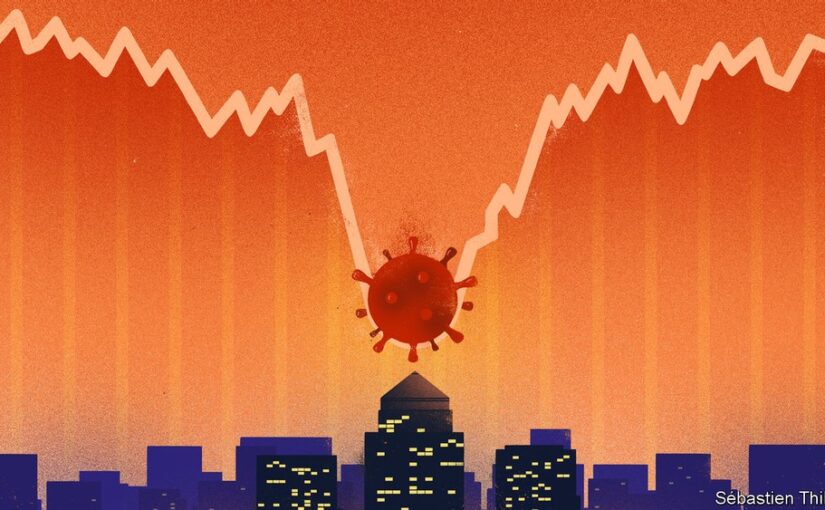
Weak businesses shrink or fail and stronger ones expand. But in 2020 the process of creative destruction did not take place in the typical manner. Because the downturn was the result of a health crisis rather than, say, a financial crash or inflation scare, there were some idiosyncratic corporate winners and losers: think of the boom in video streaming, or cruise-liner firms being wrecked. Meanwhile vast state handouts propped up companies around the world, masking the scale of the corporate carnage. In 2021 the toll will become clearer as stimulus tapers down and more firms fail. Healthy businesses will ramp up investment, giving them an enduring advantage. These top dogs will, however, face a new climate in which three tenets of modern business—the primacy of shareholders, globalisation and limited government—are in flux.

Downturns tend to be infrequent and swift: since the second world war America has been in recession only 14% of the time. But they have a profound impact on the structure of business. During the previous three slumps the share prices of American firms in the top quartile of each of ten sectors rose by 6% on average, while those in the bottom quartile fell by 44%.

presented by Romano Pisciotti

Si vis pacem, para bellum

Nel sangue d’Achille
abbiamo bagnato le spade
per trovare forza divina
e il coraggio dell’eroe:
cerimonie di guerra
dopo lauti pasti,
trattative e orazioni.

L’invulnerabile sapeva
di non essere tale,
sapeva di non tornare.

Offuscati dal profumo
di sogni e vino
ci eravamo convinti
che nessun nemico
avrebbe sfidato la pace.

Le nostre legioni
cercarono la gloria
nella politica dei discorsi
e fummo trascinati
schiavi per la vita.

Vinti senza combattere,
battuti da chi,
disposto a perdersi
per non perde,
scese in battaglia.

Romano Pisciotti

“Se vuoi la pace, prepara la guerra”

Come ci divide la moneta unica

L’euro vent’anni dopo:

La frustrazione di dover cercarsi su internet squisiti esercizi di pensiero sapendo che sulla televisione di stato si fanno manicaretti e balli con le stelle.

“L’Italia è un Paese decisivo su scala mondiale, ma non lo sa e preferisce non saperlo”, dice Lucio Caracciolo, fondatore e direttore dell’autorevole rivista Limes.

“Il nostro Paese è importante per almeno due ragioni. Primo, da noi dipende il futuro dell’euro. Secondo, l’Italia è alla frontiera fra Ordolandia e Caoslandia, ultima appendice del mondo relativamente ordinato e benestante tra Africa e Medio Oriente. E oggi, al di là del Canale di Sicilia, troviamo due imperi affacciati al centro del Mediterraneo, Russia e Turchia, che stanno riscoprendo antiche ambizioni. Ci attendono sfide enormi, ma non ce ne rendiamo conto”.

QUALE EUROPA CONVIENE ALL’ITALIA:

Presentato da Romano Pisciotti