Suez Canal Toll Fee

How Much Do Ships Pay for Transit?

HISTORY

TOLL CALCULATORS


The Suez Canal Authority (SCA) is set to lose over $10m in revenue from container lines routing vessels via the Cape of Good Hope rather than its waterway.

According to new Alphaliner research, “the number of containerships that have opted to use the Cape route and bypass the Suez Canal has risen to a historic peace-time high,” including at least 20 sailings on the Asia-Europe, Europe-Asia and North America east coast-Asia trades.

“A unique combination of a container tonnage surplus and rock-bottom bunker prices has increasingly prompted ocean carriers to avoid the canal – and thus its fees,” the analyst noted today.

Lines using cheaper Cape of Good Hope route will cost Suez Canal $10m

presented by Romano Pisciotti

‘Colli di bottiglia’ nelle catene di approvvigionamento

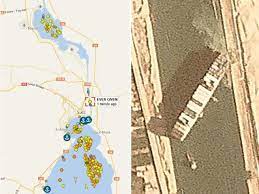
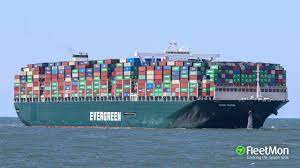
Le immagini della Ever Given, la nave cargo arenatasi nel Canale di Suez, bloccando una delle rotte commerciali più trafficate al mondo, hanno fatto in poche ore il giro del mondo.

….in poche ore il prezzo del barile sui mercati ha superato i 60 dollari: un aumento del 5%. E se non ci saranno tempi certi sul ripristino della normale circolazione su una cosa tutti concordano: più la situazione si protrarrà, peggiori saranno i danni.

Nell’era delle comunicazioni digitali, del 5G e della competizione per semiconduttori e terre rare, l’incidente di Suez e l’incidenza dei ‘colli di bottiglia’ nelle catene di approvvigionamento aggiunge nuovi timori per la tenuta delle supply chains, che durante la pandemia hanno già mostrato tutta la loro vulnerabilità e che di nuovo oggi, con i vaccini, pongono interrogativi tutt’altro che trascurabili. 

Furti ad opera di pirati, attacchi terroristici, ostilità belliche, incidenti navali: il blocco anche temporaneo di uno di questi passaggi, con conseguente collasso delle relative forniture, può generare uno shock sui mercati energetici, spingendo in alto i prezzi.

COLLI DI BOTTIGLIA


PRESENTATO DA ROMANO PISCIOTTI

Una dimostrazione di quanto siamo dipendenti da quello che succede nel mondo

“La situazione impatterà in modo particolare su quelle aziende che avevano optato per una catena della fornitura corta e non dispongono di un ampio stock di prodotti”
=====================================================================

Romano Pisciotti: Ci siamo ubriacati di “just in time” di teorie sulla fabbrica “magra” e per mettere in atto queste false promesse di utili mirabolanti abbiamo messo in atto una globalizzazione selvaggia, piegata più alla fantafinanza e agli utili a breve termine, senza pensare al “sistema paese” e alla stabilità economica.

La riduzione dei costi…ci costa lacrime e sangue ogni volta che salta una rotella del diabolico ingranaggio.

Assembliamo auto con parti costruite in Cina o rimbalziamo per mezzo mondo macchinari che aggiungono quote di valore in una catena che unisce bassi costi di produzione e grandi rischi, disoccupazione nei paesi industrializzati e, spesso, bassa qualità.

Per alimentare la teoria della globalizzazione abbiamo dovuto abbattere i costi di trasporto costruendo mega navi, spesso messe in cantiere con sovvenzioni pubbliche, abbiamo modificato porti, sempre con spesa pubblica, per ricevere questi giganti del mare…tutti pagheremo per una folata di vento che ha messo in difficoltà la “EVER GREEN.”

I marittimi hanno già pagato in termini di riduzione del personale a bordo e riduzione di stipendi, per rincorrere, al ribasso, le paghe di marinai d’acqua dolce.

Abbiamo creato un sistema che premia gli azionisti e distribuisce i costi su tutti.

Abbiamo globalizzato le pandemie e i disastri tenendoci l’incubo della disoccupazione…e tante altre rogne. Il conto economico, a livello mondiale, quadra, mentre noi affondiamo in questo mare grande che non rispetta confini, leggi o il benessere sociale.

=====================================================================

“La corsa al gigantismo navale, che continua a caratterizzare la strategia dei grandi gruppi che controllano il trasporto di merci in container (e quindi di tutti i principali beni di consumo), e che sono impegnati da anni a ordinare navi portacontainer sempre più grandi, ha creato un circolo vizioso che sta facendo emergere una fragilità senza precedenti storici nel mercato marittimo. In 5 anni la flotta mondiale per il trasporto merci è cresciuta del 37%, con tassi annuali anche del 10%, a fronte di una recessione economica mondiale e di una flessione nel tasso di sviluppo anche della Cina, oltre che dei principali Stati che avrebbero dovuto alimentare il rilancio dell’economia globale. 10% annuo contro una crescita media del 2% nel Pil mondiale. In queste cifre sono sintetizzati interrogativi inquietanti relativi alla corsa, tutt’oggi in atto, a nuove navi sempre più grandi e alle conseguenze che questa corsa genererà anche in sistemi paese…”

(Convegno Federagenti dedicato al tema delle grandi navi)

=====================================================================

Il blocco del canale di Suez causato dall’incagliamento di una delle più grandi navi al mondo, la portacontainer Ever Given della compagnia Evergreen, sta generando un vero e proprio effetto valanga su tutto il commercio globale, e in particolar modo su quello europeo. E di conseguenza anche il porto di Genova, il primo porto del paese, osserva con “orrore” le notizie in arrivo dall’Egitto, dove la situazione sembra essere, paradossalmente, “in alto mare”.

Un vero tsunami su tutta la filiera italiana – sottolinea Giampaolo Botta, direttore generale di Spediporto – la situazione potrebbe risolversi tra diversi giorni e provocherà seri problemi per la gestione delle scorte. Da Suez passano ogni settimana circa 50 mila contenitori diretti in Europa, e questo blocco sta facendo saltare tutte le schedule e le programmazioni, con attese dilatate anche di giorni“. Molte navi, infatti, stanno optando di aggirare il blocco rispolverando l’antica rotta di circumnavigazione dell’Africa “con un allungamento dei viaggi di 7-8 giorni – sottolinea Botta – cosa che con ogni certezza farà registrare rincari sul costo della merce trasportata“.

Ma non solo: “Una volta che la situazione si sbloccherà Suez bisognerà capire come ripartirà al programmazione, con un probabile aumento dei noli e problemi con la gestione dei container vuoti“. Una situazione che con buone probabilità porterà a congestionare i porti con gravi conseguenze sulla logistica sia in banchina che sulla strada. “Sarà un’ulteriore mazzata per il settore del trasporto – ci spiega Giuseppe Tagnocchetti di Trasportounito – già ora, in termini di mancanza di lavoro, visto che stanno saltando gli sbarchi, e dopo perchè si teme la congestione dei terminal, con lunghe attese dei nostri trasportatori che quindi lavoreranno in diseconomia e con pesanti disagi“.

Insomma una vera è propria bufera incastonata nel Mediterraneo e che, secondo Bloomberg, costa 9,6 miliardi di dollari al giorno: attraverso il canale di Suez passa il 12% del commercio marittimo mondiale, e l’8% del trasporto petrolifero. Dirette al nostro paese passano merci per un valore di 88 miliardi l’anno, vale a dire 241 milioni al giorno: “La situazione impatterà in modo particolare su quelle aziende che avevano optato per una catena della fornitura corta e non dispongono di un ampio stock di prodotti – sottolinea Nicola Capuzzo

https://www.genova24.it/2021/03/blocco-del-canale-di-suez-effetto-tsunami-sul-porto-di-genova-253625/?fbclid=IwAR0Ow0W4zXOD27YaQa3rXK0miZk2ccYf7uXmtvh8OyI0zE0MgpSEUtYMStk

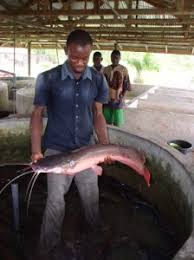
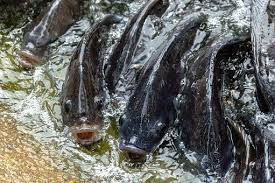
FISH FARM

Fish farming is an ancient practice that can provide many profitable opportunities today. The raising and selling of fish on a commercial basis has proven to be economically successful.

Start a fish farm by following these 9 steps:

You have found the perfect business idea, and now you are ready to take the next step. There is more to starting a business than just registering it with the state. We have put together this simple guide to starting your fish farm. These steps will ensure that your new business is well planned out, registered properly and legally compliant.

 Plan your business

A clear plan is essential for success as an entrepreneur. It will help you map out the specifics of your business and discover some unknowns. A few important topics to consider are:

  • What are the startup and ongoing costs?
  • Who is your target market?
  • How much can you charge customers?
  • What will you name your business?

What are the costs involved in opening a fish farm?

Costs will range, depending on the size and scope of the operation you are starting.

If you are starting an aquarium-based farm, you will need:

  • Tanks and pumps
  • Fish food and refrigerators
  • Water aerators
  • Water testing kits and equipment
  • An investment in the initial parent fish or eggs/frye

If you are running at a commercial fish farm you will need:

  • Land for ponds
  • Equipment for excavating ponds
  • Commercial-sized pumps, aerators, and water sources/reclamation devices
  • Boat, motor, and equipment for cleaning and managing the pond.
  • Industrial fish food supply
  • Fish processing equipment for shipping and exporting

What are the ongoing expenses for a fish farm?

Fish farming will have some variation in expenses, depending on what kind of fish and how many you are raising. Average associated costs will stem from:

  • Buying eggs and/or fingerlings for your re-stock purposes.
  • Food and maintenance of the fish.
  • Replacing pumps and oxygen/aeration systems.
  • Digging new ponds or buying additional tanks.
  • Electricity per month.
  • Plumbing maintenance.
  • Insurance for employees and the business.
  • Transporting/shipping of fish in and out of your farm.

https://youtu.be/V5bQpfo3LFs?t=12

Who is the target market?

Customer types will vary, depending on the types of fish you are raising. If you are raising fish for sport, re-stocking, or commercial food products, your base will consist of larger businesses, which need a higher volume of fish. Some customers may even consist of state or federal organizations who re-stock depleted natural resources.

If you raise fish for aquariums or as pets, your customer group will be pet shops and specialty fish dealers. You may even choose to have customers contact you directly, in order to expedite sales and cut the cost of the middle man.

Presented by Romano Pisciotti

Romano Pisciotti

CHI SCEGLIERESTE COME PRESIDENTE?

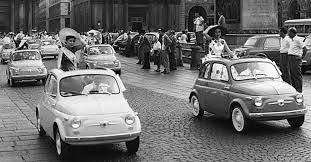
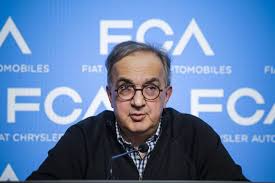
LA FIAT NON ESISTE PIU’

COME SE NE SONO ANDATI MOLTI PROTAGONISTI DEL PASSATO

MA SE SI POTESSE SCEGLIERE IL NUOVO PRESIDENTE

CHI SCEGLERESTE?

Valletta


L’ Avvocato

Ghidella

Romiti
Giovannino
Umberto
Susanna
Lapo

Marchionne
J. Elkan


Andrea


FATE LA VOSTRA SCELTA E SCRIVETELO NEI COMMENTI

Romano Pisciotti

NIGERIA: the development islands (Onne FZ)

NIGERIA: the development islands

By Romano Pisciotti

INTRODUCTION

If it is trivial to say that there can be no development of a country without industrial and technological development, it does not seem very obvious that the development of a country must pass through education and the acquisition of knowledge.

A population that grows only numerically risks causing areas of ignorance and poverty to grow.

Having said that, it is equally trivial to say that a balance is needed between learning and productive capacity:
1) School and university learning for young people who will, tomorrow, be the architects of the continuity of the “solid” development of human society and industrial and technological society.

2) Industrial investments and fast technical growth for managers and workers who are, today, the avant-garde for the growth of the country.

The potential of Nigeria, in contrast to many weaknesses of developed countries, is in the huge number of young people in contrast with the aging of the European countries, and in the breadth of the future consumer market, in contrast to the saturation of the European markets, which live mainly on substitutions.

1

These are consolidated things, but apparently not always exploited in favour of the construction of Greater Nigeria: perhaps the country perceives itself as smaller than it is or is perceived as more important than it is today in the world context … these estimates lead to a positioning that is too submissive or too optimistic, losing the true strengths of the Nation.

The mistake, in the search for solutions favourable to development, is the too broad approach: history has proved that massive and generalized interventions on a large part of a country hardly lead to an equally generalized benefit in terms of safe and constant growth, just as they do not lead to a redistribution of welfare.

In the past we have seen the famous Soviet five-year plans fail (or at least not cover their promises).
As well as the so-called “battles” for wheat… they failed in Europe, which never achieved the desired results, not having involved all sectors of the economy.

In China, after abandoning the Maoist policies, the development plans concerned only some areas, these areas have become so large as to guarantee robust development for the whole nation; the industrial and social divide will be narrowed with the creation and development of other areas. The Communist Party has abandoned part of its origins and has specialized industrial areas connected, step-by-step, by excellent infrastructures.

In the United States, the technology park was successful only because it is connected with the whole country: the excellences have been concentrated to exploit the synergies for the benefit of the entire industrial world.

In Nigeria for many years the customs duties tool has been used to favour the development of “Local Content” without achieving the desired results. For example, heavy vehicle assemblers have multiplied, attracting more state and bank aid than actual technological development or significant use of local labor. Favouring tariffs must help the economy without becoming the only strong point, forgetting technology and market competition.

2

Nigeria must grow faster, while struggling against a global crisis, or population growth will only increase the groups of poverty, also seeing the increase in social tensions.

We must start with some clear concepts:

  1. 1)  The world has globalized and, despite the collateral damage caused by this savage globalization, we cannot think that globalization can be reversible, although, of course, it will need to be better managed in social terms.
  2. 2)  The globalized world needs Nigeria … its natural resources, its human resources and its market potential.

A development model that avoids huge plans with the absorption of large resources and timid results is the system that we could define as “islands” already theorized and applied by marketing and very similar, in some ways, to the Chinese model.

ISLANDS

Identified some geographical areas that already enjoy particular natural advantages or industrial propensity … such as the proximity to raw materials or the existence of communication routes or that already enjoy some industrial installations … industrialization is pushed, well-being and school education, with limited investments, therefore not colossal, with the possibility of better monitoring of successes and failures, thus being able to accelerate or modify the path.

3

Chosen area must be considered as an autonomous municipality and, even better, enjoy tax treatment of favours. Obviously the managers of the area will have to answer to the Government about results and bring a contribution of interests to the Government itself. Part of the results will be re-invested in the area; part of the results will be transferred to the Government in compensation for the concessions awarded.

The Government will be able to use these economic remittances to open up new areas or islands of development.

The advantage of limiting development to “islands” makes the general orientation closer to the central government bodies and the concessions granted manage to attract private investors. “Dispersion” phenomena such as corruption or laxity can be better controlled through precise targets and this “precision” also comes from the relative extent of the area on which one focuses.

In Nigeria there is already a development plan for the areas linked to the existence of Free Commercial Areas; obviously it is questionable that there are very few success stories, and those few successes have been overwhelmed, at times, by the lack of project controls or deferral or other reasons not in line with the basic philosophy of marketing.

The development was limited to a closed deal within these areas.

Without mortifying the concessionaire, or rather the concessionaires, a gain will be guaranteed for all: first of all for the companies hosted in the area (which must not be throttled by the concessionaire) and for the Government that gives them the concessions.

The pivot of development must be the companies present, with their production or service activities; the Government must give the levers (facilities) and the direction based on real needs; the licensee must be an administrator with a balanced profit margin.

4

The development of the islands leads to the creation of other islands and the creation of an induced activity between the various islands that can specialize on the basis of what they will be able to do better or on the basis of distinctive characteristics (such as the presence of access to the sea or a river or the passage of an important railway or road junction.)

The peace of mind for operators of being in a protected area, also from the point of security, as well as not having to shell out figures for the acquisition of land (which remain the property of the Government), will lead to attracting investors in further connected and synergistic activities to existing ones.

The development of the “islands” will lead to connection with others or to join together. A synergy will develop between those who will occupy the islands and those who will operate on the normal market … a process that will develop on specific commercial addresses or natural needs.

Small businesses may also flourish for the necessary food supplies for the islands or large businesses for the supply of energy; infrastructures will be created for the connection of the islands and little by little a connective tissue will be formed, also offered by residential centres (new or old residential areas), by centres of medical or university excellence or other services: this fabric will be called Great Nigeria!

The “islands” can be set up as companies, capable of offering shares to “indirect” investors, that is, to those who do not have an activity in the area, but will invest on the basis of the shares they will buy and will consequently be paid by the income … exactly as on the Stock Exchange.

5

ONNE

Onne, despite the success of glorious years, proved to be a resounding failure and the worst misconception of the Free Zone.
Obviously we can say this today after the decline of that empire, but we must admit that the port works, services and buildings created in the Free Zone remain one of the greatest examples of industrial agglomeration in West Africa.

Construction, employment of personnel, and with them the well being achieved in the early years of the century could testify to what can or could be done in Nigeria.

What was missing? Probably nothing from the point of view of economic achievements, but the impact on the country was not up to the efforts made: the main strategy to be considered one of the desirable “expansion islands” for the nation has unfortunately failed, remaining a island … isolated.

Perhaps the single system of licensees that embraces construction activities, the port, industry and all other related activities risks holding back the development of some of these activities, above all it limits the opening to the market outside the Free Zone, making the concession the only economic fulcrum.

No one can be completely ungrateful to the architects of Onne’s success: the works and many facts demonstrate the growth triggered; not even the tactic used can be completely denigrated, but the strategy had not sufficiently contemplated the connections with the rest of the country and the performances remained closed by the wall of the Free Zone and there were few external synergies.

Good examples of management (even if now lost), such as the Pipe Coater Nigeria, whose “secret” of success was the orientation towards competition on the entire Nigerian market, research and continuous improvement, professionalism and extensive use of local workers and managers.

6

What is left of the “empire” can be the starting point, with a different organization and strategy.

Certainly the collapse in the price of oil has hit hard, but also a system too tied to a single scheme and the inability of some managers responsible to apply the marketing tactics, have decreed a general jam.

The isolation did not make it possible to create a better amortization of the crisis as in a large and diversified value chain.

Global companies continue to seek out new markets and need secure, well-organized bases to produce close to their target markets. They need security, efficient services and a productive and commercial induced that can help their effort. Companies need certain and constant costs.

Not only large groups must enter the Free Zone, but also traditional medium-sized family-run companies, which are numerous in the world and are the most in need of increasing their size.
In Europe, especially in Italy, family-run businesses are an important part of the economy and encompass technology and skills.

In Nigeria, many small entrepreneurs have created a similar business structure but need new technological pushes; all the medium-small companies in the world share the same efforts and the same values. Cooperation, for example, with many small Italian companies can mean a relaunch of craftsmanship or precision mechanics or clothing. In terms of transport and logistics these companies do not mean much and for this reason they have been excluded from the Free Zone, while these companies need protected areas to develop. In Nigeria there are already large companies that deal with logistics and it is one of the growing sectors but without an industrial fabric it makes little sense to have a logistics network.

In the Free Zone of Onne the structures already exist, well built by the previous concessionaire, and can be exploited for the possible next development.

7

The “old system” has rewarded the logistics apparatus by attributing to it the higher costs and revenues, as if the companies present and operating in the Free Zone were the fodder for logistics … this imbalance must be reversed and logistics must be at the service of companies with certain and controlled costs. The country needs companies capable of bringing the technology and productivity necessary for development … and bringing this knowledge must now be the main target.

In Onne it is necessary to consider everything positive that has been done and improve it.

The Free Zone must be a centre of excellence and, above all, a development engine for the country, which is why international schools and universities must also be welcomed.
Managers and workers must have vocational qualification schools and young people must follow job initiation courses that do not forget general culture.

The “islands” must be the meeting point between theory and practice in a continuous updating of professional skills.
Exchange and enrichment between different cultures is the fastest way of growth and peace.

The paradigm must change: the Free Zone must be a starting point for the country’s economic growth, not the point of arrival for the creation of a “village of wonders”.

Romano Pisciotti Business consultant

8

RECESSIONS are capitalism’s sorting mechanism.

BY PATRICK FOULIS: BUSINESS AFFAIRS EDITOR, THE ECONOMIST

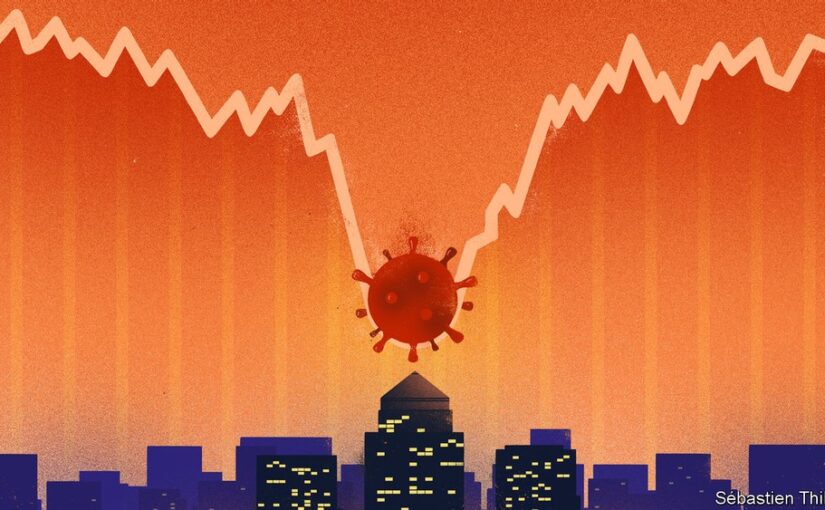
Weak businesses shrink or fail and stronger ones expand. But in 2020 the process of creative destruction did not take place in the typical manner. Because the downturn was the result of a health crisis rather than, say, a financial crash or inflation scare, there were some idiosyncratic corporate winners and losers: think of the boom in video streaming, or cruise-liner firms being wrecked. Meanwhile vast state handouts propped up companies around the world, masking the scale of the corporate carnage. In 2021 the toll will become clearer as stimulus tapers down and more firms fail. Healthy businesses will ramp up investment, giving them an enduring advantage. These top dogs will, however, face a new climate in which three tenets of modern business—the primacy of shareholders, globalisation and limited government—are in flux.

Downturns tend to be infrequent and swift: since the second world war America has been in recession only 14% of the time. But they have a profound impact on the structure of business. During the previous three slumps the share prices of American firms in the top quartile of each of ten sectors rose by 6% on average, while those in the bottom quartile fell by 44%.

presented by Romano Pisciotti

The challenge of effective communication

Every communicator, who has a minimum of experience, knows that the object of his communication will achieve success and public understanding only if the exposure is simple and understandable. Striving to simplify rewards in quantity and public appreciation, but exceeding the simplification of the topic risks making us appear banal or dispensers of partial and incomplete information.

The challenge of effective communication is to push the boundaries of maximum simplification, without going beyond them.

Romano Pisciotti

Pisciotti
Romano Pisciotti

The key indicators are in place for a continued increase in oil prices

If those continue, as we expect they will thanks to a recovery led by declines in new Covid infection rates, crude has no alternative to going higher as the year advances.

By Abd¬El Hakim, originally published by Oilprice.com

CRUDE OIL RALLY

Presented by Romano Pisciotti

FERRARI: Not exactly unusual encounters in Nigeria

Having a car is something, but having a really fancy and expensive car is a totally different thing.

Ferrari is known worldwide as the company that doesn’t just sell cars, but sells a dream. Being with Ferrari means being a part of this dream.

Ferrari’s clients include the world’s wealthiest and most influential people. Yet at the same time, the brand enjoys a high profile, attracting intense interest from the public at large.

Presented by Romano Pisciotti

Motor Parts Industry – Lagos