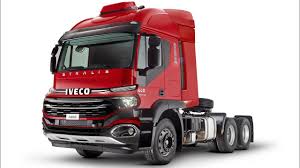
IVECO Nigeria
Motor Parts Industry
Romano Pisciotti
IVECO Nigeria
Motor Parts Industry
Romano Pisciotti
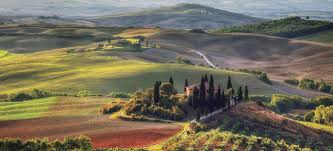
Tourism, England crowns Umbria: “It’s the ideal holiday after the lockdown”
In an Italy that has always been a destination for travelers from all over the world thanks to its artistic beauty, its landscapes and its food and wine specialties, the tourism sector will be one of those most tried by the coronavirus emergency.
Yet across the Channel, in England, there are those who still look to Italy…
…England crowns Umbria: “It is the ideal holiday after the lockdown”
“To crown the ‘green heart of Italy’ is the ‘Telegraph’, which promotes Umbria in the ‘travel’ section of its site”


http://www.auroraviewresort.it/lo-scrigno-stupendo/land-of-fire/
We realize and supply all the requested conversions as well for usual vehicles as for other types of transport…

We can equip them with:
We produce and transform in our own workshops vehicles into:


Romano Pisciotti
MPI ( Motor Parts Industry)
IVECO DEALER
italmotor@gmail.com
WORKSHOP: 231 Moshood Abiola Way, Ijora (old APAPA Road)
P.O.Box 198 Apapa, Lagos – Nigeria.
The chain of command in a company refers to the different levels of command within the organization. It starts with the top position such as CEO or the business owner, all the way down to the front-line workers. Companies create a chain of command in order to flow instructions downward and accountability upward by providing each level of workers with a supervisor.
A quick view of how the chain of command should be used to effectively and efficiently work:
What facilitates implementation
of a command and control system on the intervention?
Common knowledge of the “rules of the game” (ie procedures)
Personal skills and “bosses” quality
Personal skills and qualities of the Operators
Trust between team members
Dialogue between team members (sharing)
A SYSTEM CAN BE DEFINED
AS “A COMPLEX OF INTERACTING ELEMENTS”
“INTERACTION MEANS THAT THE ELEMENTS ARE CONNECTED BY RELATIONSHIPS, SO THAT THE BEHAVIOR OF AN ELEMENT IS DIFFERENT FROM WHAT IT WOULD BE ITS BEHAVIOR IF IT WAS TO ACT BY ITSELF
IN OTHER WORDS: MAKE SYSTEM.
Romano Pisciotti


Come era lo stile di comando di Scipione, Cesare, Pompeo, Antonio, Bruto, Cassio? erano generali severi? come si sentivano i legionari ad essere guidati da questi comandanti? i ritratti di alcuni straordinari uomini romani….lezione per i nuovi leader
Romano Pisciotti: LIKE…per i nuovi leader

«The market data are encouraging: sector studies predict between 80 and 100 cruise ships in China by 2030. Numbers that would translate into an estimate of 20 million passengers per year.
«Today there are almost 400 cruise ships in the world, the sector is growing: shipowners have invested to build 100 new ships by 2027. Not to mention that every five years a ship is modernized. The ‘refits’ are impressive and can even cost 250 million, for example if it is necessary to enlarge the ship to cope with an increase in passengers. Today only 6% of world tourism chooses the cruise: an increase of only 1% would mean building 50 new ships “
«I dati del mercato sono incoraggianti: gli studi di settore prevedono per il 2030 tra le 80 e le 100 navi da crociera in Cina. Numeri che si tradurrebbero in una stima di 20 milioni di passeggeri all’anno.
«Oggi ci sono quasi 400 navi da crociera nel mondo, il settore è in crescita: gli armatori hanno investito per realizzare 100 nuove navi entro il 2027. Senza contare che ogni cinque anni una nave viene riammodernata. I ‘refit’ sono imponenti e arrivano a costare anche 250 milioni, ad esempio se è necessario ingrandire la nave per fare fronte a un incremento dei passeggeri. Oggi solo il 6% del turismo mondiale sceglie la crociera: un aumento anche solo dell’1% vorrebbe dire costruire 50 nuove navi».
Coronavirus has put a stop to the cruise boom
Il settore stimava per quest’anno un vero e proprio ‘boom’ ma deve ora fronteggiare la pesante battuta d’arresto dovuta all’epidemia. Si attendevano 32 milioni di passeggeri e invece finora si conta il 50% di cancellazioni.
https://www.cdc.gov/mmwr/volumes/69/wr/mm6912e3.htm
Presentato da Romano Pisciotti
… watch the pdf
in Nigeria (IVECO industrial vehicles, assembly)
By Romano Pisciotti
INFO: italmotor@gmail.com
Motor Parts Industry – IVECO Nigeria

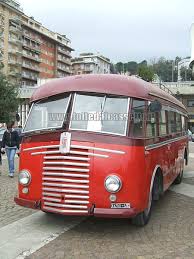
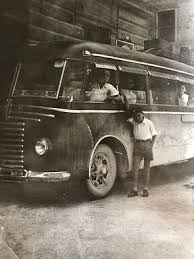
Bella, ammirata e vincitrice, questa corriera Fiat 626 del 1948, presentata dalla Pro Loco di Antignano alla grande sfilata del “Festival delle Sagre” di Asti (9 settembre 2019)
Romano Pisciotti: LIKE
“Market” is any area within which the meeting between supply and demand for goods and services takes place and the exchange of them through the price mechanism, determined precisely by this meeting: operators decide independently and individually their behavior, in particular, the prices and quantities of sales and purchases, such that the overall market performance, in terms of global prices and quantities, is the result of the countless decentralized decisions taken by the actors operating there and their interactions. The term “competition” can have two meanings and both presuppose the notion of market set out: one of them refers to the conduct of companies, the other to a particular structural conformation of the market. The first meaning is that which recalls rivalry, competition and struggle between companies, which implement independent behavior in order to increase their position on the market, to the detriment of rivals. The second, however, consists of the situation characterized by a large number of operators on the market, each of which offers such a small share of the same product or service that it is not able to individually influence the price level following a change in the quantity offered.
For the polysemy of the term “market” see, in particular, M.R. FERRARESE, Law and market, Turin, 1992, p. 17 ss., Which sorts the variety of meanings into four categories: a) market as place; b) market as ideology; c) market as a paradigm of social action; d) market as an institution.
Summarizes the characteristics of the market economy model: a) free market of production factors (raw materials, capital and labor); b) freedom of private economic initiative; c) organization of the private enterprise according to the principle of capital sovereignty; d) free play of competition; e) consumer sovereignty.
Romano Pisciotti browsing the web….about antitrust