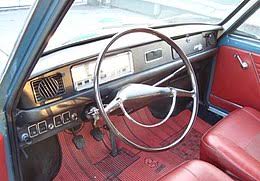
Piccole onde

Passeggi 

lungo l’umida spiaggia

davanti al mare freddo

di piccole onde

e leggera risacca.

Ascolto i tuoi pensieri 

di parole dolci ancora 

nuove

che colmano un vuoto 

e riempiono il cuore.

Canti dell’amore e lacrime

di sorrisi, d’umori e 

tempo andato che vive

nella foschia del mattino

e nei lenti tramonti.


di Romano Pisciotti

Pisciotti
Romano Pisciotti

Creative destruction

How Antitrust Regulation Hinders Innovation and Competition

Few economic concepts elicit such strong reactions as that of monopoly, and the policy intended to address it—antitrust regulations (called competition policy in the European Union). Yet, both supporters and opponents of antitrust regulations agree on one fundamental point—that effective competition is vital to the American economy and the welfare of its citizens. However, they differ in how the law should encourage this. There are essentially three schools of thought regarding antitrust policy:

  1. Interventionist. Regulators should use the law proactively to break up companies that are abusing their market power and restore a competitive market. The size of a company is a good guide as to when this should be done.
  2. Consumer welfare. Abuse of market power is rare and dominant market positions can be achieved through delivering improvements in consumer welfare. Therefore, antitrust laws should be used not to break up companies that have grown big through successful competition, but to address instances of collusion, price fixing, or other anti-competitive behavior.
  3. Free market. Antitrust law is unnecessary. Market processes routinely undermine monopolies—and attempts to create monopolies. Laws against “unfair competition” prevent property owners from experimenting with joint ventures and other innovations that can improve consumer welfare.

Until recently, there was a sharp partisan divide between these schools, which can be roughly described as liberal, conservative, and libertarian, respectively. Traditionally in practice, this meant that antitrust conservatives would more often side with the libertarian camp, while leaving some room for cooperation with the liberal faction. However, the recent rise of “big tech” has led some conservatives to turn to the most interventionist approach with a zeal that threatens innovation in America’s world-leading technology industry.

The interventionist approach suffers from the same problems classical liberal economists have long identified with government interventions in markets.

First, there is the “knowledge problem”—how do regulators know better than the market what the best market structure is?

Then there are what are known as public choice considerations—regulators might exercise their powers to promote their own preferred policy positions. The very existence of those powers will lead to intense lobbying by regulated entities—both those seeking regulatory relief and those who benefit from entry barriers that limit competition from potential new entrants in a market.

The consumer welfare approach also has problems. Retaining antitrust law as an option that may be used against entrepreneurs carries the same threat to innovation posed by the interventionist approach. For instance, politicians with an animus against certain companies may pressure regulators into opposing mergers involving those companies. Regulators assessing unfair competition will not be immune from the knowledge problem and public choice effects. Entrepreneurs, eager to avoid provoking antitrust enforcement actions, will be dissuaded from pursuing innovations that might run afoul of the law.

The third approach, abolishing antitrust law, is extremely controversial. There is a widespread belief, among policy makers, the media, and the public, that without the threat of antitrust law, companies will disregard customer preferences, extract excessive profits, and kill off competitors. Yet there is no such thing as a dominant market position unless it is guaranteed by government. AOL, Borders, Blockbuster, Sears, Kodak, and many other firms once considered dominant in their markets have fallen as the result of competition, without any antitrust action.

This process of creative destruction, succinctly described by the economist Joseph Schumpeter, is a major driver of the kind of innovation that helps raise living standards. It will surely continue unless, ironically, antitrust regulators gain too much power. Were that to happen, large firms will be tempted to reach accommodations with a government that restricts their activities in exchange for not being broken up. Those accommodations will usually include protections and guarantees that act as entry barriers against potential innovative challengers. The result will be less competition, fewer innovations, and lower consumer welfare.

Creative destruction is the best answer to dominant market positions. Rather than use antitrust law aggressively, those who wish to see big companies fall quickly should instead work to end antitrust law. As for other barriers to creative destruction—for instance, financial regulations that make launching an initial public offering of stock prohibitively costly—increased competition can be achieved through deregulation in those other areas.


Presented by Romano Pisciotti

PRIMULA: The most important car you have never heard of

If we look under the skin of various European family cars, we can see their basic engineering layout is mostly the same, and it has been for the best part of forty years. An inline-four cylinders engine mounted transversely at the front of the car, and a compact transmission unit right beside it delivering the power to the front wheels. The Autobianchi Primula first introduced this configuration in 1964, thanks to Ingegner Giacosa yet only a select few cognoscenti know about it. Well, it’s about time to introduce you to the Autobianchi Primula, the most important car you’ve never heard of.

Se guardiamo sotto la pelle di varie auto familiari europee, possiamo vedere che il loro layout ingegneristico di base è per lo più lo stesso, ed è stato per la maggior parte di quarant’anni.
Un motore a quattro cilindri in linea montato trasversalmente nella parte anteriore dell’auto e un’unità di trasmissione compatta proprio accanto che fornisce la potenza alle ruote anteriori.

La Autobianchi Primula ha introdotto questa configurazione per la prima volta nel 1964, grazie all’Ingegner Giacosa eppure solo pochi conoscitori eletti ne sono a conoscenza. Bene, è giunto il momento di presentarti l’Autobianchi Primula, l’auto più importante di cui non hai mai sentito parlare.

https://youtu.be/KgO55yJnmv4?t=2

https://en.wikipedia.org/wiki/Autobianchi_Primula

Presented by Romano Pisciotti

Pisciotti
Romano Pisciotti

TRIESTE …tedesca

Il porto di Trieste nuovamente ai tedeschi…la Germania e l’Unione Europea.

Il porto di Trieste è una delle maggiori infrastrutture logistiche portuali al mondo. Collegato ad una importante rete ferroviaria perfettamente integrata a livello europeo, è il terminal su mare dell’Oleodotto Transalpino, capace di rifornire di idrocarburi le raffinerie di Germania, Austria e Repubblica Ceca, e rappresenta uno sbocco strategico capace di raccogliere merci provenienti dal mercato asiatico attraverso il Canale di Suez.

Quello che fa la società pubblica tedesca HHLA è la realizzazione della più grande ambizione geopolitica del cosiddetto Northern Range europeo, ovvero quella di integrare ai colossi della logistica portuale del nord Europa, attraverso il sistema ferroviario, una piattaforma avanzata sul Mediterraneo.

https://youtu.be/ZQZKw8Mueko?t=1

Il ruolo dell’Europa in questa nostra debolezza è determinante ed è accompagnato – ovviamente – dall’inettitudine della nostra classe politica. Ecco perché ci obbliga a dedicare le risorse del Recovery Fund a centinaia di piccoli progetti “big data” e “green” che nulla hanno a che fare con le vere esigenze della nostra economia.  

…eravamo orgogliosi per Trieste italiana

Romano Pisciotti

“…a white swan in a pitch-black sea”

It has been engulfed by a massive corruption scandal in Brazil (2018), where it bribed officials in the state oil company Petrobras in order to secure contracts.

SBM Offshore N.V. (IHC Caland N.V. prior to July 2005) is a Dutch-based global group of companies selling systems and services to the offshore oil and gas industry.

SBM Offshore has avoided criminal prosecution in the Netherlands by paying a record settlement of $240 million to the Dutch Public prosecutor ‘While in Brazil the Petrobras corruption affair — and SBM Offshore’s major role in it — is inexorably building to a climax, the temperature in Netherlands appears to have dropped after a record settlement was reached with the Dutch Public Prosecutor (OM) in November last year. The biggest corruption case in the Dutch history was bought off by SBM for a record $240 million in exchange for which no court case followed and no admission of guilt was entered. To the OM it was important the company had implemented major reforms to prevent re-offending. “We are now a white swan in a pitch-black sea,” said a relieved and proud SBM director Sietse Hepkema in an interview with leading Dutch newspaper NRC Handelsblad last December. The man hired to clean up the company said he didn’t expect further fines in Brazil. “I really think we paid our dues, “he said. And “I refuse to be Brazil’s smelly kid in the classroom.”‘ In order to be able to take part in Petrobras contracts in the future, SBM has also agreed to a R$1 billion settlement with the Brazilian government. Nevertheless, many of SBM’s executives still face criminal charges in Brazil.

SBM Offshore’s former CEO Tony Mace has been sentenced to three years in prison for his involvement in an international bribery conspiracy.

Browsing the web, Romano Pisciotti

Could right now be the most influential time ever?

Could right now be the most influential time ever? Richard Fisher looks at the case for and against – and why it matters.

What is the best word to describe our present moment? You might be tempted to reach for “unprecedented”, or perhaps “extraordinary”.

But here’s another adjective for our times that you may not have heard before: “hingey”.

It may not be a particularly elegant term, but it describes a potentially profound idea: that we may be living through the most influential period of time ever. And it’s about far more than the Covid-19 pandemic and politics of 2020. Leading philosophers and researchers are debating whether the events that occur in our century could shape the fate of our species over the next thousands if not millions of years. The “hinge of history” hypothesis proposes that we are, right now, at a turning point.

Is this really plausible?

https://www.bbc.com/future/article/20200923-the-hinge-of-history-long-termism-and-existential-risk

Presented by Romano Pisciotti

The first extradition agreement in history (con versione in italiano)


Ramses II”, who reigned for 67 years during the 19th dynasty of the 12th century BC, was known as “Ramses the Great”. His glories surpassed all other Pharaohs, and Egypt reached an overwhelming state of prosperity during his reign. Not only is he known as one of Egypt’s greatest warriors, but also as a peace-maker and for the monuments he left behind all over Egypt. He was the first king in history to sign a peace treaty with his enemies, the Hittites, ending long years of wars and hostility. The treaty can still be considered a conclusive model, even when applying todays standards.

Ramses II “, che regnò per 67 anni durante la XIX dinastia del XII secolo a.c., era noto come” Ramses il Grande “. Le sue glorie superarono quelle di tutti i Faraoni  e l’Egitto raggiunse uno stato di prosperità travolgente durante il suo regno; non solo è conosciuto come uno dei più grandi guerrieri dell’Egitto, ma anche come pacificatore e per i monumenti che ha lasciato in tutto l’Egitto. Fu il primo re della storia a firmare un trattato di pace con i suoi nemici, gli Ittiti, ponendo fine a lunghi anni di guerre e ostilità Il trattato può ancora essere considerato un modello conclusivo, anche quando si applicano gli standard odierni.

The treaty was composed of 18 articles. After a long introduction recording the kings titles and referring to establishment of good fraternity and peace, one article was included to exclude any further attacks on the other countrys territories:

“Reamasesa, the great king, the king of the country of Egypt, shall never attack the country of Hatti to take possession of a part (of this country). And Hattusili, the great king, the king of the country of Hatti, shall never attack the country of Egypt to take possession of a part (of that country). “

Il trattato era composto da 18 articoli. Dopo una lunga introduzione che registra i titoli dei re e fa riferimento alla creazione di una buona fraternità e pace, è stato incluso un articolo per escludere ulteriori attacchi ai territori degli altri paesi:

“Reamasesa, il grande re, il re del paese d’Egitto, non attaccherà mai il paese di Hatti per prendere possesso di una parte (di questo paese). E Hattusili, il grande re, il re del paese di Hatti, dovrà non attaccare mai il paese d’Egitto per impossessarsi di una parte (di quel paese) “.

The treaty then included three articles establishing mutual collaboration against any internal mutiny or coups in either country.

Il trattato includeva quindi tre articoli che stabilivano la collaborazione reciproca contro qualsiasi ammutinamento interno o colpi di stato in entrambi i paesi.

To avoid any further dispute, if a refugee flees to the other country, ten articles were dedicated to their extradition. This was the first extradition agreement in history between two nations. The treaty did not exclude any person, and regardless of whether they were “great men”, nobles or “unknown persons”

Per evitare ulteriori controversie, se un rifugiato dovesse fuggire nell’altro Paese, dieci articoli sono stati dedicati alla loro estradizione. Questo è stato il primo accordo di estradizione nella storia tra due nazioni. Il trattato non escludeva alcuna persona, indipendentemente dal fatto che fossero “grandi uomini”, nobili o “persone sconosciute”

http://www.touregypt.net/featurestories/treaty.htm

presented by Romano Pisciotti

Pisciotti
Romano Pisciotti