Resi poveri dal “low cost”

Dai voli aerei alla spesa, dagli acquisti sul web all’arredamento, questa è l’era del low cost: un mondo in cui tutto è alla portata di (quasi) tutti. Ma dietro l’apparenza dell’egalitarismo, la verità è un’altra: il low cost ci rende più poveri, ”perché ogni volta che ci sembra di fare un affare, in realtà stiamo comprando qualcosa di qualità e valore aggiunto inferiore, in una spirale che trascina al ribasso tutta l’economia”, afferma il direttore dell’Istituto Sperimentale di Marketing e del Centro Studi Fleet&Mobility.

Con l’illusione di rendere accessibile tutto a tutti, si produce e distribuisce povertà.
Se il consumatore, ad esempio, vuole acquistare una camicia da 60 euro, pagandone 30, deve accettare che quella camicia contenga una manodopera economica, disponibile solo in Paesi in cui il livello generale dei prezzi è più basso del nostro in termini di stipendio, sicurezza sul lavoro, tutele sindacali ecc.

Gli effetti del low cost sull’economia e sull’occupazione nel medio periodo e su larga scala frenano lo sviluppo e diseducano le persone a percepire la qualità; abbassando il prezzo di beni e servizi per renderli più accessibili, si finisce per determinare poca qualità, minore reddito per le persone e, più in generale, nessuna motivazione/ambizione di accedere a beni e servizi migliori, determinando un appiattimento dei consumi.

Rimettere al centro un rapporto di fiducia tra produttore e destinatario di oggetti e servizi è forse la cosa più urgente da fare. Oltre ad aprire una riflessione sulla globalizzazione, che ha avuto esiti indubbiamente positivi in termini di riduzione della povertà mondiale (quella vera, da 1,2 dollari al giorno pro-capite), ma altrettanto negativi nel mercato del lavoro e forse merita un tagliando, a distanza di vent’anni. 

Low cost e illusione

presented by Romano Pisciotti

“La globalizzazione ha solo spostato benessere, sottraendone in alcune aree del pianeta a favore di altre.”

Romano Pisciotti

Flotta turca, minaccia o pilastro della difesa euro-mediterranea

Il rapporto fra la Turchia e l’Europa è cambiato nel corso degli ultimi anni. È, infatti, innegabile che la Turchia che conoscevamo pare essersi dissolta dopo il fallito colpo di Stato del 2016, anche se la deriva sovranista del suo presidente era già iniziata nel 2013. Sembra passata un’era geologica da quando i Consigli europei degli anni 2003-2004, con all’ordine del giorno il processo di adesione di Ankara all’Unione Europea, vedevano spesso la presenza di Erdoğan, accolto con tutti gli onori. Il suo partito, l’AKP, si presentava allora con la vocazione di conciliare le masse rurali e conservatrici turche con lo Stato moderno, portandovi i suoi valori religiosi ma con approccio laico. Nonostante alcuni aspetti da chiarire, la democrazia turca sembrava allora sufficientemente matura perché si potesse valutare un inserimento del Paese nel sistema europeo.

https://www.difesaonline.it/geopolitica/analisi/la-flotta-turca-minaccia-o-pilastro-della-difesa-euro-mediterranea

Presented by Romano Pisciotti

Romano Pisciotti

Curfew days in Nigeria…giorni di coprifuoco in Nigeria

( in calce la versione italiana)

Tormented, frustrated and whipped Nigeria, unable to use democracy and the common sense of peace and humanity.

The enforcement of rights continues to clash with old privileges and widespread ignorance.
The people struggle to improve their existence but still kneel prostrating themselves to popular little false teacher, distributors in the city districts and in the villages of enchanted, false and empty words … The right doctrine is the wisdom of the elderly, family solidarity and the enlightened wisdom of young entrepreneurs.

People rioting on the street seem to be asking to be enslaved by the vices embodied, rejoicing over a brief shower of pennies, drowning in misery and sweat.
Crowds demand justice but most are content to just steal a TV from the mall during the riot.
People swell like angry turkeys in the middle of the streets and ask for blood but believe the speeches of little barons who live off absurd traditions far from the needs of the people and who have never really offered ear or soul to the people.
The people have not yet understood the use of democracy and perhaps, for many, not even the use of logic and intelligence: they only try to scratch some small privileges to their masters, not knowing that the next day they will be poorer than before, still slaves of barons.

In a democracy you can vote, learn to do it, don’t bark and don’t look for shortcuts to democracy.

Poor children of a Greater Nigeria who still, after sixty years of independence, float in the sea of ​​ignorance and seek in history an excuse for their poverty … in a country where Nature offers divine goods … the rules of democracy would be to learn instead of reviving atavistic hatreds.

Strong and honest fathers who work folded under the scorching sun, their children who want and can be equal to young people around the world and courageous entrepreneurs must be the pride of this country … enlightened politicians will be born from them.

The path of democracy is not easy, but it is the only one that can be taken … democracy, civic education, must be taught and learned in the classrooms of schools and universities … non-violence is a teacher of civilization if you have your own goals in the heart.
A great country is built with pride, there is no pride by storming shopping centers or traveling clandestinely on boats to Europe: build your country with courage, passion and honest work.

God bless Nigeria.

by Romano Pisciotti

“Gift of God”

Nigeria tormentata, frustrata e frustata, incapace di usare la democrazia e il comune senso di pace e umanità.

L’ applicazione dei diritti continua a scontrarsi con vecchi privilegi e ignoranza diffusa.
Il popolo lotta per migliorare l’esistenza ma ancora si inginocchia prostrandosi a popolari piccoli falsi maestri distributori, nei quartieri cittadini e nei villaggi, di parole incantate, false e vuote…La giusta dottrina è la saggezza degli anziani, la solidarietà familiare e l’illuminata saggezza di giovani imprenditori.

La gente in rivolta per strada sembra chiedere di essere schiava dei vizi incarnati, esultando per una breve pioggia di penny, lasciandosi annegare nella miseria e nel sudore.
La folla chiede giustizia ma la maggior parte si accontenta di rubare solo una TV al centro commerciale durante la sommossa.
Le persone si gonfiano come tacchini arrabbiati in mezzo alle strade e chiedono sangue ma credono ai discorsi di piccoli baroni che vivono di tradizioni assurde lontane dai bisogni della gente e che non hanno mai veramente offerto orecchio o anima alla gente.
Il popolo non ha ancora capito l’uso della democrazia e forse, per molti, nemmeno l’uso della logica e dell’intelligenza: cercano solo di scalfire qualche piccolo privilegio ai loro padroni, non sapendo che il giorno dopo saranno più poveri di prima, ancora schiavi di baroni.

In una democrazia puoi votare, impara a farlo, non si abbaia e non si cercano scorciatoie alla democrazia.

Poveri figli di una Grande Nigeria che ancora, dopo sessant’anni di indipendenza, galleggiano nel mare dell’ignoranza e cercano nella storia una scusa per la loro povertà… in un paese dove la Natura offre beni divini… le regole della democrazia sarebbero da imparare anzichè far rinascere odi atavici.

I padri forti e onesti che lavorano piegati sotto il sole cocente, i loro figli che vogliono e possono essere uguali ai giovani di tutto il mondo e gli imprenditori coraggiosi devono essere l’orgoglio di questo Paese…da loro nasceranno politici illuminati.

La strada della democrazia non è facile, ma è l’unica percorribile…la democrazia, l’educazione civica, va insegnata e imparata nelle aule delle scuole e delle università…la non violenza è maestra di civiltà se hai i tuoi obbiettivi nel cuore.
Un grande paese si costruisce con l’orgoglio, non c’è orgoglio assaltando i centri commerciali o viaggiando clandestinamente su barconi verso l’Europa: costruisci il tuo paese con coraggio, passione e onesto lavoro.

Dio benedica la Nigeria.

di Romano Pisciotti
Le quattro parche (FATES)

Le quattro parche

Onestà e sogno

sono morti

sotto le mura d’Invidia

e paludi di Gelosia.

Non c’è storia

quando l’Infamia

rammenda le verità

di cuciture incerte

imbastite da giochi

d’altri interessi.

Non c’è riscatto

ma solo vociare

dopo squallide sentenze

di Vergogna.

Il cuore batte e

non s’arrende mai

ai pupetti di bottega.


Romano Pisciotti

The four Fates

Honesty and dream

dead

under the walls of envy

and swamps of jealousy.

There is no story

when the infamy

repair the truths

with uncertain seams

basted by games

of other interests.

There is no ransom

but just chat

after squalid sentences

of shame.

The heart beats and

it never gives up

to the workshop puppets.


Romano Pisciotti

False speranze

Ancora ho nei polmoni

l’aria del secolo scorso:

il sogno di speranze

di una vita migliore,

intima e privata,

come private sono gioie

passioni e amori

di un’ umanità comune

nella felicità e nella lotta.

Non si affitta l’anima

non si globalizza la vita.

Falsi profeti abbattono confini,

bruciano bandiere e glorie,

disegnando il mondo uguale

per ebeti strabici e connessi,

veloci e più ignoranti.

Reclamo il senso della vita,

la corsa alla Luna,

il senso del viaggio

e la voglia di futuro

fatto di sudate scalate

e non di falsi pianori

in un modo appiattito:

meglio i muri che

i ponti sul vuoto.


di Romano Pisciotti.

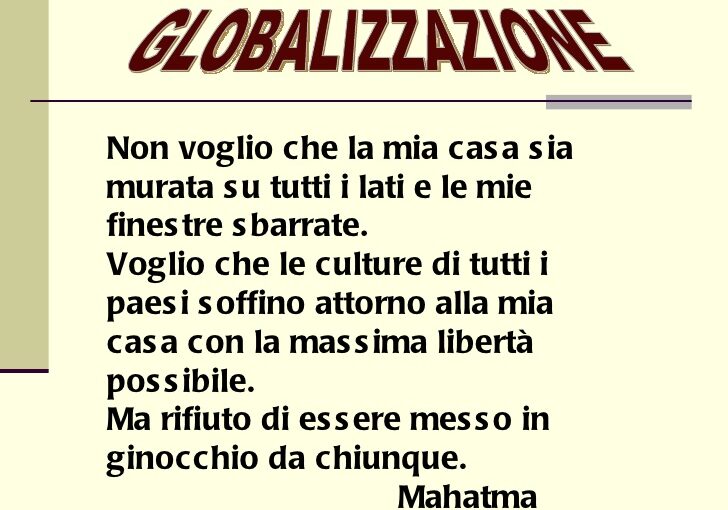
Globalizzazione


IVECO manufacturing plant..Yesterday Today Tomorrow

1955 Torino – ITALY

The name Iveco first appeared in 1975 after a merger of Italian, French and German brands. Its production plants are in Europe, Brazil, Russia, Australia, Africa, Argentina and China, and it has approximately 5,000 points of sales and service in over 160 countries.

With over 28,000 employees, Iveco is present in all five continents: 27 plants located in 16 countries around the world manufacture vehicles with top level technologies developed in 6 research centres. Outside of Europe, the company operates in China, Russia, Australia and Latin America. An extensive after-sales service network guarantees our support in all geographic areas where an Iveco vehicle is at work.


The joint venture of Iveco, FPT Industrial and Nikola will produce electric and fuel cell trucks for the European market at Iveco’s headquarters in the German city of Ulm. The first trucks will roll off the assembly lines next year.

Nikola Tre, a truck designed for the European market, was presented in December 2019. Iveco, FPT Industrial and Nikola announced last week that the large electric vehicle would be made in Ulm, which is the home of the IVECO’s chassis engineering hub. The joint venture partners will invest 40 million euros in the modernization of the factory. 

“The decision to build the Nikola TRE in Ulm – a centre of heavy-duty truck engineering excellence – underscores the site’s strategic location at the heart of Germany’s fuel cell technology cluster.”

Presented by Romano Pisciotti

La storia è custode della nostra provenienza e origine.

La storia è custode della nostra provenienza e origine. … La storia ci aiuta a costruirci un futuro, in un certo senso il futuro è già stato provato in dieci mila anni di storia dell’uomo, infatti la storia tende a ripetersi in quando gli errori commessi sono sempre simili, basta adattarli e interpretarli.

Presented by Romano Pisciotti

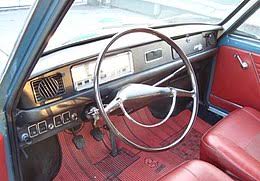
PRIMULA: The most important car you have never heard of

If we look under the skin of various European family cars, we can see their basic engineering layout is mostly the same, and it has been for the best part of forty years. An inline-four cylinders engine mounted transversely at the front of the car, and a compact transmission unit right beside it delivering the power to the front wheels. The Autobianchi Primula first introduced this configuration in 1964, thanks to Ingegner Giacosa yet only a select few cognoscenti know about it. Well, it’s about time to introduce you to the Autobianchi Primula, the most important car you’ve never heard of.

Se guardiamo sotto la pelle di varie auto familiari europee, possiamo vedere che il loro layout ingegneristico di base è per lo più lo stesso, ed è stato per la maggior parte di quarant’anni.
Un motore a quattro cilindri in linea montato trasversalmente nella parte anteriore dell’auto e un’unità di trasmissione compatta proprio accanto che fornisce la potenza alle ruote anteriori.

La Autobianchi Primula ha introdotto questa configurazione per la prima volta nel 1964, grazie all’Ingegner Giacosa eppure solo pochi conoscitori eletti ne sono a conoscenza. Bene, è giunto il momento di presentarti l’Autobianchi Primula, l’auto più importante di cui non hai mai sentito parlare.

https://youtu.be/KgO55yJnmv4?t=2

https://en.wikipedia.org/wiki/Autobianchi_Primula

Presented by Romano Pisciotti

Pisciotti
Romano Pisciotti

Advertising on trucks

Truck advertising is a form of dynamic advertising that uses the truck as a real means of communication. Truck advertising falls into the category of outdoor or outdoor advertising (also called OOH – Out Of Home).

The main peculiarities of advertising on trucks, compared to other forms, are the following:

places itself in an almost exclusive context;
it is difficult to ignore (does not allow users to change TV channels or radio stations);
it has high visual impact graphics;
addresses a heterogeneous target (depending on the areas chosen for the transmission of the campaign);
it is flexible in terms of medium size and positioning.

Presented by Romano Pisciotti

CHINA: ‘Rich country full of poor’

The fact that the largest nation in the world is able to manage a capitalist economy without granting political freedoms, even in the presence of the new information medium which is the Internet, represents an unprecedented challenge for those who believe that democracy and the market sooner or later must converge. The unique dimension of China, the peculiarity of its history and its civilization lead to fear that the union between authoritarianism and the market may be solid and lasting. The efficiency of the censorship applied by the Beijing government to the Internet has become a symbol for many Westerners, who observe the successes of the repressive apparatus against dissent.

In every production sector, the country has used production techniques that consume more energy than its Japanese, European or American competitors. Changing this model of development will require difficult sacrifices, even in terms of social consensus. For the Beijing government, the consent of the urban middle class is a fundamental element of political and social stability.

In China, arable land for cereals is only 600 m² per inhabitant, compared to 1900 m² per inhabitant in the United States, yet the American workforce employed in agriculture is only 2% of the active population. The Chinese labor still employed in agricultural work is largely overabundant, unproductive, underutilized, and this is a structural cause of its misery.

The fact that China has become a major world exporter of fruit and vegetables does not prevent it from being doomed to not be self-sufficient in basic production – such as rice, cereals, soybeans. The mass expulsion from the countryside appears to be an inevitable process destined to last a very long time.

The rural population of the country is estimated at around 900 million people. 40% of all farmers on the planet live in China. The other side of the Chinese economic miracle was summarized in November 2006 by a World Bank study relating to the period 2001-2003: in that three-year period of growth, 10% of the population saw their income decrease by 2.4%. Over the same period, the richest 10% of Chinese recorded an income increase of 16%. The condition of large masses of peasants at the beginning of the 21st century. it was still marked by profound injustices, arbitrariness and oppression by the political class.

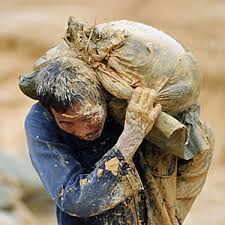
The flight of Chinese peasants to urban factories and construction sites gives rise to other hotbeds of social tension. In cities, the fate that awaits rural immigrants is that of second-class citizens, victims of a sort of apartheid. Deprived of the status of urban residents, immigrants from the countryside are not entitled to health care or schools for their children. They are condemned to the humblest jobs, underpaid, blackmailed by their employers.

Romano Pisciotti..Browsing the web