Arroganza USA di sempre

Gli americani, sono convinti che le leggi dei paesi diversi dal loro non valgano.

Pensano che, essendo cittadini di una super-potenza, possono fare i super-prepotenti.

I loro Governi arroganti hanno fatto credere a tutti di poter avere una speciale patente…di lecita arroganza…in caso di guai, se non bastano le pressioni economiche, si possono sempre mandare un paio di missili “intelligenti”!

https://www.dagospia.com/rubrica-3/politica/delusione-americana-problema-non-obama-ma-66388.htm

Un chiaro esempio è l’ estensione extraterritoriale delle normative economiche (nazionali) USA…anche in campo antitrust.

Romano Pisciotti

Piccole onde

Passeggi 

lungo l’umida spiaggia

davanti al mare freddo

di piccole onde

e leggera risacca.

Ascolto i tuoi pensieri 

di parole dolci ancora 

nuove

che colmano un vuoto 

e riempiono il cuore.

Canti dell’amore e lacrime

di sorrisi, d’umori e 

tempo andato che vive

nella foschia del mattino

e nei lenti tramonti.


di Romano Pisciotti

Pisciotti
Romano Pisciotti

Creative destruction

How Antitrust Regulation Hinders Innovation and Competition

Few economic concepts elicit such strong reactions as that of monopoly, and the policy intended to address it—antitrust regulations (called competition policy in the European Union). Yet, both supporters and opponents of antitrust regulations agree on one fundamental point—that effective competition is vital to the American economy and the welfare of its citizens. However, they differ in how the law should encourage this. There are essentially three schools of thought regarding antitrust policy:

  1. Interventionist. Regulators should use the law proactively to break up companies that are abusing their market power and restore a competitive market. The size of a company is a good guide as to when this should be done.
  2. Consumer welfare. Abuse of market power is rare and dominant market positions can be achieved through delivering improvements in consumer welfare. Therefore, antitrust laws should be used not to break up companies that have grown big through successful competition, but to address instances of collusion, price fixing, or other anti-competitive behavior.
  3. Free market. Antitrust law is unnecessary. Market processes routinely undermine monopolies—and attempts to create monopolies. Laws against “unfair competition” prevent property owners from experimenting with joint ventures and other innovations that can improve consumer welfare.

Until recently, there was a sharp partisan divide between these schools, which can be roughly described as liberal, conservative, and libertarian, respectively. Traditionally in practice, this meant that antitrust conservatives would more often side with the libertarian camp, while leaving some room for cooperation with the liberal faction. However, the recent rise of “big tech” has led some conservatives to turn to the most interventionist approach with a zeal that threatens innovation in America’s world-leading technology industry.

The interventionist approach suffers from the same problems classical liberal economists have long identified with government interventions in markets.

First, there is the “knowledge problem”—how do regulators know better than the market what the best market structure is?

Then there are what are known as public choice considerations—regulators might exercise their powers to promote their own preferred policy positions. The very existence of those powers will lead to intense lobbying by regulated entities—both those seeking regulatory relief and those who benefit from entry barriers that limit competition from potential new entrants in a market.

The consumer welfare approach also has problems. Retaining antitrust law as an option that may be used against entrepreneurs carries the same threat to innovation posed by the interventionist approach. For instance, politicians with an animus against certain companies may pressure regulators into opposing mergers involving those companies. Regulators assessing unfair competition will not be immune from the knowledge problem and public choice effects. Entrepreneurs, eager to avoid provoking antitrust enforcement actions, will be dissuaded from pursuing innovations that might run afoul of the law.

The third approach, abolishing antitrust law, is extremely controversial. There is a widespread belief, among policy makers, the media, and the public, that without the threat of antitrust law, companies will disregard customer preferences, extract excessive profits, and kill off competitors. Yet there is no such thing as a dominant market position unless it is guaranteed by government. AOL, Borders, Blockbuster, Sears, Kodak, and many other firms once considered dominant in their markets have fallen as the result of competition, without any antitrust action.

This process of creative destruction, succinctly described by the economist Joseph Schumpeter, is a major driver of the kind of innovation that helps raise living standards. It will surely continue unless, ironically, antitrust regulators gain too much power. Were that to happen, large firms will be tempted to reach accommodations with a government that restricts their activities in exchange for not being broken up. Those accommodations will usually include protections and guarantees that act as entry barriers against potential innovative challengers. The result will be less competition, fewer innovations, and lower consumer welfare.

Creative destruction is the best answer to dominant market positions. Rather than use antitrust law aggressively, those who wish to see big companies fall quickly should instead work to end antitrust law. As for other barriers to creative destruction—for instance, financial regulations that make launching an initial public offering of stock prohibitively costly—increased competition can be achieved through deregulation in those other areas.


Presented by Romano Pisciotti

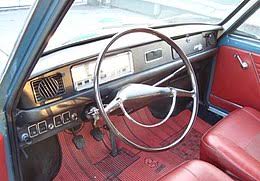
PRIMULA: The most important car you have never heard of

If we look under the skin of various European family cars, we can see their basic engineering layout is mostly the same, and it has been for the best part of forty years. An inline-four cylinders engine mounted transversely at the front of the car, and a compact transmission unit right beside it delivering the power to the front wheels. The Autobianchi Primula first introduced this configuration in 1964, thanks to Ingegner Giacosa yet only a select few cognoscenti know about it. Well, it’s about time to introduce you to the Autobianchi Primula, the most important car you’ve never heard of.

Se guardiamo sotto la pelle di varie auto familiari europee, possiamo vedere che il loro layout ingegneristico di base è per lo più lo stesso, ed è stato per la maggior parte di quarant’anni.
Un motore a quattro cilindri in linea montato trasversalmente nella parte anteriore dell’auto e un’unità di trasmissione compatta proprio accanto che fornisce la potenza alle ruote anteriori.

La Autobianchi Primula ha introdotto questa configurazione per la prima volta nel 1964, grazie all’Ingegner Giacosa eppure solo pochi conoscitori eletti ne sono a conoscenza. Bene, è giunto il momento di presentarti l’Autobianchi Primula, l’auto più importante di cui non hai mai sentito parlare.

https://youtu.be/KgO55yJnmv4?t=2

https://en.wikipedia.org/wiki/Autobianchi_Primula

Presented by Romano Pisciotti

Pisciotti
Romano Pisciotti

Advertising on trucks

Truck advertising is a form of dynamic advertising that uses the truck as a real means of communication. Truck advertising falls into the category of outdoor or outdoor advertising (also called OOH – Out Of Home).

The main peculiarities of advertising on trucks, compared to other forms, are the following:

places itself in an almost exclusive context;
it is difficult to ignore (does not allow users to change TV channels or radio stations);
it has high visual impact graphics;
addresses a heterogeneous target (depending on the areas chosen for the transmission of the campaign);
it is flexible in terms of medium size and positioning.

Presented by Romano Pisciotti
LA FOLLIA DEL MONOPATTINO

Sono semplicemente dei giochi per bambini da usare nel parco con un piede a terra che spinge in sicurezza.

https://video.corriere.it/milano/boom-picco-incidenti-monopattino-milano-pattuglia-vigili/db047a92-f8fb-11ea-b4b0-f49c5435d3f2

I monopattini nelle nostre vite non sono piovuti dal cielo, non sono arrivati per caso. In diversi posti nel mondo sono nate alcune startup che hanno capito che il principio del car sharing si poteva applicare anche a bici e “scooter elettrici” (all’estero i monopattini vengono chiamati così): trovi quello più vicino a te con lo smartphone e sempre con lo smartphone lo sblocchi e paghi la corsa. C’è voluto non poco lo scorso anno per approvare una norma che li rendesse legali, tipo le biciclette, e nel giro di pochi mesi le startup hanno fatto accordi con i sindaci delle nostre principali città smaniosi di poter dire “dopo il coronavirus nulla sarà come prima”. Come se bastasse una manciata di monopattini a far sparire il traffico. Il governo poi, in una smania di “nuovismo”, ha anche messo sul tavolo un ecobonus importante per chi ne acquista uno personale, inserendolo nel ‘Decreto rilancio’, come se dalla crisi si potesse uscire zigzagando su due (piccole) ruote.

Va bene la mobilità intelligente. D’accordo la sostenibilità. Evviva tutto quello che un giorno renderà le nostre città meno ingolfate di smog. Ma credo che questa faccenda dei monopattini elettrici ci stia sfuggendo di mano.

https://www.repubblica.it/dossier/stazione-futuro-riccardo-luna/2020/08/05/news/monopattini_che_cosa_abbiamo_sbagliato-263765718/

Presentato da Romano Pisciotti

CHINA: ‘Rich country full of poor’

The fact that the largest nation in the world is able to manage a capitalist economy without granting political freedoms, even in the presence of the new information medium which is the Internet, represents an unprecedented challenge for those who believe that democracy and the market sooner or later must converge. The unique dimension of China, the peculiarity of its history and its civilization lead to fear that the union between authoritarianism and the market may be solid and lasting. The efficiency of the censorship applied by the Beijing government to the Internet has become a symbol for many Westerners, who observe the successes of the repressive apparatus against dissent.

In every production sector, the country has used production techniques that consume more energy than its Japanese, European or American competitors. Changing this model of development will require difficult sacrifices, even in terms of social consensus. For the Beijing government, the consent of the urban middle class is a fundamental element of political and social stability.

In China, arable land for cereals is only 600 m² per inhabitant, compared to 1900 m² per inhabitant in the United States, yet the American workforce employed in agriculture is only 2% of the active population. The Chinese labor still employed in agricultural work is largely overabundant, unproductive, underutilized, and this is a structural cause of its misery.

The fact that China has become a major world exporter of fruit and vegetables does not prevent it from being doomed to not be self-sufficient in basic production – such as rice, cereals, soybeans. The mass expulsion from the countryside appears to be an inevitable process destined to last a very long time.

The rural population of the country is estimated at around 900 million people. 40% of all farmers on the planet live in China. The other side of the Chinese economic miracle was summarized in November 2006 by a World Bank study relating to the period 2001-2003: in that three-year period of growth, 10% of the population saw their income decrease by 2.4%. Over the same period, the richest 10% of Chinese recorded an income increase of 16%. The condition of large masses of peasants at the beginning of the 21st century. it was still marked by profound injustices, arbitrariness and oppression by the political class.

The flight of Chinese peasants to urban factories and construction sites gives rise to other hotbeds of social tension. In cities, the fate that awaits rural immigrants is that of second-class citizens, victims of a sort of apartheid. Deprived of the status of urban residents, immigrants from the countryside are not entitled to health care or schools for their children. They are condemned to the humblest jobs, underpaid, blackmailed by their employers.

Romano Pisciotti..Browsing the web

TRIESTE …tedesca

Il porto di Trieste nuovamente ai tedeschi…la Germania e l’Unione Europea.

Il porto di Trieste è una delle maggiori infrastrutture logistiche portuali al mondo. Collegato ad una importante rete ferroviaria perfettamente integrata a livello europeo, è il terminal su mare dell’Oleodotto Transalpino, capace di rifornire di idrocarburi le raffinerie di Germania, Austria e Repubblica Ceca, e rappresenta uno sbocco strategico capace di raccogliere merci provenienti dal mercato asiatico attraverso il Canale di Suez.

Quello che fa la società pubblica tedesca HHLA è la realizzazione della più grande ambizione geopolitica del cosiddetto Northern Range europeo, ovvero quella di integrare ai colossi della logistica portuale del nord Europa, attraverso il sistema ferroviario, una piattaforma avanzata sul Mediterraneo.

https://youtu.be/ZQZKw8Mueko?t=1

Il ruolo dell’Europa in questa nostra debolezza è determinante ed è accompagnato – ovviamente – dall’inettitudine della nostra classe politica. Ecco perché ci obbliga a dedicare le risorse del Recovery Fund a centinaia di piccoli progetti “big data” e “green” che nulla hanno a che fare con le vere esigenze della nostra economia.  

…eravamo orgogliosi per Trieste italiana

Romano Pisciotti