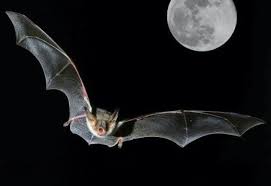
The bat is served….unsafe proteins!

Five million tons of bushmeat is consumed annually in Central Africa. In the Democratic Republic of Congo alone, a million prey are captured and killed, while in Ghana over 100,000 bats are cooked. In large regions of the continent, the population sees the forest as the most convenient place to get food. For those who live in poor and isolated villages, game is the only source of protein; for some, hunting and selling meat serves to supplement their meager earnings.

In African metropolises, eating habits have not changed much and the demand for bushmeat, bushmeat, is growing, in parallel with the demographic boom. On the outskirts of Nairobi, Kampala or Abidjan the streets are teeming with street vendors selling roasted antelope legs or monkeys. For the new middle class, buying crocodile or hippo meat is a status symbol. In Kinshasa and Lagos there is no shortage of markets specialized in the sale of game. Even in Western cities like London and New York, the demand for African game is on the rise. There are even restaurants that have made the “wild menu” the key to their success: in refined locations they serve steamed snakes, anteater stews, roast chimpanzees, caterpillar skewers and birds.

The game trade has become a multi-million dollar business that worries scientists and conservationists. The reasons are well known: researchers have now ascertained that African game is a powerful vehicle for the transmission of deadly viruses (Ebola, for example) to humans. It is no coincidence that hunters and their families are the first victims of the epidemics that periodically break out in the middle of the forest.

Then there is an environmental emergency: man is literally emptying the forests

Romano Pisciotti:“The problem of providing protein to the ever-growing population in developing countries is obvious!We have to look for the solution in animal husbandry … in hygienically controlled environments, with healthy food.

Helping developing countries to increase the volumes of meat and milk produced by farms makes the entire planet safer, without forgetting to fight against fairy tales and stupid traditions (even in rich countries) that are counterproductive to development.

Centenario del Milite Ignoto

SILENZIO

(di Romano Pisciotti)

Forse il silenzio

di una sommessa preghiera

cristiana o pagana

potrebbe meglio celebrare

il ricordo

di giovani dispersi

nella gelida nebbia

delle nostre montagne.

Spolverare bandiere

dopo cent’anni

è un insulto

alla memoria storica

e umana.

Un paese che abdica

alla propria sovranità

sostenendo imperi globali

è un paese

di morti viventi

in cerca di felicità

sul ceppo del boia.


Romano

Countries without words (English and Italian version)

A country that does not know the words of the mother tongue will not have peace: good leaders, jobs and growth will be lacking. If ignorance wins, poverty wins.

Rich and technologically advanced countries are losing the beauty of dialogue and writing: the world of work seeks dumb workers and increasingly specialized engineers like horses with blinders; the school is a pool of students who study less and less … and words are lost! Developing countries are moving fast towards industrial and financial goals, while the study of history, art and grammar seems to have become an option.

The thesis of many, silenced by most, highlights the impoverishment of the world’s cultural baggage, followed by the decrease in intelligence. We are listening to great speeches, increasingly devoid of content, but with flirtatious objectives created to attract the consent of the masses: more than on the importance of words, the focus is on the ease and repetitiveness of the same as in an advertisement.

The students press the keys of the cell phone, which suggests the words; slowly the logic of the expression will be guided by smartphones; we will soon confuse every expression of thought with pre-installed catalogs and dictionaries. Quick acronyms will replace the words, tone and colors of the dialogue, slowly extinguishing human consciousness and intelligence.

A cave language will unite peoples: men will be equal, globalized and… slaves!

Un Paese che non conosce le parole della madrelingua non avrà pace: mancheranno buoni dirigenti, lavoro e crescita. Se vince l’ignoranza, vince la povertà. Paesi ricchi e tecnologicamente avanzati stanno perdendo la bellezza del dialogo e della scrittura: il mondo del lavoro cerca operai muti e ingegneri sempre più specializzati come cavalli con i paraocchi; la scuola è un bacino di studenti che studiano sempre meno… e le parole si perdono! I paesi in via di sviluppo si stanno muovendo velocemente verso obiettivi industriali e finanziari, mentre lo studio della storia, dell’arte e della grammatica sembra essere diventato un’opzione. La tesi di molti, messa a tacere dai più, mette in luce l’impoverimento del bagaglio culturale mondiale, seguito dalla diminuzione dell’intelligenza. Stiamo ascoltando grandi discorsi, sempre più privi di contenuti, ma con obiettivi civettuoli creati per attirare il consenso delle masse: più che sull’importanza delle parole, l’attenzione è posta sulla facilità e ripetitività delle stesse come in uno spot pubblicitario. Gli studenti premono i tasti del cellulare, che suggerisce le parole; piano piano la logica dell’espressione sarà guidata dagli smartphone; confonderemo presto ogni espressione di pensiero con cataloghi e dizionari preinstallati. Acronimi veloci sostituiranno le parole, il tono e i colori del dialogo, spegnendo lentamente la coscienza e l’intelligenza umana. Una lingua cavernicola unirà i popoli: gli uomini saranno uguali, globalizzati e… schiavi!

by Romano Pisciotti

President Buhari thanked the Turkish President

The Turkish President announced that his country has increased its diplomatic presence in Africa to 43 missions, adding that the third round of the Turkish-African business forum will be held in Istanbul this October while the third Turkish-African partnership summit will follow in December.

As a positive outcome, eight major Agreements/MoUs on a number of the key sectors including Energy, Defense Industry, Mining and HydroCarbons among others were signed

In his remarks, President Erdogan stressed that Turkey was determined to improve relations with Nigeria to ‘‘higher levels on all fields’’.

He said the trade volume between both countries reached 2 billion dollars in 2020, making Nigeria the outstanding and the biggest trading partner in sub-Saharan Africa.

‘‘However, we still believe that this level of trade we have achieved is far from being adequate. We hope and pray that we will be expanding our trade volume up to 5 billion dollars immediately.

Romano Pisciotti: …The European Union chases dreams and shit, Erdogan deals with economics and power

Marazzato collection

The Marazzato Autoveicoli Storici Collection was born from the deep passion of Carlo Marazzato for the vehicles that have made the history of transport in Italy. The collection now numbers more than one hundred vehicles, mostly vintage trucks and buses, but also historic cars and motorbikes of rare beauty.

This passion is now turning to the creation of a one-of-a-kind tourist attraction pole.

Among the rarest ones is the Isotta Fraschini D 65, built in the 1940s and completely restored in the Marazzato Group workshop.

Among others, the Fiat 642 N 65 R, built in 1961, which was one of the first vehicles used for the purging and cleaning of septic tanks. Also worth mentioning is the OM Tigrotto 55 N from 1970, set up with a fire engine dating back to the 1970s. In the collection, “distributed” in several places but with a core of 70 vehicles renovated and kept in the internal offices, there is a good part of the history of trucks, both Italian and foreign.


Presented by ITALMOTOR, Romano Pisciotti

NIGERIA: Bio-fortified Crops, sustainable but not sufficient


In Nigeria, climatic zone is divided into three main categories: a tropical forest from the south to the north; a savanna in the middle with 800 to 1,200 mm of annual rainfall; and a Sahel, semi-arid land in the north, with 300 to 800 mm of annual rainfall. There are two climatic seasons, rainy season (May to October) and dry season. Since agricultural production mainly relies on rainfalls, the crop cultivation is influenced by seasonality and the amount of rainfalls every year.

In addition to the climatic influence, product losses due to storage and transport methods must be considered.

The result is a lack of vitamins to which is added a very deficient situation for the supply of animal-derived proteins (poultry, etc.). Intensive animal breeding is under development, but due to the precariousness of agricultural supply and for the health situation, the sector must be developed with the support of controlled nutrients for animal welfare and an increase in production.


Presented by Romano Pisciotti

ALITO DIVINO

ALITO DIVINO

(di Romano Pisciotti)


I sogni misurano l’infinito

nella continuità dell’orizzonte:

solo i marinai 

hanno il dono e il peso 

d’aver vissuto tante vite 

quante le navi navigate.

Il mare non lava paure 

né alleggerisce dubbi 

o difetti;

la curiosità e il bisogno

s’incrostano come sale 

nel cuore dei naviganti,

dove la salsedine

diventa speranza

e coraggio.

Sul ripetersi delle onde 

e dei cieli stellati

soffia l’alito divino 

spingendo le vele

e le anime 

oltre il bordo del mondo.

Romano


TEMPERATURE-CONTROLLED CHAIN, NIGERIA

In Nigeria, 40–50% of fresh fruits and vegetables
are lost during crating, transportation, storage and processing. In the tomato sector, for instance, it is estimated that more than 40% of tomato production does not reach consumers.

One of the main reasons for this massive waste is the lack of a temperature-controlled supply chain— known as cold chain—which prevents fresh foods from spoiling between farm and market. Tomatoes, for example, must travel long distances as they are largely grown in the north of the country, but mostly consumed in urban centres in the south.

A higher, quality and more predictable supply ultimately means more stable prices for consumers and a good deal in logistics.

Motor Parts Industry

COLD SECTOR

Info: italmotor@gmail.com

231 Moshood Abiola Way, Ijora (Old Apapa road)

Lagos – Nigeria

Romano Pisciotti