Le quattro parche (FATES)

Le quattro parche

Onestà e sogno

sono morti

sotto le mura d’Invidia

e paludi di Gelosia.

Non c’è storia

quando l’Infamia

rammenda le verità

di cuciture incerte

imbastite da giochi

d’altri interessi.

Non c’è riscatto

ma solo vociare

dopo squallide sentenze

di Vergogna.

Il cuore batte e

non s’arrende mai

ai pupetti di bottega.


Romano Pisciotti

The four Fates

Honesty and dream

dead

under the walls of envy

and swamps of jealousy.

There is no story

when the infamy

repair the truths

with uncertain seams

basted by games

of other interests.

There is no ransom

but just chat

after squalid sentences

of shame.

The heart beats and

it never gives up

to the workshop puppets.


Romano Pisciotti

False speranze

Ancora ho nei polmoni

l’aria del secolo scorso:

il sogno di speranze

di una vita migliore,

intima e privata,

come private sono gioie

passioni e amori

di un’ umanità comune

nella felicità e nella lotta.

Non si affitta l’anima

non si globalizza la vita.

Falsi profeti abbattono confini,

bruciano bandiere e glorie,

disegnando il mondo uguale

per ebeti strabici e connessi,

veloci e più ignoranti.

Reclamo il senso della vita,

la corsa alla Luna,

il senso del viaggio

e la voglia di futuro

fatto di sudate scalate

e non di falsi pianori

in un modo appiattito:

meglio i muri che

i ponti sul vuoto.


di Romano Pisciotti.

Globalizzazione


RIVA D’AFRICA

Riva d’Africa


L’oceano del silenzio

che si stende sull’Africa

è un mare stanco

di parole e promesse.

La schiuma grigia

dei vecchi riti dell’ignoranza

inquina pace e sogni

cercando l’alibi nella storia.

Non ci sono più

le rive degli schiavi

ma insistono pesanti verità

di corrotti e inutili parolai.

Folli trascinatori

con folle di sciocchi creduloni

bruciano ogni ragione 

nell’illusione che l’orgoglio

stia solo nella pelle nera.

Che siano il tuo cuore, 

l’intelligenza, la bellezza e la forza

a gridare il tuo orgoglio!


di Romano Pisciotti

Arroganza USA di sempre

Gli americani, sono convinti che le leggi dei paesi diversi dal loro non valgano.

Pensano che, essendo cittadini di una super-potenza, possono fare i super-prepotenti.

I loro Governi arroganti hanno fatto credere a tutti di poter avere una speciale patente…di lecita arroganza…in caso di guai, se non bastano le pressioni economiche, si possono sempre mandare un paio di missili “intelligenti”!

https://www.dagospia.com/rubrica-3/politica/delusione-americana-problema-non-obama-ma-66388.htm

Un chiaro esempio è l’ estensione extraterritoriale delle normative economiche (nazionali) USA…anche in campo antitrust.

Romano Pisciotti

Piccole onde

Passeggi 

lungo l’umida spiaggia

davanti al mare freddo

di piccole onde

e leggera risacca.

Ascolto i tuoi pensieri 

di parole dolci ancora 

nuove

che colmano un vuoto 

e riempiono il cuore.

Canti dell’amore e lacrime

di sorrisi, d’umori e 

tempo andato che vive

nella foschia del mattino

e nei lenti tramonti.


di Romano Pisciotti

Pisciotti
Romano Pisciotti

Creative destruction

How Antitrust Regulation Hinders Innovation and Competition

Few economic concepts elicit such strong reactions as that of monopoly, and the policy intended to address it—antitrust regulations (called competition policy in the European Union). Yet, both supporters and opponents of antitrust regulations agree on one fundamental point—that effective competition is vital to the American economy and the welfare of its citizens. However, they differ in how the law should encourage this. There are essentially three schools of thought regarding antitrust policy:

  1. Interventionist. Regulators should use the law proactively to break up companies that are abusing their market power and restore a competitive market. The size of a company is a good guide as to when this should be done.
  2. Consumer welfare. Abuse of market power is rare and dominant market positions can be achieved through delivering improvements in consumer welfare. Therefore, antitrust laws should be used not to break up companies that have grown big through successful competition, but to address instances of collusion, price fixing, or other anti-competitive behavior.
  3. Free market. Antitrust law is unnecessary. Market processes routinely undermine monopolies—and attempts to create monopolies. Laws against “unfair competition” prevent property owners from experimenting with joint ventures and other innovations that can improve consumer welfare.

Until recently, there was a sharp partisan divide between these schools, which can be roughly described as liberal, conservative, and libertarian, respectively. Traditionally in practice, this meant that antitrust conservatives would more often side with the libertarian camp, while leaving some room for cooperation with the liberal faction. However, the recent rise of “big tech” has led some conservatives to turn to the most interventionist approach with a zeal that threatens innovation in America’s world-leading technology industry.

The interventionist approach suffers from the same problems classical liberal economists have long identified with government interventions in markets.

First, there is the “knowledge problem”—how do regulators know better than the market what the best market structure is?

Then there are what are known as public choice considerations—regulators might exercise their powers to promote their own preferred policy positions. The very existence of those powers will lead to intense lobbying by regulated entities—both those seeking regulatory relief and those who benefit from entry barriers that limit competition from potential new entrants in a market.

The consumer welfare approach also has problems. Retaining antitrust law as an option that may be used against entrepreneurs carries the same threat to innovation posed by the interventionist approach. For instance, politicians with an animus against certain companies may pressure regulators into opposing mergers involving those companies. Regulators assessing unfair competition will not be immune from the knowledge problem and public choice effects. Entrepreneurs, eager to avoid provoking antitrust enforcement actions, will be dissuaded from pursuing innovations that might run afoul of the law.

The third approach, abolishing antitrust law, is extremely controversial. There is a widespread belief, among policy makers, the media, and the public, that without the threat of antitrust law, companies will disregard customer preferences, extract excessive profits, and kill off competitors. Yet there is no such thing as a dominant market position unless it is guaranteed by government. AOL, Borders, Blockbuster, Sears, Kodak, and many other firms once considered dominant in their markets have fallen as the result of competition, without any antitrust action.

This process of creative destruction, succinctly described by the economist Joseph Schumpeter, is a major driver of the kind of innovation that helps raise living standards. It will surely continue unless, ironically, antitrust regulators gain too much power. Were that to happen, large firms will be tempted to reach accommodations with a government that restricts their activities in exchange for not being broken up. Those accommodations will usually include protections and guarantees that act as entry barriers against potential innovative challengers. The result will be less competition, fewer innovations, and lower consumer welfare.

Creative destruction is the best answer to dominant market positions. Rather than use antitrust law aggressively, those who wish to see big companies fall quickly should instead work to end antitrust law. As for other barriers to creative destruction—for instance, financial regulations that make launching an initial public offering of stock prohibitively costly—increased competition can be achieved through deregulation in those other areas.


Presented by Romano Pisciotti

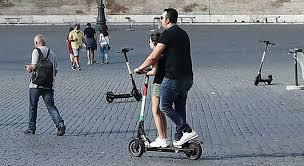
LA FOLLIA DEL MONOPATTINO

Sono semplicemente dei giochi per bambini da usare nel parco con un piede a terra che spinge in sicurezza.

https://video.corriere.it/milano/boom-picco-incidenti-monopattino-milano-pattuglia-vigili/db047a92-f8fb-11ea-b4b0-f49c5435d3f2

I monopattini nelle nostre vite non sono piovuti dal cielo, non sono arrivati per caso. In diversi posti nel mondo sono nate alcune startup che hanno capito che il principio del car sharing si poteva applicare anche a bici e “scooter elettrici” (all’estero i monopattini vengono chiamati così): trovi quello più vicino a te con lo smartphone e sempre con lo smartphone lo sblocchi e paghi la corsa. C’è voluto non poco lo scorso anno per approvare una norma che li rendesse legali, tipo le biciclette, e nel giro di pochi mesi le startup hanno fatto accordi con i sindaci delle nostre principali città smaniosi di poter dire “dopo il coronavirus nulla sarà come prima”. Come se bastasse una manciata di monopattini a far sparire il traffico. Il governo poi, in una smania di “nuovismo”, ha anche messo sul tavolo un ecobonus importante per chi ne acquista uno personale, inserendolo nel ‘Decreto rilancio’, come se dalla crisi si potesse uscire zigzagando su due (piccole) ruote.

Va bene la mobilità intelligente. D’accordo la sostenibilità. Evviva tutto quello che un giorno renderà le nostre città meno ingolfate di smog. Ma credo che questa faccenda dei monopattini elettrici ci stia sfuggendo di mano.

https://www.repubblica.it/dossier/stazione-futuro-riccardo-luna/2020/08/05/news/monopattini_che_cosa_abbiamo_sbagliato-263765718/

Presentato da Romano Pisciotti

CHINA: ‘Rich country full of poor’

The fact that the largest nation in the world is able to manage a capitalist economy without granting political freedoms, even in the presence of the new information medium which is the Internet, represents an unprecedented challenge for those who believe that democracy and the market sooner or later must converge. The unique dimension of China, the peculiarity of its history and its civilization lead to fear that the union between authoritarianism and the market may be solid and lasting. The efficiency of the censorship applied by the Beijing government to the Internet has become a symbol for many Westerners, who observe the successes of the repressive apparatus against dissent.

In every production sector, the country has used production techniques that consume more energy than its Japanese, European or American competitors. Changing this model of development will require difficult sacrifices, even in terms of social consensus. For the Beijing government, the consent of the urban middle class is a fundamental element of political and social stability.

In China, arable land for cereals is only 600 m² per inhabitant, compared to 1900 m² per inhabitant in the United States, yet the American workforce employed in agriculture is only 2% of the active population. The Chinese labor still employed in agricultural work is largely overabundant, unproductive, underutilized, and this is a structural cause of its misery.

The fact that China has become a major world exporter of fruit and vegetables does not prevent it from being doomed to not be self-sufficient in basic production – such as rice, cereals, soybeans. The mass expulsion from the countryside appears to be an inevitable process destined to last a very long time.

The rural population of the country is estimated at around 900 million people. 40% of all farmers on the planet live in China. The other side of the Chinese economic miracle was summarized in November 2006 by a World Bank study relating to the period 2001-2003: in that three-year period of growth, 10% of the population saw their income decrease by 2.4%. Over the same period, the richest 10% of Chinese recorded an income increase of 16%. The condition of large masses of peasants at the beginning of the 21st century. it was still marked by profound injustices, arbitrariness and oppression by the political class.

The flight of Chinese peasants to urban factories and construction sites gives rise to other hotbeds of social tension. In cities, the fate that awaits rural immigrants is that of second-class citizens, victims of a sort of apartheid. Deprived of the status of urban residents, immigrants from the countryside are not entitled to health care or schools for their children. They are condemned to the humblest jobs, underpaid, blackmailed by their employers.

Romano Pisciotti..Browsing the web

TRIESTE …tedesca

Il porto di Trieste nuovamente ai tedeschi…la Germania e l’Unione Europea.

Il porto di Trieste è una delle maggiori infrastrutture logistiche portuali al mondo. Collegato ad una importante rete ferroviaria perfettamente integrata a livello europeo, è il terminal su mare dell’Oleodotto Transalpino, capace di rifornire di idrocarburi le raffinerie di Germania, Austria e Repubblica Ceca, e rappresenta uno sbocco strategico capace di raccogliere merci provenienti dal mercato asiatico attraverso il Canale di Suez.

Quello che fa la società pubblica tedesca HHLA è la realizzazione della più grande ambizione geopolitica del cosiddetto Northern Range europeo, ovvero quella di integrare ai colossi della logistica portuale del nord Europa, attraverso il sistema ferroviario, una piattaforma avanzata sul Mediterraneo.

https://youtu.be/ZQZKw8Mueko?t=1

Il ruolo dell’Europa in questa nostra debolezza è determinante ed è accompagnato – ovviamente – dall’inettitudine della nostra classe politica. Ecco perché ci obbliga a dedicare le risorse del Recovery Fund a centinaia di piccoli progetti “big data” e “green” che nulla hanno a che fare con le vere esigenze della nostra economia.  

…eravamo orgogliosi per Trieste italiana

Romano Pisciotti

MEGLIO VIAGGIARE IN AEREO O IN TRENO?

Addio aereo a tutti i costi, meglio viaggiare in treno o in bus. Potrebbe essere il nuovo volto del trasporto a breve-medio raggio nell’Europa post-pandemia. Almeno secondo i dati raccolti da un sondaggio svolto nei giorni scorsi tra un migliaio di viaggiatori dalla banca d’affari Ubs Investment Bank. Gli intervistati, in quattro paesi Ue e in Cina, si sono dichiarati disposti a usare il treno ad alta velocità per percorrenze fino a 6 ore per andare in vacanza e fino a 4 ore per viaggi di lavoro; prima dell’epidemia il valore ritenuto accettabile non andava oltre le 2-3 ore in entrambi i casi. E la presenza di wifi ad alta capacità a bordo amplierebbe ulteriormente l’accettazione delle lunghe percorrenze in treno.

I dati raccolti da Ubs rispecchiano alcune analisi degli esperti, dove l’unico fattore a favore dell’aereo è il forte calo del prezzo del petrolio. Ma le nuove esigenze di distanziamento a bordo, i tempi d’attesa per la sanificazione delle cabine e il contingentamento degli imbarchi in aeroporto per evitare assembramenti hanno in prospettiva un solo denominatore comune: l’aumento del prezzo dei biglietti.

Che si tratti di voli con compagnie “convenzionali” o low-cost, difficilmente si può pensare di continuare a viaggiare in aereo ai prezzi (stracciati) di prima dell’epidemia. Il fondatore e guru di Ryanair, Michael O’Leary, in un’intervista ha dichiarato di essere in grado di «mantenere i conti in pareggio anche viaggiando con un terzo dei sedili vuoti». Ma potrebbe essere necessario dimezzare il numero dei passeggeri a bordo; quanto agli aeroporti, è escluso che le compagnie low-cost possano continuare a programmare solo 20-30 minuti di pausa tra atterraggio e decollo dello stesso aereo, ritmo chiave per mantenere in piedi il business.

Al di fuori della maggiore “pazienza” dei viaggiatori post-pandemia, il treno – specie se declinato sulle linee ad alta velocità – potrebbe avere carte migliori da giocare. Già oggi un Frecciarossa porta 450 passeggeri offrendo spazi ben più ampi di quelli offerti da un aereo. Riducendone la capienza a 350 posti si potrebbero rispettare le norme di distanziamento senza far impennare i prezzi. I ticket con l’indicativo del posto e della vettura sono già uno standard e il numero delle porte d’accesso consente imbarchi e sbarchi ordinati; unico dato negativo: le fermate intermedie potrebbero allungarsi di qualche minuto, come i tempi tecnici di ripristino del convoglio a fine corsa.

Presented by Romano Pisciotti

Continua a leggere:

https://www.touringclub.it/notizie-di-viaggio/per-i-viaggi-post-pandemia-il-treno-battera-laereo